Planetary Anchor Station Cutaway
Planetary Anchor Station Cutaway

prompt

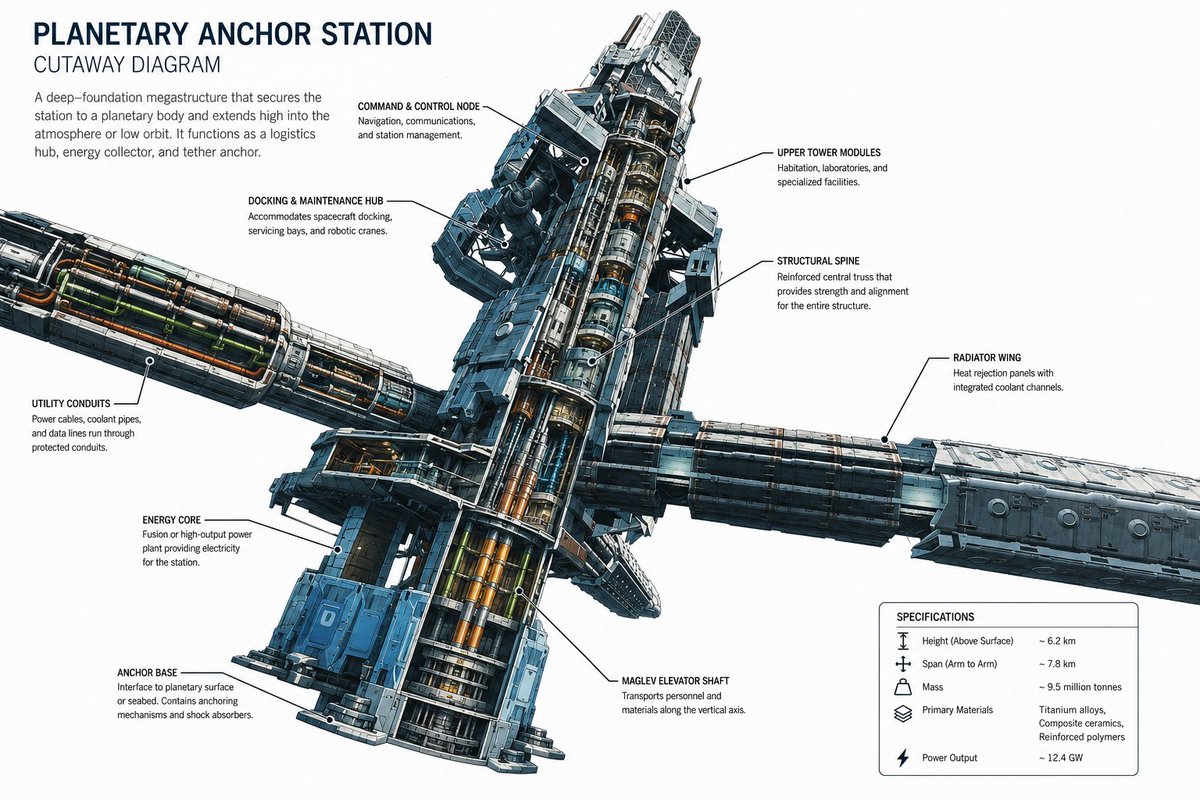
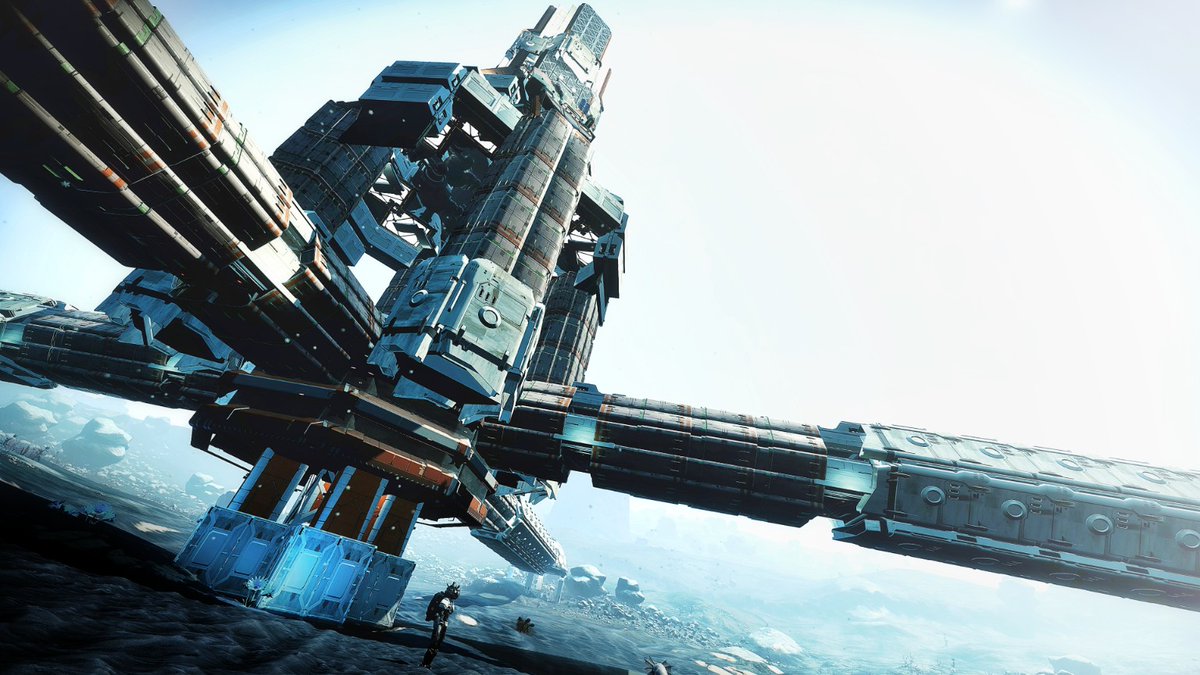
Goal: Create a clean sci-fi technical cutaway diagram of a massive No Man's Sky-inspired space megastructure labeled as PLANETARY ANCHOR STATION, showing a deep-foundation orbital tether/logistics hub in precise industrial detail. Canvas: Wide 3:2 landscape technical poster on a white background, high-resolution, with generous empty space for labels. Use a realistic hard-surface concept-art style with crisp black leader lines, small circular callout dots, thin technical typography, and subtle shadows under the structure. Main subject: A huge cross-sectioned vertical space station tilted diagonally from lower left to upper right, with two long horizontal arms extending left and right through the central tower. The structure is blue-gray, gunmetal, white, and dark steel, with exposed copper, orange, green, and black utility piping. The central tower is partially cut away to reveal stacked cylindrical machinery, conduits, elevator shafts, reactor sections, service decks, truss frames, and glowing industrial interiors. The left arm shows many exposed utility pipes inside segmented conduit housing. The right arm is a heavier rectangular radiator/armature with panel plating, circular ports, and mechanical seams. The lower end has a bulky blue anchor base with landing-foot-like supports and shock absorber details. Top-left text: Large bold uppercase title: PLANETARY ANCHOR STATION. Directly below it, smaller uppercase subtitle: CUTAWAY DIAGRAM. Under the subtitle, add a short paragraph: A deep-foundation megastructure that secures the station to a planetary body and extends high into the atmosphere or low orbit. It functions as a logistics hub, energy collector, and tether anchor. Callouts: Include exactly 9 labeled callouts with leader lines and small dot markers, using compact uppercase headings plus one short explanatory sentence each: 1. COMMAND & CONTROL NODE — Navigation, communications, and station management. 2. UPPER TOWER MODULES — Habitation, laboratories, and specialized facilities. 3. DOCKING & MAINTENANCE HUB — Accommodates spacecraft docking, servicing bays, and robotic cranes. 4. STRUCTURAL SPINE — Reinforced central truss that provides strength and alignment for the entire structure. 5. UTILITY CONDUITS — Power cables, coolant pipes, and data lines run through protected conduits. 6. RADIATOR WING — Heat rejection panels with integrated coolant channels. 7. ENERGY CORE — Fusion or high-output power plant providing electricity for the station. 8. ANCHOR BASE — Interface to planetary surface or seabed. Contains anchoring mechanisms and shock absorbers. 9. MAGLEV ELEVATOR SHAFT — Transports personnel and materials along the vertical axis. Specification box: Place a bordered white box in the lower-right corner titled SPECIFICATIONS. Include exactly 5 rows with small monochrome icons and values: Height (Above Surface) — ~ 6.2 km; Span (Arm to Arm) — ~ 7.8 km; Mass — ~ 9.5 million tonnes; Primary Materials — Titanium alloys, Composite ceramics, Reinforced polymers; Power Output — ~ 12.4 GW. Visual style: Futuristic aerospace engineering diagram, photorealistic 3D model render mixed with infographic annotation, sharp panel lines, exposed mechanical innards, realistic scale, no people, no planets, no starfield, no watermark. Keep the background plain white and the typography clean, black, and highly legible.

Funciona em 20 modelos

  • Flux
  • Flux 2
  • Flux Kontext
  • GPT-4o Image
  • GPT Image
  • GPT Image 2
  • GPT Image 2.5
  • GPT Image 2.6
  • Grok Imagine
  • Ideogram V3
  • Imagen 4
  • Kling
  • +8 Mais

O que este prompt produz

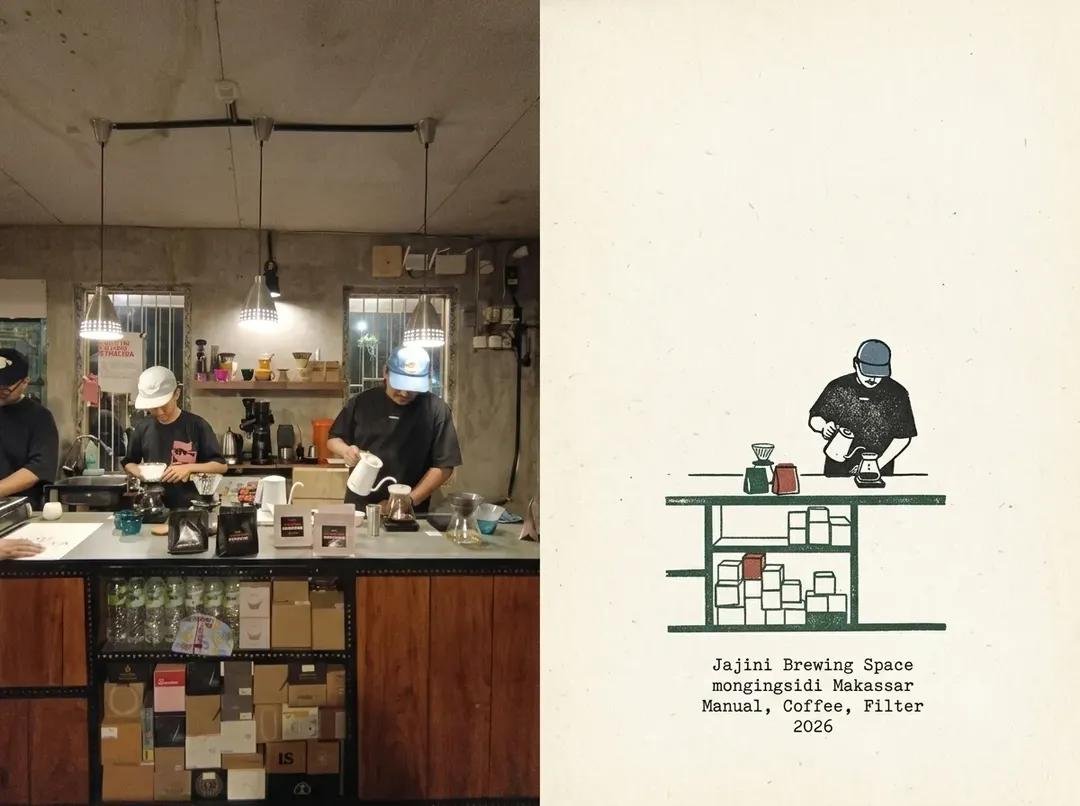
Split-Page Coffee Shop Travel Journal Não especificado gpt-image-2
Cute Chibi Characters in a Sweet Playful Moment Não especificado gpt-image-2
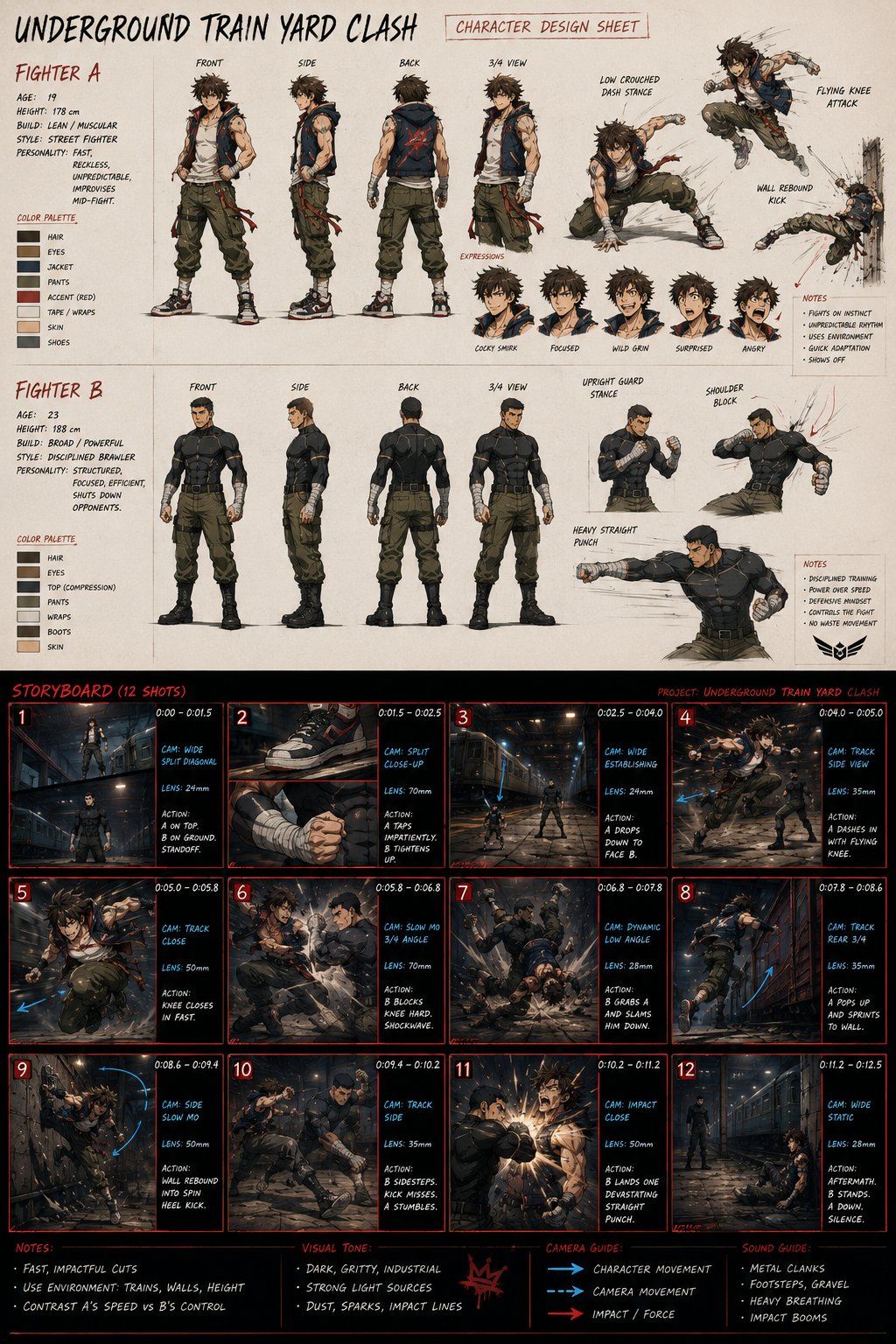
Underground Train Yard Clash Anime Development Board Não especificado gpt-image-2
Realistic Group Selfie with Smartphone Flash Effect Não especificado nano-banana-pro
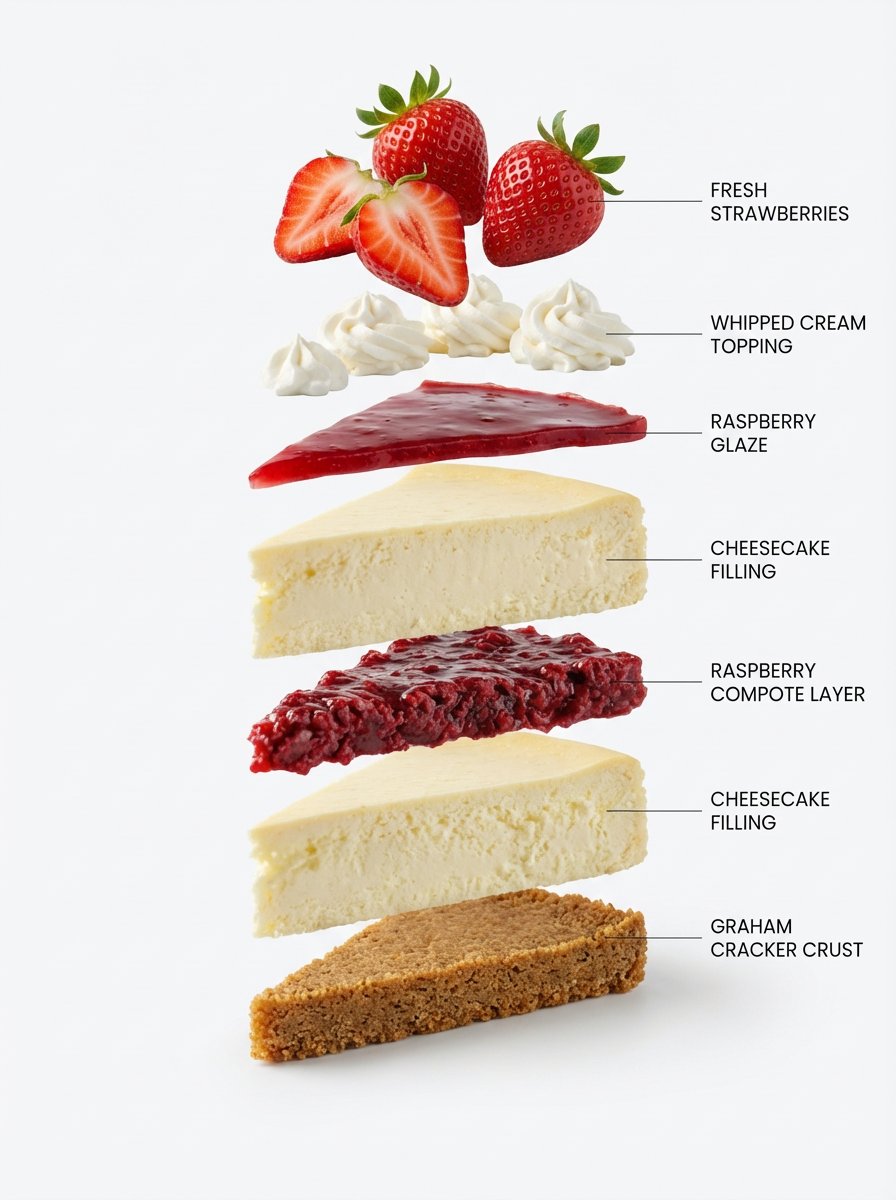
Exploded-View Structural Cutaway for Food Photography Não especificado nano-banana-pro
Four Seasons Portrait Collage Não especificado nano-banana-pro

Run este prompt com o API

A solicitação abaixo envia esse prompt, com seus valores padrão preenchidos, para o primeiro modelo em que é executado. Troque o nome do modelo por qualquer outro modelo listado acima.

Documentação da prompt API
/api/v1/gpt_image_2/text_to_image
curl -X POST https://runapi.ai/api/v1/gpt_image_2/text_to_image \
  -H "Authorization: Bearer $RUNAPI_API_KEY" \
  -H "Content-Type: application/json" \
  --data-binary @- <<'JSON'
{
  "model": "gpt-image-2",
  "prompt": "Goal: Create a clean sci-fi technical cutaway diagram of a massive No Man's Sky-inspired space megastructure labeled as PLANETARY ANCHOR STATION, showing a deep-foundation orbital tether/logistics hub in precise industrial detail.\n\nCanvas: Wide 3:2 landscape technical poster on a white background, high-resolution, with generous empty space for labels. Use a realistic hard-surface concept-art style with crisp black leader lines, small circular callout dots, thin technical typography, and subtle shadows under the structure.\n\nMain subject: A huge cross-sectioned vertical space station tilted diagonally from lower left to upper right, with two long horizontal arms extending left and right through the central tower. The structure is blue-gray, gunmetal, white, and dark steel, with exposed copper, orange, green, and black utility piping. The central tower is partially cut away to reveal stacked cylindrical machinery, conduits, elevator shafts, reactor sections, service decks, truss frames, and glowing industrial interiors. The left arm shows many exposed utility pipes inside segmented conduit housing. The right arm is a heavier rectangular radiator/armature with panel plating, circular ports, and mechanical seams. The lower end has a bulky blue anchor base with landing-foot-like supports and shock absorber details.\n\nTop-left text: Large bold uppercase title: PLANETARY ANCHOR STATION. Directly below it, smaller uppercase subtitle: CUTAWAY DIAGRAM. Under the subtitle, add a short paragraph: A deep-foundation megastructure that secures the station to a planetary body and extends high into the atmosphere or low orbit. It functions as a logistics hub, energy collector, and tether anchor.\n\nCallouts: Include exactly 9 labeled callouts with leader lines and small dot markers, using compact uppercase headings plus one short explanatory sentence each: 1. COMMAND & CONTROL NODE — Navigation, communications, and station management. 2. UPPER TOWER MODULES — Habitation, laboratories, and specialized facilities. 3. DOCKING & MAINTENANCE HUB — Accommodates spacecraft docking, servicing bays, and robotic cranes. 4. STRUCTURAL SPINE — Reinforced central truss that provides strength and alignment for the entire structure. 5. UTILITY CONDUITS — Power cables, coolant pipes, and data lines run through protected conduits. 6. RADIATOR WING — Heat rejection panels with integrated coolant channels. 7. ENERGY CORE — Fusion or high-output power plant providing electricity for the station. 8. ANCHOR BASE — Interface to planetary surface or seabed. Contains anchoring mechanisms and shock absorbers. 9. MAGLEV ELEVATOR SHAFT — Transports personnel and materials along the vertical axis.\n\nSpecification box: Place a bordered white box in the lower-right corner titled SPECIFICATIONS. Include exactly 5 rows with small monochrome icons and values: Height (Above Surface) — ~ 6.2 km; Span (Arm to Arm) — ~ 7.8 km; Mass — ~ 9.5 million tonnes; Primary Materials — Titanium alloys, Composite ceramics, Reinforced polymers; Power Output — ~ 12.4 GW.\n\nVisual style: Futuristic aerospace engineering diagram, photorealistic 3D model render mixed with infographic annotation, sharp panel lines, exposed mechanical innards, realistic scale, no people, no planets, no starfield, no watermark. Keep the background plain white and the typography clean, black, and highly legible."
}
JSON

Experimentar a prompt

Estimado: $0.04 / imagem

Entre para gerar com a RunAPI.

Faça login para gerar

Entre para começar a gerar com seus modelos de linguagem disponíveis.