Golden Retriever Encyclopedia Card

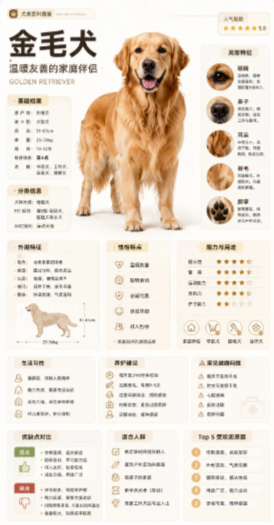
Generates a vertical modular pet encyclopedia infographic card with a central golden retriever, detail close-ups, statistics, ratings, and care notes.
Golden Retriever Encyclopedia Card

Prompt

Goal: Create a vertical modular encyclopedia card about Golden Retriever, designed like a polished Chinese science-popularization pet profile poster. Canvas: Tall portrait infographic, about 9:16 aspect ratio, warm off-white background, soft beige and cream rounded cards, subtle shadows, plenty of white space, clean grid alignment, high-resolution print-ready look. Main layout: Place a large realistic full-body golden retriever in the center-left, standing and facing forward, happy open mouth, visible tongue, fluffy golden coat, natural paws, soft studio lighting. At the top-left, use a small brand/tag pill, then a large bold Chinese headline for the breed name and a short subtitle meaning “gentle and friendly family companion.” Add the English text “GOLDEN RETRIEVER” below the subtitle in small uppercase letters. Top area elements: Include exactly 3 compact information blocks around the title and dog: 1 small breed-origin/specification card on the left with multiple short rows of stats, 1 small popularity or rating card at the top-right with star rating, and 1 small introduction card below the left stats with brief descriptive text. Right detail column: Create exactly 5 stacked rounded detail cards, each with a circular close-up photo and short Chinese explanatory text. The 5 close-ups are: 1 eye/face detail, 2 ear or muzzle detail, 3 coat/fur detail, 4 tail or body coat detail, 5 paw pad detail. Keep these cards aligned vertically on the right side of the dog. Middle and lower modules: Use a neat dashboard of exactly 10 rounded rectangular content cards below and around the dog. The 10 cards are: 1 physical characteristics card with a small side-view dog silhouette and bullet text, 2 personality traits card with five small line icons, 3 ability/rating card with exactly 5 rows of star ratings, 4 lifestyle habits card with four icon bullets, 5 care advice card with multiple short bullet rows, 6 safety or warning card with triangle alert icons, 7 strengths and weaknesses comparison card split into green “advantages” and red “disadvantages” areas, 8 suitable owners card with five icon bullets, 9 Top 5 key facts card with exactly five numbered orange circles, 10 small bonus profile/knowledge card if needed to balance the grid. Visual style: Professional encyclopedia-card aesthetic, clean Chinese editorial layout, soft warm palette of cream, beige, pale gold, muted orange, light brown, and gentle green/red accents. Use thin line icons, circular photo crops, small gold star ratings, rounded corners, subtle drop shadows, and consistent margins. The central dog should be the most visually dominant element; all text should look dense but organized. Text content: Use Chinese UI-style labels and short Chinese paragraphs throughout, with the main title set to 金毛犬. Use a warm subtitle set to 温暖友善的家庭伴侣. Keep text legible-looking but do not overcrowd; use placeholder-like short Chinese bullet lines where tiny text is not readable. Customization: Set the overall palette to warm cream, beige, golden brown, muted orange and the illustration/photo style to realistic pet photography combined with clean infographic design. Constraints: Exactly one main dog, exactly 5 right-column close-up detail cards, exactly 10 lower/middle information cards, exactly 5 rows in the star-rating card, exactly 5 numbered items in the Top 5 card. No people, no watermark, no messy background, no extra animals.

Runs on 18 models

  • Flux
  • Flux 2
  • Flux Kontext
  • GPT-4o Image
  • GPT Image
  • GPT Image 2
  • GPT Image 2.5
  • Grok Imagine
  • Ideogram V3
  • Imagen 4
  • Midjourney
  • Nano Banana
  • +6 more

What this prompt produces

咖啡馆旅行手账分栏页 Not specified gpt-image-2
日系 Chibi 互动小插画 Not specified gpt-image-2
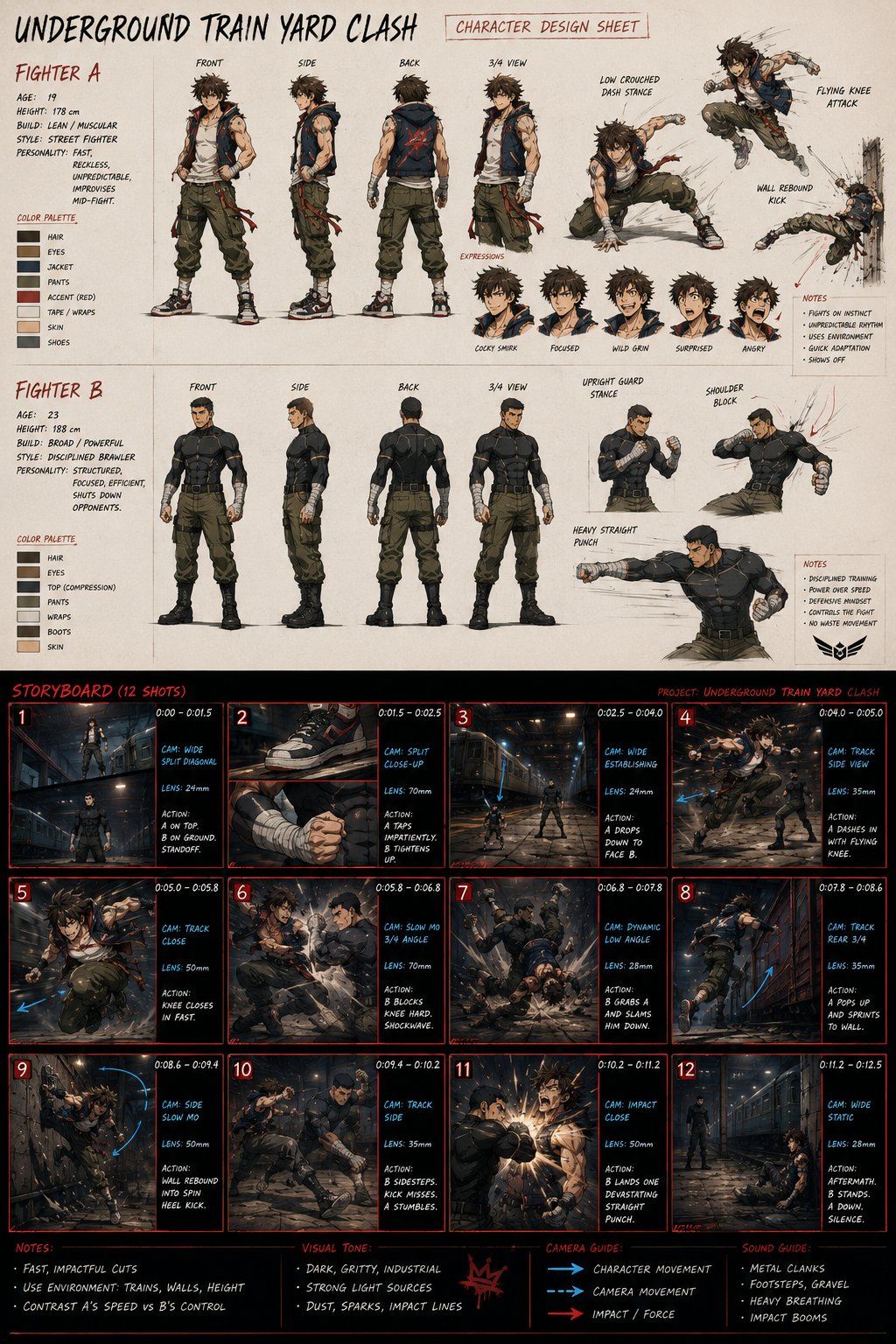
动漫动作短片设定分镜板 Not specified gpt-image-2
Realistic Group Selfie with Smartphone Flash Effect Not specified nano-banana-pro
Four Seasons Portrait Collage Not specified nano-banana-pro
Minimalist Dog Sketch Clipart Not specified nano-banana-pro

Run this prompt with the API

The request below sends this prompt, with its default values filled in, to the first model it runs on. Swap the model name for any other model listed above.

Prompt API docs
/api/v1/gpt_image_2/text_to_image
curl -X POST https://runapi.ai/api/v1/gpt_image_2/text_to_image \
  -H "Authorization: Bearer $RUNAPI_API_KEY" \
  -H "Content-Type: application/json" \
  --data-binary @- <<'JSON'
{
  "model": "gpt-image-2",
  "prompt": "Goal: Create a vertical modular encyclopedia card about Golden Retriever, designed like a polished Chinese science-popularization pet profile poster.\n\nCanvas: Tall portrait infographic, about 9:16 aspect ratio, warm off-white background, soft beige and cream rounded cards, subtle shadows, plenty of white space, clean grid alignment, high-resolution print-ready look.\n\nMain layout: Place a large realistic full-body golden retriever in the center-left, standing and facing forward, happy open mouth, visible tongue, fluffy golden coat, natural paws, soft studio lighting. At the top-left, use a small brand/tag pill, then a large bold Chinese headline for the breed name and a short subtitle meaning “gentle and friendly family companion.” Add the English text “GOLDEN RETRIEVER” below the subtitle in small uppercase letters.\n\nTop area elements: Include exactly 3 compact information blocks around the title and dog: 1 small breed-origin/specification card on the left with multiple short rows of stats, 1 small popularity or rating card at the top-right with star rating, and 1 small introduction card below the left stats with brief descriptive text.\n\nRight detail column: Create exactly 5 stacked rounded detail cards, each with a circular close-up photo and short Chinese explanatory text. The 5 close-ups are: 1 eye/face detail, 2 ear or muzzle detail, 3 coat/fur detail, 4 tail or body coat detail, 5 paw pad detail. Keep these cards aligned vertically on the right side of the dog.\n\nMiddle and lower modules: Use a neat dashboard of exactly 10 rounded rectangular content cards below and around the dog. The 10 cards are: 1 physical characteristics card with a small side-view dog silhouette and bullet text, 2 personality traits card with five small line icons, 3 ability/rating card with exactly 5 rows of star ratings, 4 lifestyle habits card with four icon bullets, 5 care advice card with multiple short bullet rows, 6 safety or warning card with triangle alert icons, 7 strengths and weaknesses comparison card split into green “advantages” and red “disadvantages” areas, 8 suitable owners card with five icon bullets, 9 Top 5 key facts card with exactly five numbered orange circles, 10 small bonus profile/knowledge card if needed to balance the grid.\n\nVisual style: Professional encyclopedia-card aesthetic, clean Chinese editorial layout, soft warm palette of cream, beige, pale gold, muted orange, light brown, and gentle green/red accents. Use thin line icons, circular photo crops, small gold star ratings, rounded corners, subtle drop shadows, and consistent margins. The central dog should be the most visually dominant element; all text should look dense but organized.\n\nText content: Use Chinese UI-style labels and short Chinese paragraphs throughout, with the main title set to 金毛犬. Use a warm subtitle set to 温暖友善的家庭伴侣. Keep text legible-looking but do not overcrowd; use placeholder-like short Chinese bullet lines where tiny text is not readable.\n\nCustomization: Set the overall palette to warm cream, beige, golden brown, muted orange and the illustration/photo style to realistic pet photography combined with clean infographic design.\n\nConstraints: Exactly one main dog, exactly 5 right-column close-up detail cards, exactly 10 lower/middle information cards, exactly 5 rows in the star-rating card, exactly 5 numbered items in the Top 5 card. No people, no watermark, no messy background, no extra animals."
}
JSON

Try a prompt

Estimated: $0.04 / image

Sign in to generate with RunAPI.

Sign in to generate

Sign in to start generating with your available language models.