---
title: Nano Banana Pro Science Prompt Template — prompt dla nano-banana-pro | RunAPI
description: Skopiuj ten prompt RunAPI, sprawdź kroki konfiguracji agenta i użyj kodu API dla nano-banana-pro.
url: https://runapi.ai/pl/prompts/2x2-scientific-theory-structures-in-3d-mod-designer-toy-73YLq0.md
canonical: https://runapi.ai/prompts/2x2-scientific-theory-structures-in-3d-mod-designer-toy-73YLq0
locale: pl
site: RunAPI
image: https://runapi.ai/assets/opengraph-bfaaa0f0.png
prompt_id: 35887
model: nano-banana-pro
modality: image
endpoint: "/api/v1/nano_banana/text_to_image"
---
> HTML version: https://runapi.ai/pl/prompts/2x2-scientific-theory-structures-in-3d-mod-designer-toy-73YLq0
> Site index for agents: https://runapi.ai/llms.txt
# Nano Banana Pro Science Prompt Template
Skopiuj ten prompt RunAPI, sprawdź kroki konfiguracji agenta i użyj kodu API dla nano-banana-pro.
**Prompty** · Obraz
## Przykładowe obrazy

## Prompt
```text
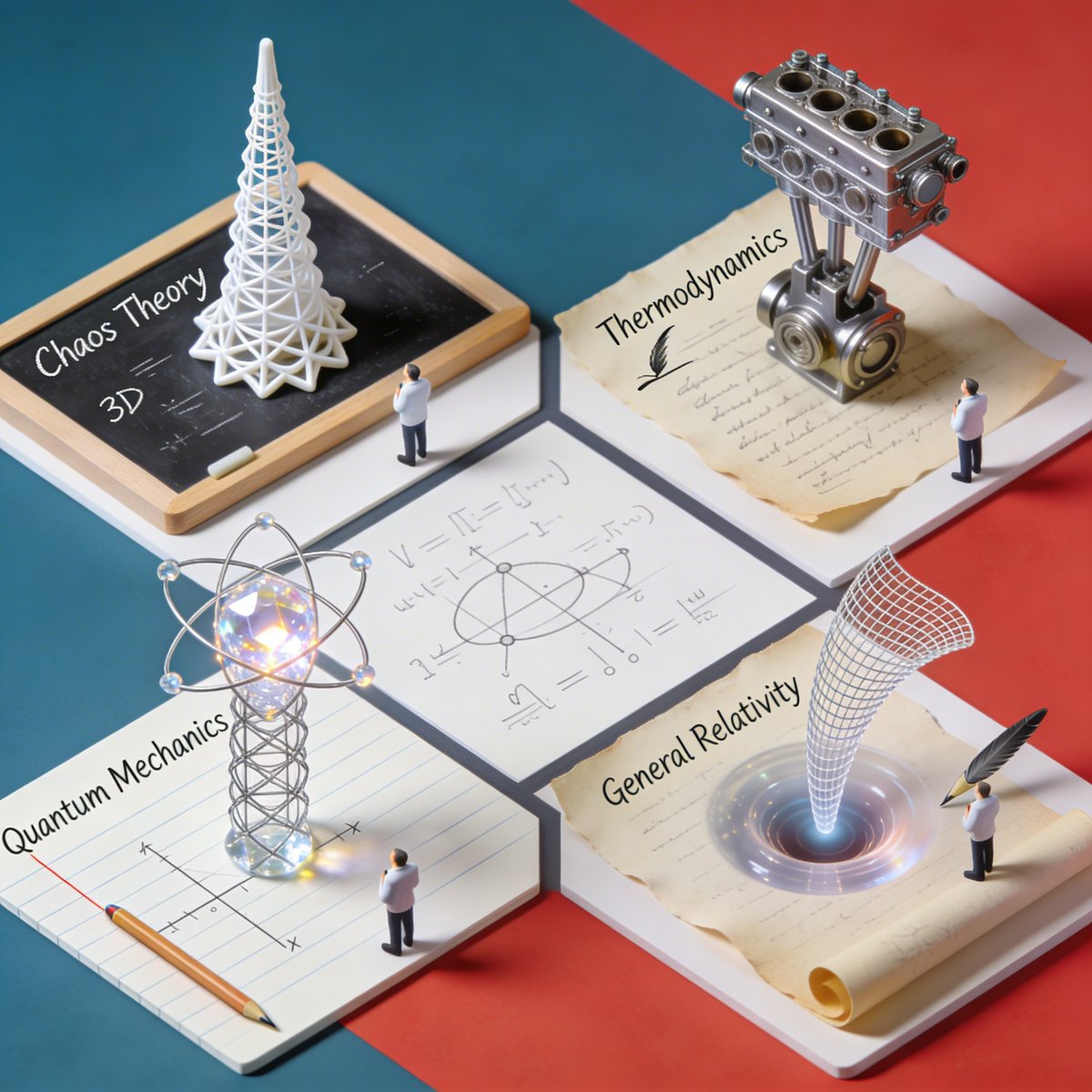
2x2 grid, do this for 4 famous PHD level science or math topics
Input Variable: Theorem / Formula
Phase 1: Schematic Decomposition
Analyze the Notation: Identify the primary visual language of the scientist (Chalk on blackboard? Ink on parchment? Pencil on graph paper?).
Identify the "Structure": If this theory were a building, what would it look like?
Logic: Chaos Theory -> Fractal Spire. Thermodynamics -> Engine Block.
Phase 2: The Dimensional Transition
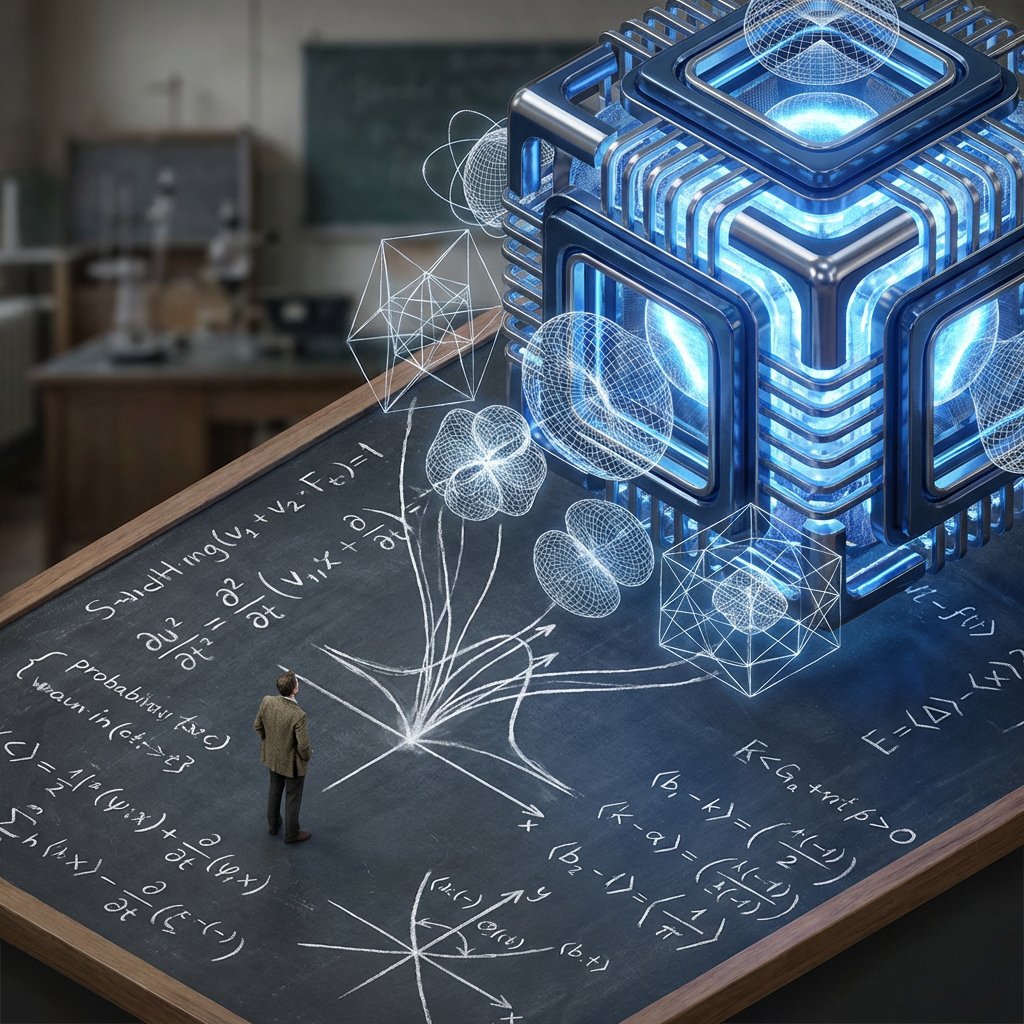
The Base: A flat surface covered in the [Notation Medium] (e.g., a slate blackboard covered in chalk equations).
The Extrusion: The chalk lines physically lift off the surface. They begin as white wireframes, then gain opacity, then gain texture.
The Climax: At the top of the image, the wireframes have fully solidified into a photorealistic, impossible structure representing the theory.
The Observer: A tiny, scale-model figure of the scientist stands on the flat "2D" section, looking up in awe at the massive "3D" structure they have summoned.
Output: High-Angle Isometric, "3D mod designer toy" style, stark contrast between sketchy lines and solid mass.
```
### Wygeneruj ten prompt
| Model | Nano Banana pro |
|---|---|
| Szacowany koszt | $0.11 / wywołanie |
| Endpoint | `/api/v1/nano_banana/text_to_image` |
[Zaloguj się, aby wygenerować](https://runapi.ai/pl/login)
Wygenerowany obraz pojawi się tutaj
## Analiza promptu
### Temat
Nano Banana Pro Science Prompt Template
### Atmosfera
art / Obraz
### Techniczne
nano-banana-pro / Nano Banana / Text To Image / /api/v1/nano_banana/text_to_image
### Styl
2x2-grid, blackboard, isometric, math, photorealistic, science, wireframes
## Modele obsługujące ten prompt
| Modalność | Model | Cena | Wypróbuj |
|---|---|---|---|
| Obraz | Qwen 2/qwen-2-text-to-image | $0.04 / obraz | [Wypróbuj](https://runapi.ai/pl/models/qwen-2/text-to-image.md) |
| Obraz | Qwen 3/qwen-3-pro-text-to-image | $0.04-$0.08 / obraz | [Wypróbuj](https://runapi.ai/pl/models/qwen-3/pro-text-to-image.md) |
| Obraz | Qwen 3/qwen-3-text-to-image | $0.03 / obraz | [Wypróbuj](https://runapi.ai/pl/models/qwen-3/text-to-image.md) |
| Obraz | Qwen Image/qwen-image-text-to-image | $0.03 / obraz | [Wypróbuj](https://runapi.ai/pl/models/qwen-image/text-to-image.md) |
| Obraz | Wan/wan-2.7-image | $0.03 / obraz | [Wypróbuj](https://runapi.ai/pl/models/wan/2.7-image.md) |
## SZCZEGÓŁY URUCHOMIENIA
| Field | Value |
|---|---|
| Model | `nano-banana-pro` |
| Modality | Obraz |
| Category | art |
| Tags | 2x2-grid, blackboard, isometric, math, photorealistic, science, wireframes |
## Use with an agent
### Claude Code
1. claude mcp add runapi -s user -- npx -y @runapi.ai/mcp
2. Uruchom ponownie Claude Code
3. Wklej ten prompt: Wygeneruj obraz: "2x2 grid, do this for 4 famous PHD level science or math topics
Input Variable: Theorem / Formula
Phase 1: Schematic Decomposition
Analyze the Notation: Identify the primary visual language of the scientist (Chalk on blackboard? Ink on parchment? Pencil on graph paper?).
Identify the "Structure": If this theory were a building, what would it look like?
Logic: Chaos Theory -> Fractal Spire. Thermodynamics -> Engine Block.
Phase 2: The Dimensional Transition
The Base: A flat surface covered in the [Notation Medium] (e.g., a slate blackboard covered in chalk equations).
The Extrusion: The chalk lines physically lift off the surface. They begin as white wireframes, then gain opacity, then gain texture.
The Climax: At the top of the image, the wireframes have fully solidified into a photorealistic, impossible structure representing the theory.
The Observer: A tiny, scale-model figure of the scientist stands on the flat "2D" section, looking up in awe at the massive "3D" structure they have summoned.
Output: High-Angle Isometric, "3D mod designer toy" style, stark contrast between sketchy lines and solid mass.
"
### Codex
1. codex plugin install runapi-mcp@agents
2. Uruchom ponownie Codex
3. Wklej ten prompt: Wygeneruj obraz: "2x2 grid, do this for 4 famous PHD level science or math topics
Input Variable: Theorem / Formula
Phase 1: Schematic Decomposition
Analyze the Notation: Identify the primary visual language of the scientist (Chalk on blackboard? Ink on parchment? Pencil on graph paper?).
Identify the "Structure": If this theory were a building, what would it look like?
Logic: Chaos Theory -> Fractal Spire. Thermodynamics -> Engine Block.
Phase 2: The Dimensional Transition
The Base: A flat surface covered in the [Notation Medium] (e.g., a slate blackboard covered in chalk equations).
The Extrusion: The chalk lines physically lift off the surface. They begin as white wireframes, then gain opacity, then gain texture.
The Climax: At the top of the image, the wireframes have fully solidified into a photorealistic, impossible structure representing the theory.
The Observer: A tiny, scale-model figure of the scientist stands on the flat "2D" section, looking up in awe at the massive "3D" structure they have summoned.
Output: High-Angle Isometric, "3D mod designer toy" style, stark contrast between sketchy lines and solid mass.
"
### Cursor
1. npx @runapi.ai/mcp init cursor
2. Uruchom ponownie Cursor
3. Wklej ten prompt: Wygeneruj obraz: "2x2 grid, do this for 4 famous PHD level science or math topics
Input Variable: Theorem / Formula
Phase 1: Schematic Decomposition
Analyze the Notation: Identify the primary visual language of the scientist (Chalk on blackboard? Ink on parchment? Pencil on graph paper?).
Identify the "Structure": If this theory were a building, what would it look like?
Logic: Chaos Theory -> Fractal Spire. Thermodynamics -> Engine Block.
Phase 2: The Dimensional Transition
The Base: A flat surface covered in the [Notation Medium] (e.g., a slate blackboard covered in chalk equations).
The Extrusion: The chalk lines physically lift off the surface. They begin as white wireframes, then gain opacity, then gain texture.
The Climax: At the top of the image, the wireframes have fully solidified into a photorealistic, impossible structure representing the theory.
The Observer: A tiny, scale-model figure of the scientist stands on the flat "2D" section, looking up in awe at the massive "3D" structure they have summoned.
Output: High-Angle Isometric, "3D mod designer toy" style, stark contrast between sketchy lines and solid mass.
"
### Windsurf
1. npx @runapi.ai/mcp init windsurf
2. Uruchom ponownie Windsurf
3. Wklej ten prompt: Wygeneruj obraz: "2x2 grid, do this for 4 famous PHD level science or math topics
Input Variable: Theorem / Formula
Phase 1: Schematic Decomposition
Analyze the Notation: Identify the primary visual language of the scientist (Chalk on blackboard? Ink on parchment? Pencil on graph paper?).
Identify the "Structure": If this theory were a building, what would it look like?
Logic: Chaos Theory -> Fractal Spire. Thermodynamics -> Engine Block.
Phase 2: The Dimensional Transition
The Base: A flat surface covered in the [Notation Medium] (e.g., a slate blackboard covered in chalk equations).
The Extrusion: The chalk lines physically lift off the surface. They begin as white wireframes, then gain opacity, then gain texture.
The Climax: At the top of the image, the wireframes have fully solidified into a photorealistic, impossible structure representing the theory.
The Observer: A tiny, scale-model figure of the scientist stands on the flat "2D" section, looking up in awe at the massive "3D" structure they have summoned.
Output: High-Angle Isometric, "3D mod designer toy" style, stark contrast between sketchy lines and solid mass.
"
## Generate via API
### curl
```curl
curl -X POST https://runapi.ai/api/v1/nano_banana/text_to_image \
-H "Authorization: Bearer $RUNAPI_API_KEY" \
-H "Content-Type: application/json" \
--data-binary @- <<'JSON'
{
"model": "nano-banana-pro",
"prompt": "2x2 grid, do this for 4 famous PHD level science or math topics \n Input Variable: Theorem / Formula\nPhase 1: Schematic Decomposition\nAnalyze the Notation: Identify the primary visual language of the scientist (Chalk on blackboard? Ink on parchment? Pencil on graph paper?).\nIdentify the \"Structure\": If this theory were a building, what would it look like?\nLogic: Chaos Theory -> Fractal Spire. Thermodynamics -> Engine Block.\nPhase 2: The Dimensional Transition\nThe Base: A flat surface covered in the [Notation Medium] (e.g., a slate blackboard covered in chalk equations).\nThe Extrusion: The chalk lines physically lift off the surface. They begin as white wireframes, then gain opacity, then gain texture.\nThe Climax: At the top of the image, the wireframes have fully solidified into a photorealistic, impossible structure representing the theory.\nThe Observer: A tiny, scale-model figure of the scientist stands on the flat \"2D\" section, looking up in awe at the massive \"3D\" structure they have summoned.\nOutput: High-Angle Isometric, \"3D mod designer toy\" style, stark contrast between sketchy lines and solid mass.\n"
}
JSON
```
### Node.js
```javascript
import { NanoBananaClient } from "@runapi.ai/nano-banana";
const client = new NanoBananaClient({
apiKey: process.env.RUNAPI_API_KEY,
});
const result = await client.textToImage.run({
"model": "nano-banana-pro",
"prompt": "2x2 grid, do this for 4 famous PHD level science or math topics \n Input Variable: Theorem / Formula\nPhase 1: Schematic Decomposition\nAnalyze the Notation: Identify the primary visual language of the scientist (Chalk on blackboard? Ink on parchment? Pencil on graph paper?).\nIdentify the \"Structure\": If this theory were a building, what would it look like?\nLogic: Chaos Theory -> Fractal Spire. Thermodynamics -> Engine Block.\nPhase 2: The Dimensional Transition\nThe Base: A flat surface covered in the [Notation Medium] (e.g., a slate blackboard covered in chalk equations).\nThe Extrusion: The chalk lines physically lift off the surface. They begin as white wireframes, then gain opacity, then gain texture.\nThe Climax: At the top of the image, the wireframes have fully solidified into a photorealistic, impossible structure representing the theory.\nThe Observer: A tiny, scale-model figure of the scientist stands on the flat \"2D\" section, looking up in awe at the massive \"3D\" structure they have summoned.\nOutput: High-Angle Isometric, \"3D mod designer toy\" style, stark contrast between sketchy lines and solid mass.\n"
});
console.log(result.id);
```
### Python
```python
import json
import os
import requests
response = requests.post(
"https://runapi.ai/api/v1/nano_banana/text_to_image",
headers={"Authorization": f"Bearer {os.environ['RUNAPI_API_KEY']}"},
json=json.loads("{\n \"model\": \"nano-banana-pro\",\n \"prompt\": \"2x2 grid, do this for 4 famous PHD level science or math topics \u003cinstructions\u003e\\n Input Variable: Theorem / Formula\\nPhase 1: Schematic Decomposition\\nAnalyze the Notation: Identify the primary visual language of the scientist (Chalk on blackboard? Ink on parchment? Pencil on graph paper?).\\nIdentify the \\\"Structure\\\": If this theory were a building, what would it look like?\\nLogic: Chaos Theory -\u003e Fractal Spire. Thermodynamics -\u003e Engine Block.\\nPhase 2: The Dimensional Transition\\nThe Base: A flat surface covered in the [Notation Medium] (e.g., a slate blackboard covered in chalk equations).\\nThe Extrusion: The chalk lines physically lift off the surface. They begin as white wireframes, then gain opacity, then gain texture.\\nThe Climax: At the top of the image, the wireframes have fully solidified into a photorealistic, impossible structure representing the theory.\\nThe Observer: A tiny, scale-model figure of the scientist stands on the flat \\\"2D\\\" section, looking up in awe at the massive \\\"3D\\\" structure they have summoned.\\nOutput: High-Angle Isometric, \\\"3D mod designer toy\\\" style, stark contrast between sketchy lines and solid mass.\\n\u003c/instructions\u003e\"\n}")
)
response.raise_for_status()
print(response.json()["id"])
```
### PHP
```php
true,
CURLOPT_HTTPHEADER => [
"Authorization: Bearer " . getenv("RUNAPI_API_KEY"),
"Content-Type: application/json",
],
CURLOPT_POSTFIELDS => "{\n \"model\": \"nano-banana-pro\",\n \"prompt\": \"2x2 grid, do this for 4 famous PHD level science or math topics \u003cinstructions\u003e\\n Input Variable: Theorem / Formula\\nPhase 1: Schematic Decomposition\\nAnalyze the Notation: Identify the primary visual language of the scientist (Chalk on blackboard? Ink on parchment? Pencil on graph paper?).\\nIdentify the \\\"Structure\\\": If this theory were a building, what would it look like?\\nLogic: Chaos Theory -\u003e Fractal Spire. Thermodynamics -\u003e Engine Block.\\nPhase 2: The Dimensional Transition\\nThe Base: A flat surface covered in the [Notation Medium] (e.g., a slate blackboard covered in chalk equations).\\nThe Extrusion: The chalk lines physically lift off the surface. They begin as white wireframes, then gain opacity, then gain texture.\\nThe Climax: At the top of the image, the wireframes have fully solidified into a photorealistic, impossible structure representing the theory.\\nThe Observer: A tiny, scale-model figure of the scientist stands on the flat \\\"2D\\\" section, looking up in awe at the massive \\\"3D\\\" structure they have summoned.\\nOutput: High-Angle Isometric, \\\"3D mod designer toy\\\" style, stark contrast between sketchy lines and solid mass.\\n\u003c/instructions\u003e\"\n}",
CURLOPT_RETURNTRANSFER => true,
]);
$response = json_decode(curl_exec($ch), true);
curl_close($ch);
echo $response["id"] . PHP_EOL;
```
### Java
```java
import java.net.URI;
import java.net.http.HttpClient;
import java.net.http.HttpRequest;
import java.net.http.HttpResponse;
var request = HttpRequest.newBuilder(URI.create("https://runapi.ai/api/v1/nano_banana/text_to_image"))
.header("Authorization", "Bearer " + System.getenv("RUNAPI_API_KEY"))
.header("Content-Type", "application/json")
.POST(HttpRequest.BodyPublishers.ofString("{\n \"model\": \"nano-banana-pro\",\n \"prompt\": \"2x2 grid, do this for 4 famous PHD level science or math topics \u003cinstructions\u003e\\n Input Variable: Theorem / Formula\\nPhase 1: Schematic Decomposition\\nAnalyze the Notation: Identify the primary visual language of the scientist (Chalk on blackboard? Ink on parchment? Pencil on graph paper?).\\nIdentify the \\\"Structure\\\": If this theory were a building, what would it look like?\\nLogic: Chaos Theory -\u003e Fractal Spire. Thermodynamics -\u003e Engine Block.\\nPhase 2: The Dimensional Transition\\nThe Base: A flat surface covered in the [Notation Medium] (e.g., a slate blackboard covered in chalk equations).\\nThe Extrusion: The chalk lines physically lift off the surface. They begin as white wireframes, then gain opacity, then gain texture.\\nThe Climax: At the top of the image, the wireframes have fully solidified into a photorealistic, impossible structure representing the theory.\\nThe Observer: A tiny, scale-model figure of the scientist stands on the flat \\\"2D\\\" section, looking up in awe at the massive \\\"3D\\\" structure they have summoned.\\nOutput: High-Angle Isometric, \\\"3D mod designer toy\\\" style, stark contrast between sketchy lines and solid mass.\\n\u003c/instructions\u003e\"\n}"))
.build();
var response = HttpClient.newHttpClient().send(request, HttpResponse.BodyHandlers.ofString());
System.out.println(response.body());
```
### Ruby
```ruby
require "json"
require "net/http"
uri = URI("https://runapi.ai/api/v1/nano_banana/text_to_image")
request = Net::HTTP::Post.new(uri)
request["Authorization"] = "Bearer " + ENV.fetch("RUNAPI_API_KEY")
request["Content-Type"] = "application/json"
request.body = "{\n \"model\": \"nano-banana-pro\",\n \"prompt\": \"2x2 grid, do this for 4 famous PHD level science or math topics \u003cinstructions\u003e\\n Input Variable: Theorem / Formula\\nPhase 1: Schematic Decomposition\\nAnalyze the Notation: Identify the primary visual language of the scientist (Chalk on blackboard? Ink on parchment? Pencil on graph paper?).\\nIdentify the \\\"Structure\\\": If this theory were a building, what would it look like?\\nLogic: Chaos Theory -\u003e Fractal Spire. Thermodynamics -\u003e Engine Block.\\nPhase 2: The Dimensional Transition\\nThe Base: A flat surface covered in the [Notation Medium] (e.g., a slate blackboard covered in chalk equations).\\nThe Extrusion: The chalk lines physically lift off the surface. They begin as white wireframes, then gain opacity, then gain texture.\\nThe Climax: At the top of the image, the wireframes have fully solidified into a photorealistic, impossible structure representing the theory.\\nThe Observer: A tiny, scale-model figure of the scientist stands on the flat \\\"2D\\\" section, looking up in awe at the massive \\\"3D\\\" structure they have summoned.\\nOutput: High-Angle Isometric, \\\"3D mod designer toy\\\" style, stark contrast between sketchy lines and solid mass.\\n\u003c/instructions\u003e\"\n}"
response = Net::HTTP.start(uri.hostname, uri.port, use_ssl: true) { |http| http.request(request) }
puts JSON.parse(response.body).fetch("id")
```
### Go
```go
package main
import (
"context"
"fmt"
"log"
"net/http"
"os"
"strings"
)
func main() {
body := strings.NewReader("{\"model\":\"nano-banana-pro\",\"prompt\":\"2x2 grid, do this for 4 famous PHD level science or math topics \\n Input Variable: Theorem / Formula\\nPhase 1: Schematic Decomposition\\nAnalyze the Notation: Identify the primary visual language of the scientist (Chalk on blackboard? Ink on parchment? Pencil on graph paper?).\\nIdentify the \\\"Structure\\\": If this theory were a building, what would it look like?\\nLogic: Chaos Theory -> Fractal Spire. Thermodynamics -> Engine Block.\\nPhase 2: The Dimensional Transition\\nThe Base: A flat surface covered in the [Notation Medium] (e.g., a slate blackboard covered in chalk equations).\\nThe Extrusion: The chalk lines physically lift off the surface. They begin as white wireframes, then gain opacity, then gain texture.\\nThe Climax: At the top of the image, the wireframes have fully solidified into a photorealistic, impossible structure representing the theory.\\nThe Observer: A tiny, scale-model figure of the scientist stands on the flat \\\"2D\\\" section, looking up in awe at the massive \\\"3D\\\" structure they have summoned.\\nOutput: High-Angle Isometric, \\\"3D mod designer toy\\\" style, stark contrast between sketchy lines and solid mass.\\n\"}")
req, err := http.NewRequestWithContext(context.Background(), http.MethodPost, "https://runapi.ai/api/v1/nano_banana/text_to_image", body)
if err != nil {
log.Fatal(err)
}
req.Header.Set("Authorization", "Bearer "+os.Getenv("RUNAPI_API_KEY"))
req.Header.Set("Content-Type", "application/json")
resp, err := http.DefaultClient.Do(req)
if err != nil {
log.Fatal(err)
}
defer resp.Body.Close()
fmt.Println(resp.Status)
}
```
### CLI
```cli
$ runapi generate \
--model nano-banana-pro \
--prompt "2x2 grid, do this for 4 famous PHD level science or math topics \n Input Variable: Theorem / Formula\nPhase 1: Schematic Decomposition\nAnalyze the Notation: Identify the primary visual language of the scientist (Chalk on blackboard? Ink on parchment? Pencil on graph paper?).\nIdentify the \"Structure\": If this theory were a building, what would it look like?\nLogic: Chaos Theory -> Fractal Spire. Thermodynamics -> Engine Block.\nPhase 2: The Dimensional Transition\nThe Base: A flat surface covered in the [Notation Medium] (e.g., a slate blackboard covered in chalk equations).\nThe Extrusion: The chalk lines physically lift off the surface. They begin as white wireframes, then gain opacity, then gain texture.\nThe Climax: At the top of the image, the wireframes have fully solidified into a photorealistic, impossible structure representing the theory.\nThe Observer: A tiny, scale-model figure of the scientist stands on the flat \"2D\" section, looking up in awe at the massive \"3D\" structure they have summoned.\nOutput: High-Angle Isometric, \"3D mod designer toy\" style, stark contrast between sketchy lines and solid mass.\n" \
--wait
```
## Więcej promptów podobnych do tego
- [Realistic Group Selfie with Smartphone Flash Effect](https://runapi.ai/pl/prompts/realistic-new-year-s-eve-group-selfie-78vEn0.md) — `nano-banana-pro`
- [Exploded-View Structural Cutaway for Food Photography](https://runapi.ai/pl/prompts/exploded-view-ingredient-cutaway-diagram-Jq6qv0.md) — `nano-banana-pro`
- [Four Seasons Portrait Collage](https://runapi.ai/pl/prompts/south-asian-seasonal-portrait-collage-0ge9j7.md) — `nano-banana-pro`
## Jak używać tego promptu nano-banana-pro
### Jak bezpiecznie skopiować ten prompt?
Użyj przycisku kopiowania obok pełnego bloku promptu. Kopiuje on wyłącznie tekst promptu, bez etykiet strony, dzięki czemu możesz wkleić go do instrukcji agenta, body żądania JSON albo własnej biblioteki promptów.
### Dlaczego strona szczegółów pokazuje parametry?
Niektóre prompty zostały zebrane z zapisanymi ustawieniami generowania, takimi jak proporcje, czas trwania lub sterowanie głosem. Gdy parametry istnieją, strona pokazuje je osobno, aby można było ponownie użyć tekstu promptu i ustrukturyzowanych ustawień razem.
### Który endpoint powinienem wywołać?
Użyj ścieżki endpointu pokazanej w bloku kodu API. Ścieżka jest generowana na podstawie usługi RunAPI i nazwy endpointu promptu, a następnie renderowana jako publiczny URL API używany przez curl i przykłady SDK.
### Czy mogę użyć tego promptu w agencie zamiast w kodzie?
Tak. Wybierz Claude Code, Codex, Cursor lub Windsurf w przełączniku kart, zainstaluj RunAPI MCP Server i wklej wygenerowaną instrukcję. Instrukcja zawiera pełny tekst promptu.
## Budujesz z zespołem?
Pomożemy w konfiguracji dla firm, integracjach i kwestiach technicznych.
[Skontaktuj się](https://runapi.ai/pl/contact.md)
---
## More from RunAPI
- [Home](https://runapi.ai/pl/.md)
### Produkt
- [Katalog modeli](https://runapi.ai/pl/models.md)
- [Cennik](https://runapi.ai/pl/pricing.md)
- [Dostawcy](https://runapi.ai/pl/models#all-models)
- [Galeria promptów](https://runapi.ai/pl/prompts.md)
### Dla developerów
- [Dokumentacja](https://runapi.ai/pl/docs/guides)
- [SDK](https://runapi.ai/pl/sdk.md)
- [CLI](https://runapi.ai/pl/cli.md)
- [Serwer MCP](https://runapi.ai/pl/mcp.md)
- [x402](https://runapi.ai/pl/x402.md)
### Przewodniki
- [Claude Code vs Cursor](https://runapi.ai/pl/claude-code-vs-cursor.md)
- [Konfiguracja Cursor API](https://runapi.ai/pl/cursor-api-setup.md)
- [RunAPI vs OpenRouter](https://runapi.ai/pl/openrouter-alternative.md)
### Firma
- [Enterprise](https://runapi.ai/pl/contact.md)
- [Kontakt](https://runapi.ai/pl/contact.md)
### Prawne
- [Regulamin](https://runapi.ai/pl/terms.md)
- [Prywatność](https://runapi.ai/pl/privacy.md)
- [Site index for agents](https://runapi.ai/llms.txt)
Contact: contact@runapi.ai
## Structured data
```json
[
{
"@context": "https://schema.org",
"inLanguage": "pl",
"@type": "WebSite",
"name": "RunAPI",
"url": "https://runapi.ai/pl",
"potentialAction": {
"@type": "SearchAction",
"target": {
"@type": "EntryPoint",
"urlTemplate": "https://runapi.ai/pl/models?q={search_term_string}"
},
"query-input": "required name=search_term_string"
}
},
{
"@context": "https://schema.org",
"inLanguage": "pl",
"@type": "Organization",
"name": "RunAPI",
"url": "https://runapi.ai/pl",
"logo": {
"@type": "ImageObject",
"url": "https://runapi.ai/plicon.svg"
},
"sameAs": [
"https://github.com/runapi-ai"
]
},
{
"@context": "https://schema.org",
"inLanguage": "pl",
"@type": "BreadcrumbList",
"itemListElement": [
{
"@type": "ListItem",
"position": 1,
"name": "Strona główna",
"item": "https://runapi.ai/pl"
},
{
"@type": "ListItem",
"position": 2,
"name": "Prompty",
"item": "https://runapi.ai/pl/prompts"
},
{
"@type": "ListItem",
"position": 3,
"name": "Obraz",
"item": "https://runapi.ai/pl/prompts/image"
},
{
"@type": "ListItem",
"position": 4,
"name": "Nano Banana Pro Science Prompt Template",
"item": "https://runapi.ai/prompts/2x2-scientific-theory-structures-in-3d-mod-designer-toy-73YLq0"
}
]
},
{
"@context": "https://schema.org",
"inLanguage": "pl",
"@type": "FAQPage",
"mainEntity": [
{
"@type": "Question",
"name": "Jak bezpiecznie skopiować ten prompt?",
"acceptedAnswer": {
"@type": "Answer",
"text": "Użyj przycisku kopiowania obok pełnego bloku promptu. Kopiuje on wyłącznie tekst promptu, bez etykiet strony, dzięki czemu możesz wkleić go do instrukcji agenta, body żądania JSON albo własnej biblioteki promptów."
}
},
{
"@type": "Question",
"name": "Dlaczego strona szczegółów pokazuje parametry?",
"acceptedAnswer": {
"@type": "Answer",
"text": "Niektóre prompty zostały zebrane z zapisanymi ustawieniami generowania, takimi jak proporcje, czas trwania lub sterowanie głosem. Gdy parametry istnieją, strona pokazuje je osobno, aby można było ponownie użyć tekstu promptu i ustrukturyzowanych ustawień razem."
}
},
{
"@type": "Question",
"name": "Który endpoint powinienem wywołać?",
"acceptedAnswer": {
"@type": "Answer",
"text": "Użyj ścieżki endpointu pokazanej w bloku kodu API. Ścieżka jest generowana na podstawie usługi RunAPI i nazwy endpointu promptu, a następnie renderowana jako publiczny URL API używany przez curl i przykłady SDK."
}
},
{
"@type": "Question",
"name": "Czy mogę użyć tego promptu w agencie zamiast w kodzie?",
"acceptedAnswer": {
"@type": "Answer",
"text": "Tak. Wybierz Claude Code, Codex, Cursor lub Windsurf w przełączniku kart, zainstaluj RunAPI MCP Server i wklej wygenerowaną instrukcję. Instrukcja zawiera pełny tekst promptu."
}
}
]
},
{
"@context": "https://schema.org",
"inLanguage": "en",
"@type": "CreativeWork",
"name": "Nano Banana Pro Science Prompt Template",
"text": "2x2 grid, do this for 4 famous PHD level science or math topics \n Input Variable: Theorem / Formula\nPhase 1: Schematic Decomposition\nAnalyze the Notation: Identify the primary visual language of the scientist (Chalk on blackboard? Ink on parchment? Pencil on graph paper?).\nIdentify the \"Structure\": If this theory were a building, what would it look like?\nLogic: Chaos Theory -> Fractal Spire. Thermodynamics -> Engine Block.\nPhase 2: The Dimensional Transition\nThe Base: A flat surface covered in the [Notation Medium] (e.g., a slate blackboard covered in chalk equations).\nThe Extrusion: The chalk lines physically lift off the surface. They begin as white wireframes, then gain opacity, then gain texture.\nThe Climax: At the top of the image, the wireframes have fully solidified into a photorealistic, impossible structure representing the theory.\nThe Observer: A tiny, scale-model figure of the scientist stands on the flat \"2D\" section, looking up in awe at the massive \"3D\" structure they have summoned.\nOutput: High-Angle Isometric, \"3D mod designer toy\" style, stark contrast between sketchy lines and solid mass.\n",
"image": "https://cdn.runapi.ai/public/prompts/previews/0ea5ef71e1a26448d5b463a1327315a5cfb6e09c3fb6c4e5e56f7601cd4e9f53-runapi-ai.jpg",
"about": [
"image",
"nano-banana-pro",
"art"
]
}
]
```