---
title: Nano Banana Pro Science Prompt Template — nano-banana-pro-prompt | RunAPI
description: Kopieer deze RunAPI prompt, bekijk de setupstappen voor agents en gebruik API-code voor nano-banana-pro.
url: https://runapi.ai/nl/prompts/2x2-scientific-theory-structures-in-3d-mod-designer-toy-73YLq0.md
canonical: https://runapi.ai/prompts/2x2-scientific-theory-structures-in-3d-mod-designer-toy-73YLq0
locale: nl
site: RunAPI
image: https://runapi.ai/assets/opengraph-bfaaa0f0.png
prompt_id: 35887
model: nano-banana-pro
modality: image
endpoint: "/api/v1/nano_banana/text_to_image"
---
> HTML version: https://runapi.ai/nl/prompts/2x2-scientific-theory-structures-in-3d-mod-designer-toy-73YLq0
> Site index for agents: https://runapi.ai/llms.txt
# Nano Banana Pro Science Prompt Template
Kopieer deze RunAPI prompt, bekijk de setupstappen voor agents en gebruik API-code voor nano-banana-pro.
**Prompts** · Afbeelding
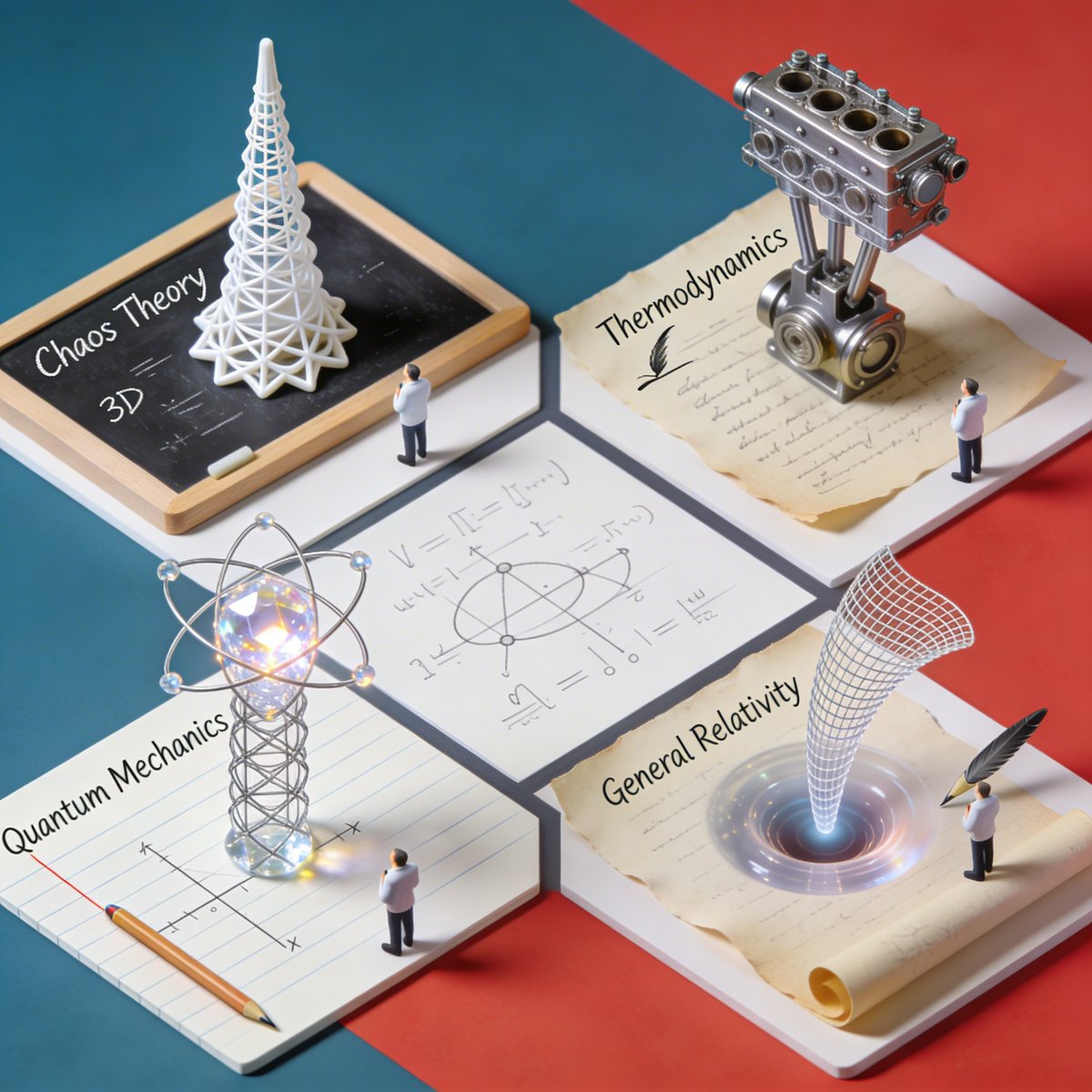
## Voorbeeldafbeeldingen

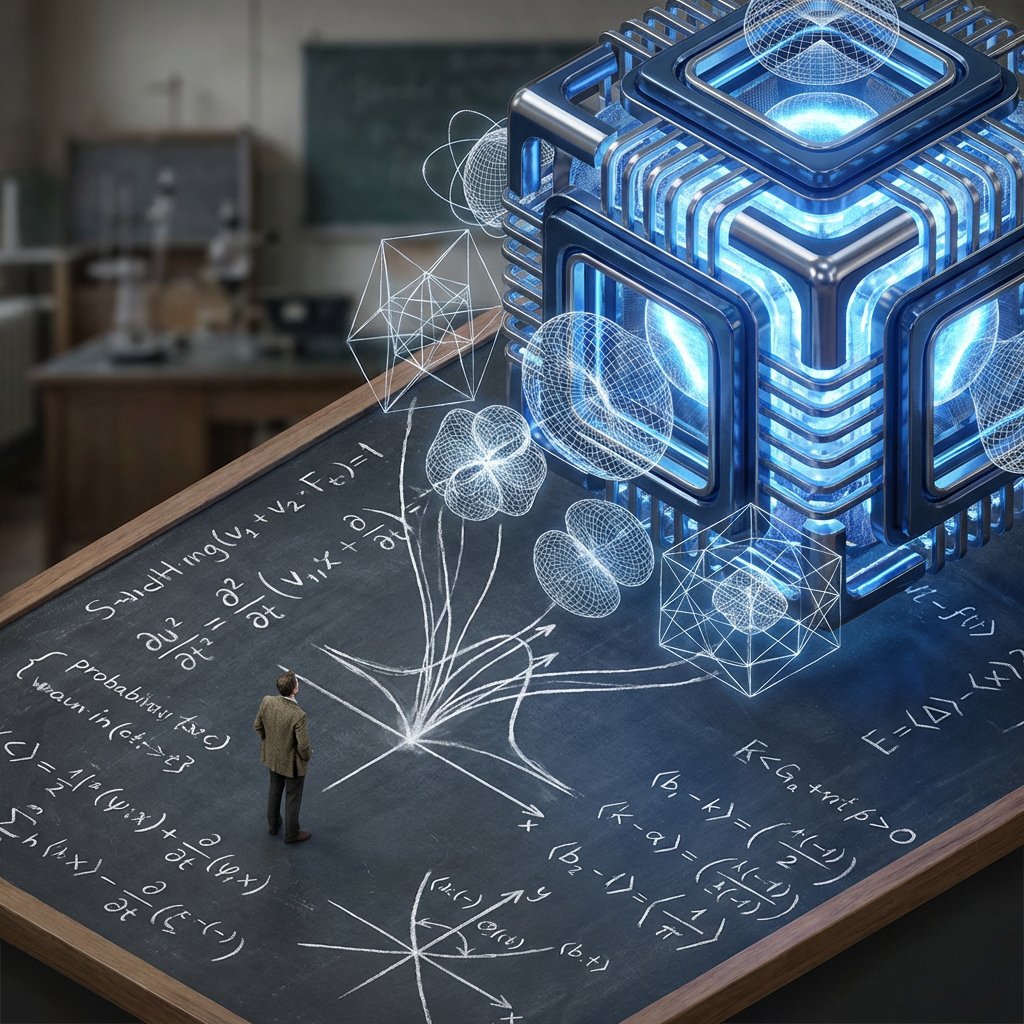
## Prompt
```text
2x2 grid, do this for 4 famous PHD level science or math topics
Input Variable: Theorem / Formula
Phase 1: Schematic Decomposition
Analyze the Notation: Identify the primary visual language of the scientist (Chalk on blackboard? Ink on parchment? Pencil on graph paper?).
Identify the "Structure": If this theory were a building, what would it look like?
Logic: Chaos Theory -> Fractal Spire. Thermodynamics -> Engine Block.
Phase 2: The Dimensional Transition
The Base: A flat surface covered in the [Notation Medium] (e.g., a slate blackboard covered in chalk equations).
The Extrusion: The chalk lines physically lift off the surface. They begin as white wireframes, then gain opacity, then gain texture.
The Climax: At the top of the image, the wireframes have fully solidified into a photorealistic, impossible structure representing the theory.
The Observer: A tiny, scale-model figure of the scientist stands on the flat "2D" section, looking up in awe at the massive "3D" structure they have summoned.
Output: High-Angle Isometric, "3D mod designer toy" style, stark contrast between sketchy lines and solid mass.
```
### Deze prompt genereren
| Model | Nano Banana pro |
|---|---|
| Geschatte kosten | $0.11 / aanroep |
| Endpoint | `/api/v1/nano_banana/text_to_image` |
[Log in om te genereren](https://runapi.ai/nl/login)
Je gegenereerde afbeelding verschijnt hier
## Promptanalyse
### Onderwerp
Nano Banana Pro Science Prompt Template
### Sfeer
art / Afbeelding
### Technisch
nano-banana-pro / Nano Banana / Text To Image / /api/v1/nano_banana/text_to_image
### Stijl
2x2-grid, blackboard, isometric, math, photorealistic, science, wireframes
## Modellen die deze prompt ondersteunen
| Modaliteit | Model | Prijs | Proberen |
|---|---|---|---|
| Afbeelding | Qwen 2/qwen-2-text-to-image | $0.04 / afbeelding | [Proberen](https://runapi.ai/nl/models/qwen-2/text-to-image.md) |
| Afbeelding | Qwen 3/qwen-3-pro-text-to-image | $0.04-$0.08 / afbeelding | [Proberen](https://runapi.ai/nl/models/qwen-3/pro-text-to-image.md) |
| Afbeelding | Qwen 3/qwen-3-text-to-image | $0.03 / afbeelding | [Proberen](https://runapi.ai/nl/models/qwen-3/text-to-image.md) |
| Afbeelding | Qwen Image/qwen-image-text-to-image | $0.03 / afbeelding | [Proberen](https://runapi.ai/nl/models/qwen-image/text-to-image.md) |
| Afbeelding | Wan/wan-2.7-image | $0.03 / afbeelding | [Proberen](https://runapi.ai/nl/models/wan/2.7-image.md) |
## RUNDETAILS
| Field | Value |
|---|---|
| Model | `nano-banana-pro` |
| Modality | Afbeelding |
| Category | art |
| Tags | 2x2-grid, blackboard, isometric, math, photorealistic, science, wireframes |
## Use with an agent
### Claude Code
1. claude mcp add runapi -s user -- npx -y @runapi.ai/mcp
2. Start Claude Code opnieuw op
3. Plak deze prompt: Genereer een afbeelding: "2x2 grid, do this for 4 famous PHD level science or math topics
Input Variable: Theorem / Formula
Phase 1: Schematic Decomposition
Analyze the Notation: Identify the primary visual language of the scientist (Chalk on blackboard? Ink on parchment? Pencil on graph paper?).
Identify the "Structure": If this theory were a building, what would it look like?
Logic: Chaos Theory -> Fractal Spire. Thermodynamics -> Engine Block.
Phase 2: The Dimensional Transition
The Base: A flat surface covered in the [Notation Medium] (e.g., a slate blackboard covered in chalk equations).
The Extrusion: The chalk lines physically lift off the surface. They begin as white wireframes, then gain opacity, then gain texture.
The Climax: At the top of the image, the wireframes have fully solidified into a photorealistic, impossible structure representing the theory.
The Observer: A tiny, scale-model figure of the scientist stands on the flat "2D" section, looking up in awe at the massive "3D" structure they have summoned.
Output: High-Angle Isometric, "3D mod designer toy" style, stark contrast between sketchy lines and solid mass.
"
### Codex
1. codex plugin install runapi-mcp@agents
2. Start Codex opnieuw op
3. Plak deze prompt: Genereer een afbeelding: "2x2 grid, do this for 4 famous PHD level science or math topics
Input Variable: Theorem / Formula
Phase 1: Schematic Decomposition
Analyze the Notation: Identify the primary visual language of the scientist (Chalk on blackboard? Ink on parchment? Pencil on graph paper?).
Identify the "Structure": If this theory were a building, what would it look like?
Logic: Chaos Theory -> Fractal Spire. Thermodynamics -> Engine Block.
Phase 2: The Dimensional Transition
The Base: A flat surface covered in the [Notation Medium] (e.g., a slate blackboard covered in chalk equations).
The Extrusion: The chalk lines physically lift off the surface. They begin as white wireframes, then gain opacity, then gain texture.
The Climax: At the top of the image, the wireframes have fully solidified into a photorealistic, impossible structure representing the theory.
The Observer: A tiny, scale-model figure of the scientist stands on the flat "2D" section, looking up in awe at the massive "3D" structure they have summoned.
Output: High-Angle Isometric, "3D mod designer toy" style, stark contrast between sketchy lines and solid mass.
"
### Cursor
1. npx @runapi.ai/mcp init cursor
2. Start Cursor opnieuw op
3. Plak deze prompt: Genereer een afbeelding: "2x2 grid, do this for 4 famous PHD level science or math topics
Input Variable: Theorem / Formula
Phase 1: Schematic Decomposition
Analyze the Notation: Identify the primary visual language of the scientist (Chalk on blackboard? Ink on parchment? Pencil on graph paper?).
Identify the "Structure": If this theory were a building, what would it look like?
Logic: Chaos Theory -> Fractal Spire. Thermodynamics -> Engine Block.
Phase 2: The Dimensional Transition
The Base: A flat surface covered in the [Notation Medium] (e.g., a slate blackboard covered in chalk equations).
The Extrusion: The chalk lines physically lift off the surface. They begin as white wireframes, then gain opacity, then gain texture.
The Climax: At the top of the image, the wireframes have fully solidified into a photorealistic, impossible structure representing the theory.
The Observer: A tiny, scale-model figure of the scientist stands on the flat "2D" section, looking up in awe at the massive "3D" structure they have summoned.
Output: High-Angle Isometric, "3D mod designer toy" style, stark contrast between sketchy lines and solid mass.
"
### Windsurf
1. npx @runapi.ai/mcp init windsurf
2. Start Windsurf opnieuw op
3. Plak deze prompt: Genereer een afbeelding: "2x2 grid, do this for 4 famous PHD level science or math topics
Input Variable: Theorem / Formula
Phase 1: Schematic Decomposition
Analyze the Notation: Identify the primary visual language of the scientist (Chalk on blackboard? Ink on parchment? Pencil on graph paper?).
Identify the "Structure": If this theory were a building, what would it look like?
Logic: Chaos Theory -> Fractal Spire. Thermodynamics -> Engine Block.
Phase 2: The Dimensional Transition
The Base: A flat surface covered in the [Notation Medium] (e.g., a slate blackboard covered in chalk equations).
The Extrusion: The chalk lines physically lift off the surface. They begin as white wireframes, then gain opacity, then gain texture.
The Climax: At the top of the image, the wireframes have fully solidified into a photorealistic, impossible structure representing the theory.
The Observer: A tiny, scale-model figure of the scientist stands on the flat "2D" section, looking up in awe at the massive "3D" structure they have summoned.
Output: High-Angle Isometric, "3D mod designer toy" style, stark contrast between sketchy lines and solid mass.
"
## Generate via API
### curl
```curl
curl -X POST https://runapi.ai/api/v1/nano_banana/text_to_image \
-H "Authorization: Bearer $RUNAPI_API_KEY" \
-H "Content-Type: application/json" \
--data-binary @- <<'JSON'
{
"model": "nano-banana-pro",
"prompt": "2x2 grid, do this for 4 famous PHD level science or math topics \n Input Variable: Theorem / Formula\nPhase 1: Schematic Decomposition\nAnalyze the Notation: Identify the primary visual language of the scientist (Chalk on blackboard? Ink on parchment? Pencil on graph paper?).\nIdentify the \"Structure\": If this theory were a building, what would it look like?\nLogic: Chaos Theory -> Fractal Spire. Thermodynamics -> Engine Block.\nPhase 2: The Dimensional Transition\nThe Base: A flat surface covered in the [Notation Medium] (e.g., a slate blackboard covered in chalk equations).\nThe Extrusion: The chalk lines physically lift off the surface. They begin as white wireframes, then gain opacity, then gain texture.\nThe Climax: At the top of the image, the wireframes have fully solidified into a photorealistic, impossible structure representing the theory.\nThe Observer: A tiny, scale-model figure of the scientist stands on the flat \"2D\" section, looking up in awe at the massive \"3D\" structure they have summoned.\nOutput: High-Angle Isometric, \"3D mod designer toy\" style, stark contrast between sketchy lines and solid mass.\n"
}
JSON
```
### Node.js
```javascript
import { NanoBananaClient } from "@runapi.ai/nano-banana";
const client = new NanoBananaClient({
apiKey: process.env.RUNAPI_API_KEY,
});
const result = await client.textToImage.run({
"model": "nano-banana-pro",
"prompt": "2x2 grid, do this for 4 famous PHD level science or math topics \n Input Variable: Theorem / Formula\nPhase 1: Schematic Decomposition\nAnalyze the Notation: Identify the primary visual language of the scientist (Chalk on blackboard? Ink on parchment? Pencil on graph paper?).\nIdentify the \"Structure\": If this theory were a building, what would it look like?\nLogic: Chaos Theory -> Fractal Spire. Thermodynamics -> Engine Block.\nPhase 2: The Dimensional Transition\nThe Base: A flat surface covered in the [Notation Medium] (e.g., a slate blackboard covered in chalk equations).\nThe Extrusion: The chalk lines physically lift off the surface. They begin as white wireframes, then gain opacity, then gain texture.\nThe Climax: At the top of the image, the wireframes have fully solidified into a photorealistic, impossible structure representing the theory.\nThe Observer: A tiny, scale-model figure of the scientist stands on the flat \"2D\" section, looking up in awe at the massive \"3D\" structure they have summoned.\nOutput: High-Angle Isometric, \"3D mod designer toy\" style, stark contrast between sketchy lines and solid mass.\n"
});
console.log(result.id);
```
### Python
```python
import json
import os
import requests
response = requests.post(
"https://runapi.ai/api/v1/nano_banana/text_to_image",
headers={"Authorization": f"Bearer {os.environ['RUNAPI_API_KEY']}"},
json=json.loads("{\n \"model\": \"nano-banana-pro\",\n \"prompt\": \"2x2 grid, do this for 4 famous PHD level science or math topics \u003cinstructions\u003e\\n Input Variable: Theorem / Formula\\nPhase 1: Schematic Decomposition\\nAnalyze the Notation: Identify the primary visual language of the scientist (Chalk on blackboard? Ink on parchment? Pencil on graph paper?).\\nIdentify the \\\"Structure\\\": If this theory were a building, what would it look like?\\nLogic: Chaos Theory -\u003e Fractal Spire. Thermodynamics -\u003e Engine Block.\\nPhase 2: The Dimensional Transition\\nThe Base: A flat surface covered in the [Notation Medium] (e.g., a slate blackboard covered in chalk equations).\\nThe Extrusion: The chalk lines physically lift off the surface. They begin as white wireframes, then gain opacity, then gain texture.\\nThe Climax: At the top of the image, the wireframes have fully solidified into a photorealistic, impossible structure representing the theory.\\nThe Observer: A tiny, scale-model figure of the scientist stands on the flat \\\"2D\\\" section, looking up in awe at the massive \\\"3D\\\" structure they have summoned.\\nOutput: High-Angle Isometric, \\\"3D mod designer toy\\\" style, stark contrast between sketchy lines and solid mass.\\n\u003c/instructions\u003e\"\n}")
)
response.raise_for_status()
print(response.json()["id"])
```
### PHP
```php
true,
CURLOPT_HTTPHEADER => [
"Authorization: Bearer " . getenv("RUNAPI_API_KEY"),
"Content-Type: application/json",
],
CURLOPT_POSTFIELDS => "{\n \"model\": \"nano-banana-pro\",\n \"prompt\": \"2x2 grid, do this for 4 famous PHD level science or math topics \u003cinstructions\u003e\\n Input Variable: Theorem / Formula\\nPhase 1: Schematic Decomposition\\nAnalyze the Notation: Identify the primary visual language of the scientist (Chalk on blackboard? Ink on parchment? Pencil on graph paper?).\\nIdentify the \\\"Structure\\\": If this theory were a building, what would it look like?\\nLogic: Chaos Theory -\u003e Fractal Spire. Thermodynamics -\u003e Engine Block.\\nPhase 2: The Dimensional Transition\\nThe Base: A flat surface covered in the [Notation Medium] (e.g., a slate blackboard covered in chalk equations).\\nThe Extrusion: The chalk lines physically lift off the surface. They begin as white wireframes, then gain opacity, then gain texture.\\nThe Climax: At the top of the image, the wireframes have fully solidified into a photorealistic, impossible structure representing the theory.\\nThe Observer: A tiny, scale-model figure of the scientist stands on the flat \\\"2D\\\" section, looking up in awe at the massive \\\"3D\\\" structure they have summoned.\\nOutput: High-Angle Isometric, \\\"3D mod designer toy\\\" style, stark contrast between sketchy lines and solid mass.\\n\u003c/instructions\u003e\"\n}",
CURLOPT_RETURNTRANSFER => true,
]);
$response = json_decode(curl_exec($ch), true);
curl_close($ch);
echo $response["id"] . PHP_EOL;
```
### Java
```java
import java.net.URI;
import java.net.http.HttpClient;
import java.net.http.HttpRequest;
import java.net.http.HttpResponse;
var request = HttpRequest.newBuilder(URI.create("https://runapi.ai/api/v1/nano_banana/text_to_image"))
.header("Authorization", "Bearer " + System.getenv("RUNAPI_API_KEY"))
.header("Content-Type", "application/json")
.POST(HttpRequest.BodyPublishers.ofString("{\n \"model\": \"nano-banana-pro\",\n \"prompt\": \"2x2 grid, do this for 4 famous PHD level science or math topics \u003cinstructions\u003e\\n Input Variable: Theorem / Formula\\nPhase 1: Schematic Decomposition\\nAnalyze the Notation: Identify the primary visual language of the scientist (Chalk on blackboard? Ink on parchment? Pencil on graph paper?).\\nIdentify the \\\"Structure\\\": If this theory were a building, what would it look like?\\nLogic: Chaos Theory -\u003e Fractal Spire. Thermodynamics -\u003e Engine Block.\\nPhase 2: The Dimensional Transition\\nThe Base: A flat surface covered in the [Notation Medium] (e.g., a slate blackboard covered in chalk equations).\\nThe Extrusion: The chalk lines physically lift off the surface. They begin as white wireframes, then gain opacity, then gain texture.\\nThe Climax: At the top of the image, the wireframes have fully solidified into a photorealistic, impossible structure representing the theory.\\nThe Observer: A tiny, scale-model figure of the scientist stands on the flat \\\"2D\\\" section, looking up in awe at the massive \\\"3D\\\" structure they have summoned.\\nOutput: High-Angle Isometric, \\\"3D mod designer toy\\\" style, stark contrast between sketchy lines and solid mass.\\n\u003c/instructions\u003e\"\n}"))
.build();
var response = HttpClient.newHttpClient().send(request, HttpResponse.BodyHandlers.ofString());
System.out.println(response.body());
```
### Ruby
```ruby
require "json"
require "net/http"
uri = URI("https://runapi.ai/api/v1/nano_banana/text_to_image")
request = Net::HTTP::Post.new(uri)
request["Authorization"] = "Bearer " + ENV.fetch("RUNAPI_API_KEY")
request["Content-Type"] = "application/json"
request.body = "{\n \"model\": \"nano-banana-pro\",\n \"prompt\": \"2x2 grid, do this for 4 famous PHD level science or math topics \u003cinstructions\u003e\\n Input Variable: Theorem / Formula\\nPhase 1: Schematic Decomposition\\nAnalyze the Notation: Identify the primary visual language of the scientist (Chalk on blackboard? Ink on parchment? Pencil on graph paper?).\\nIdentify the \\\"Structure\\\": If this theory were a building, what would it look like?\\nLogic: Chaos Theory -\u003e Fractal Spire. Thermodynamics -\u003e Engine Block.\\nPhase 2: The Dimensional Transition\\nThe Base: A flat surface covered in the [Notation Medium] (e.g., a slate blackboard covered in chalk equations).\\nThe Extrusion: The chalk lines physically lift off the surface. They begin as white wireframes, then gain opacity, then gain texture.\\nThe Climax: At the top of the image, the wireframes have fully solidified into a photorealistic, impossible structure representing the theory.\\nThe Observer: A tiny, scale-model figure of the scientist stands on the flat \\\"2D\\\" section, looking up in awe at the massive \\\"3D\\\" structure they have summoned.\\nOutput: High-Angle Isometric, \\\"3D mod designer toy\\\" style, stark contrast between sketchy lines and solid mass.\\n\u003c/instructions\u003e\"\n}"
response = Net::HTTP.start(uri.hostname, uri.port, use_ssl: true) { |http| http.request(request) }
puts JSON.parse(response.body).fetch("id")
```
### Go
```go
package main
import (
"context"
"fmt"
"log"
"net/http"
"os"
"strings"
)
func main() {
body := strings.NewReader("{\"model\":\"nano-banana-pro\",\"prompt\":\"2x2 grid, do this for 4 famous PHD level science or math topics \\n Input Variable: Theorem / Formula\\nPhase 1: Schematic Decomposition\\nAnalyze the Notation: Identify the primary visual language of the scientist (Chalk on blackboard? Ink on parchment? Pencil on graph paper?).\\nIdentify the \\\"Structure\\\": If this theory were a building, what would it look like?\\nLogic: Chaos Theory -> Fractal Spire. Thermodynamics -> Engine Block.\\nPhase 2: The Dimensional Transition\\nThe Base: A flat surface covered in the [Notation Medium] (e.g., a slate blackboard covered in chalk equations).\\nThe Extrusion: The chalk lines physically lift off the surface. They begin as white wireframes, then gain opacity, then gain texture.\\nThe Climax: At the top of the image, the wireframes have fully solidified into a photorealistic, impossible structure representing the theory.\\nThe Observer: A tiny, scale-model figure of the scientist stands on the flat \\\"2D\\\" section, looking up in awe at the massive \\\"3D\\\" structure they have summoned.\\nOutput: High-Angle Isometric, \\\"3D mod designer toy\\\" style, stark contrast between sketchy lines and solid mass.\\n\"}")
req, err := http.NewRequestWithContext(context.Background(), http.MethodPost, "https://runapi.ai/api/v1/nano_banana/text_to_image", body)
if err != nil {
log.Fatal(err)
}
req.Header.Set("Authorization", "Bearer "+os.Getenv("RUNAPI_API_KEY"))
req.Header.Set("Content-Type", "application/json")
resp, err := http.DefaultClient.Do(req)
if err != nil {
log.Fatal(err)
}
defer resp.Body.Close()
fmt.Println(resp.Status)
}
```
### CLI
```cli
$ runapi generate \
--model nano-banana-pro \
--prompt "2x2 grid, do this for 4 famous PHD level science or math topics \n Input Variable: Theorem / Formula\nPhase 1: Schematic Decomposition\nAnalyze the Notation: Identify the primary visual language of the scientist (Chalk on blackboard? Ink on parchment? Pencil on graph paper?).\nIdentify the \"Structure\": If this theory were a building, what would it look like?\nLogic: Chaos Theory -> Fractal Spire. Thermodynamics -> Engine Block.\nPhase 2: The Dimensional Transition\nThe Base: A flat surface covered in the [Notation Medium] (e.g., a slate blackboard covered in chalk equations).\nThe Extrusion: The chalk lines physically lift off the surface. They begin as white wireframes, then gain opacity, then gain texture.\nThe Climax: At the top of the image, the wireframes have fully solidified into a photorealistic, impossible structure representing the theory.\nThe Observer: A tiny, scale-model figure of the scientist stands on the flat \"2D\" section, looking up in awe at the massive \"3D\" structure they have summoned.\nOutput: High-Angle Isometric, \"3D mod designer toy\" style, stark contrast between sketchy lines and solid mass.\n" \
--wait
```
## Meer prompts zoals deze
- [Realistic Group Selfie with Smartphone Flash Effect](https://runapi.ai/nl/prompts/realistic-new-year-s-eve-group-selfie-78vEn0.md) — `nano-banana-pro`
- [Exploded-View Structural Cutaway for Food Photography](https://runapi.ai/nl/prompts/exploded-view-ingredient-cutaway-diagram-Jq6qv0.md) — `nano-banana-pro`
- [Four Seasons Portrait Collage](https://runapi.ai/nl/prompts/south-asian-seasonal-portrait-collage-0ge9j7.md) — `nano-banana-pro`
## Deze nano-banana-pro prompt gebruiken
### Hoe kopieer ik deze prompt veilig?
Gebruik de copyknop naast het volledige promptblok. Daarmee kopieer je alleen de prompttekst, niet de labels van de pagina eromheen, zodat je die kunt plakken in een agentinstructie, een JSON request body of je eigen promptbibliotheek.
### Waarom toont de detailpagina parameters?
Sommige prompts zijn verzameld met opgeslagen generation settings zoals aspect ratio, duration of voice controls. Als parameters bestaan, toont de pagina die apart, zodat je de prompttekst en de gestructureerde instellingen samen kunt hergebruiken.
### Welke endpoint moet ik aanroepen?
Gebruik het endpointpad dat in het API-codeblok staat. Het pad wordt gegenereerd op basis van de RunAPI service en endpointnaam van de prompt, en vervolgens weergegeven als de publieke API-URL die door curl- en SDK-voorbeelden wordt gebruikt.
### Kan ik deze prompt in een agent gebruiken in plaats van code?
Ja. Kies Claude Code, Codex, Cursor of Windsurf in de tab-switcher, installeer de RunAPI MCP Server en plak de gegenereerde instructie. De instructie bevat de volledige prompttekst.
## Bouw je met een team?
We helpen je met enterprise-inrichting, integraties en technische vragen.
[Neem contact op](https://runapi.ai/nl/contact.md)
---
## More from RunAPI
- [Home](https://runapi.ai/nl/.md)
### Product
- [Modelcatalogus](https://runapi.ai/nl/models.md)
- [Prijzen](https://runapi.ai/nl/pricing.md)
- [Providers](https://runapi.ai/nl/models#all-models)
- [Promptgalerij](https://runapi.ai/nl/prompts.md)
### Ontwikkelaars
- [Documentatie](https://runapi.ai/nl/docs/guides)
- [SDK's](https://runapi.ai/nl/sdk.md)
- [CLI](https://runapi.ai/nl/cli.md)
- [MCP Server](https://runapi.ai/nl/mcp.md)
- [x402](https://runapi.ai/nl/x402.md)
### Gidsen
- [Claude Code vs Cursor](https://runapi.ai/nl/claude-code-vs-cursor.md)
- [Cursor API instellen](https://runapi.ai/nl/cursor-api-setup.md)
- [RunAPI vs OpenRouter](https://runapi.ai/nl/openrouter-alternative.md)
### Bedrijf
- [Enterprise](https://runapi.ai/nl/contact.md)
- [Contact](https://runapi.ai/nl/contact.md)
### Juridisch
- [Voorwaarden](https://runapi.ai/nl/terms.md)
- [Privacy](https://runapi.ai/nl/privacy.md)
- [Site index for agents](https://runapi.ai/llms.txt)
Contact: contact@runapi.ai
## Structured data
```json
[
{
"@context": "https://schema.org",
"inLanguage": "nl",
"@type": "WebSite",
"name": "RunAPI",
"url": "https://runapi.ai/nl",
"potentialAction": {
"@type": "SearchAction",
"target": {
"@type": "EntryPoint",
"urlTemplate": "https://runapi.ai/nl/models?q={search_term_string}"
},
"query-input": "required name=search_term_string"
}
},
{
"@context": "https://schema.org",
"inLanguage": "nl",
"@type": "Organization",
"name": "RunAPI",
"url": "https://runapi.ai/nl",
"logo": {
"@type": "ImageObject",
"url": "https://runapi.ai/nlicon.svg"
},
"sameAs": [
"https://github.com/runapi-ai"
]
},
{
"@context": "https://schema.org",
"inLanguage": "nl",
"@type": "BreadcrumbList",
"itemListElement": [
{
"@type": "ListItem",
"position": 1,
"name": "Home",
"item": "https://runapi.ai/nl"
},
{
"@type": "ListItem",
"position": 2,
"name": "Prompts",
"item": "https://runapi.ai/nl/prompts"
},
{
"@type": "ListItem",
"position": 3,
"name": "Afbeelding",
"item": "https://runapi.ai/nl/prompts/image"
},
{
"@type": "ListItem",
"position": 4,
"name": "Nano Banana Pro Science Prompt Template",
"item": "https://runapi.ai/prompts/2x2-scientific-theory-structures-in-3d-mod-designer-toy-73YLq0"
}
]
},
{
"@context": "https://schema.org",
"inLanguage": "nl",
"@type": "FAQPage",
"mainEntity": [
{
"@type": "Question",
"name": "Hoe kopieer ik deze prompt veilig?",
"acceptedAnswer": {
"@type": "Answer",
"text": "Gebruik de copyknop naast het volledige promptblok. Daarmee kopieer je alleen de prompttekst, niet de labels van de pagina eromheen, zodat je die kunt plakken in een agentinstructie, een JSON request body of je eigen promptbibliotheek."
}
},
{
"@type": "Question",
"name": "Waarom toont de detailpagina parameters?",
"acceptedAnswer": {
"@type": "Answer",
"text": "Sommige prompts zijn verzameld met opgeslagen generation settings zoals aspect ratio, duration of voice controls. Als parameters bestaan, toont de pagina die apart, zodat je de prompttekst en de gestructureerde instellingen samen kunt hergebruiken."
}
},
{
"@type": "Question",
"name": "Welke endpoint moet ik aanroepen?",
"acceptedAnswer": {
"@type": "Answer",
"text": "Gebruik het endpointpad dat in het API-codeblok staat. Het pad wordt gegenereerd op basis van de RunAPI service en endpointnaam van de prompt, en vervolgens weergegeven als de publieke API-URL die door curl- en SDK-voorbeelden wordt gebruikt."
}
},
{
"@type": "Question",
"name": "Kan ik deze prompt in een agent gebruiken in plaats van code?",
"acceptedAnswer": {
"@type": "Answer",
"text": "Ja. Kies Claude Code, Codex, Cursor of Windsurf in de tab-switcher, installeer de RunAPI MCP Server en plak de gegenereerde instructie. De instructie bevat de volledige prompttekst."
}
}
]
},
{
"@context": "https://schema.org",
"inLanguage": "en",
"@type": "CreativeWork",
"name": "Nano Banana Pro Science Prompt Template",
"text": "2x2 grid, do this for 4 famous PHD level science or math topics \n Input Variable: Theorem / Formula\nPhase 1: Schematic Decomposition\nAnalyze the Notation: Identify the primary visual language of the scientist (Chalk on blackboard? Ink on parchment? Pencil on graph paper?).\nIdentify the \"Structure\": If this theory were a building, what would it look like?\nLogic: Chaos Theory -> Fractal Spire. Thermodynamics -> Engine Block.\nPhase 2: The Dimensional Transition\nThe Base: A flat surface covered in the [Notation Medium] (e.g., a slate blackboard covered in chalk equations).\nThe Extrusion: The chalk lines physically lift off the surface. They begin as white wireframes, then gain opacity, then gain texture.\nThe Climax: At the top of the image, the wireframes have fully solidified into a photorealistic, impossible structure representing the theory.\nThe Observer: A tiny, scale-model figure of the scientist stands on the flat \"2D\" section, looking up in awe at the massive \"3D\" structure they have summoned.\nOutput: High-Angle Isometric, \"3D mod designer toy\" style, stark contrast between sketchy lines and solid mass.\n",
"image": "https://cdn.runapi.ai/public/prompts/previews/0ea5ef71e1a26448d5b463a1327315a5cfb6e09c3fb6c4e5e56f7601cd4e9f53-runapi-ai.jpg",
"about": [
"image",
"nano-banana-pro",
"art"
]
}
]
```