---
title: nano-banana-pro용 Nano Banana Pro Science Prompt Template 프롬프트 | RunAPI
description: nano-banana-pro의 RunAPI 프롬프트를 복사하고, 에이전트 설정 단계를 확인하고, API 코드를 사용하세요.
url: https://runapi.ai/ko/prompts/2x2-scientific-theory-structures-in-3d-mod-designer-toy-73YLq0.md
canonical: https://runapi.ai/prompts/2x2-scientific-theory-structures-in-3d-mod-designer-toy-73YLq0
locale: ko
site: RunAPI
image: https://runapi.ai/assets/opengraph-bfaaa0f0.png
prompt_id: 35887
model: nano-banana-pro
modality: image
endpoint: "/api/v1/nano_banana/text_to_image"
---
> HTML version: https://runapi.ai/ko/prompts/2x2-scientific-theory-structures-in-3d-mod-designer-toy-73YLq0
> Site index for agents: https://runapi.ai/llms.txt
# Nano Banana Pro Science Prompt Template
nano-banana-pro의 RunAPI 프롬프트를 복사하고, 에이전트 설정 단계를 확인하고, API 코드를 사용하세요.
**프롬프트** · 이미지
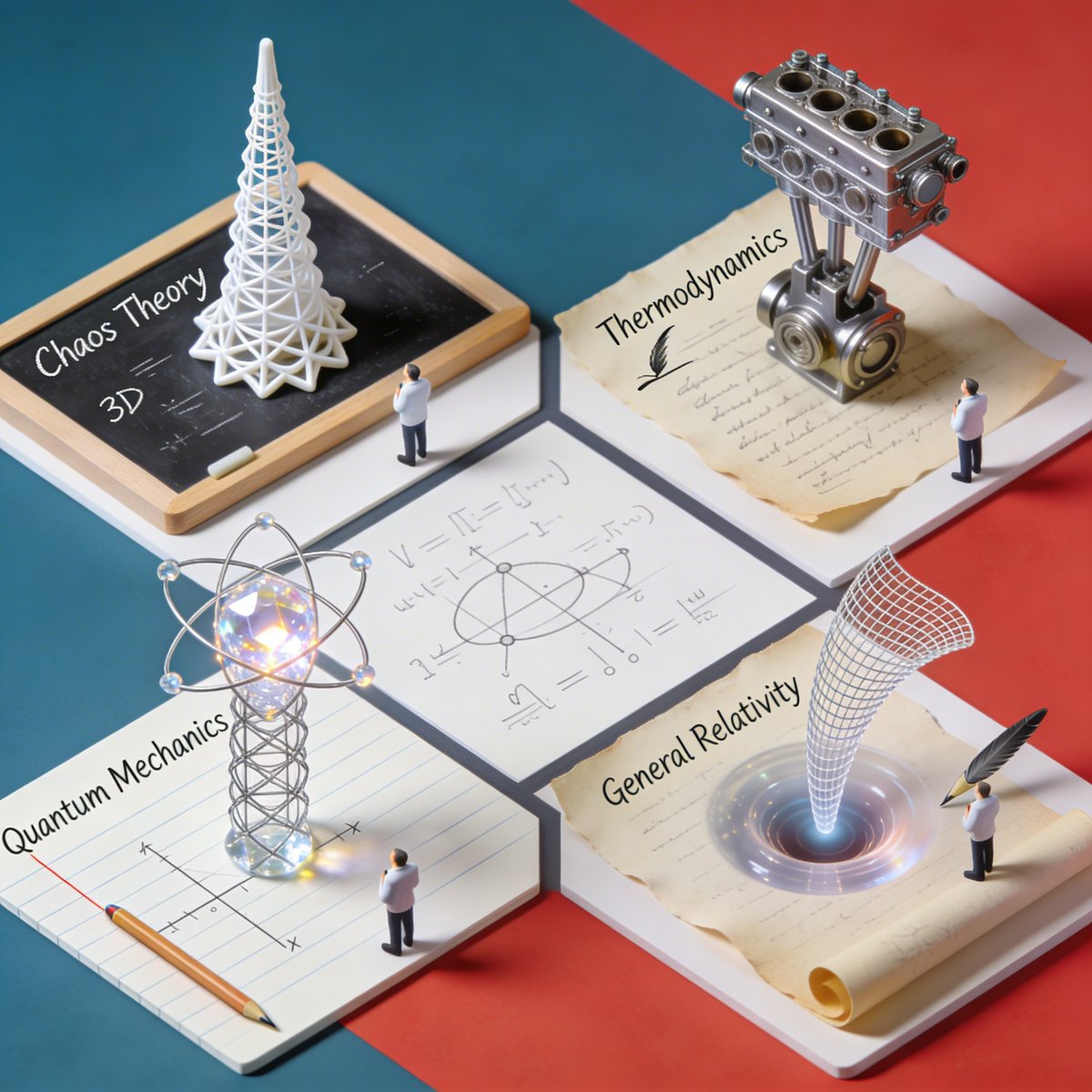
## 예시 이미지

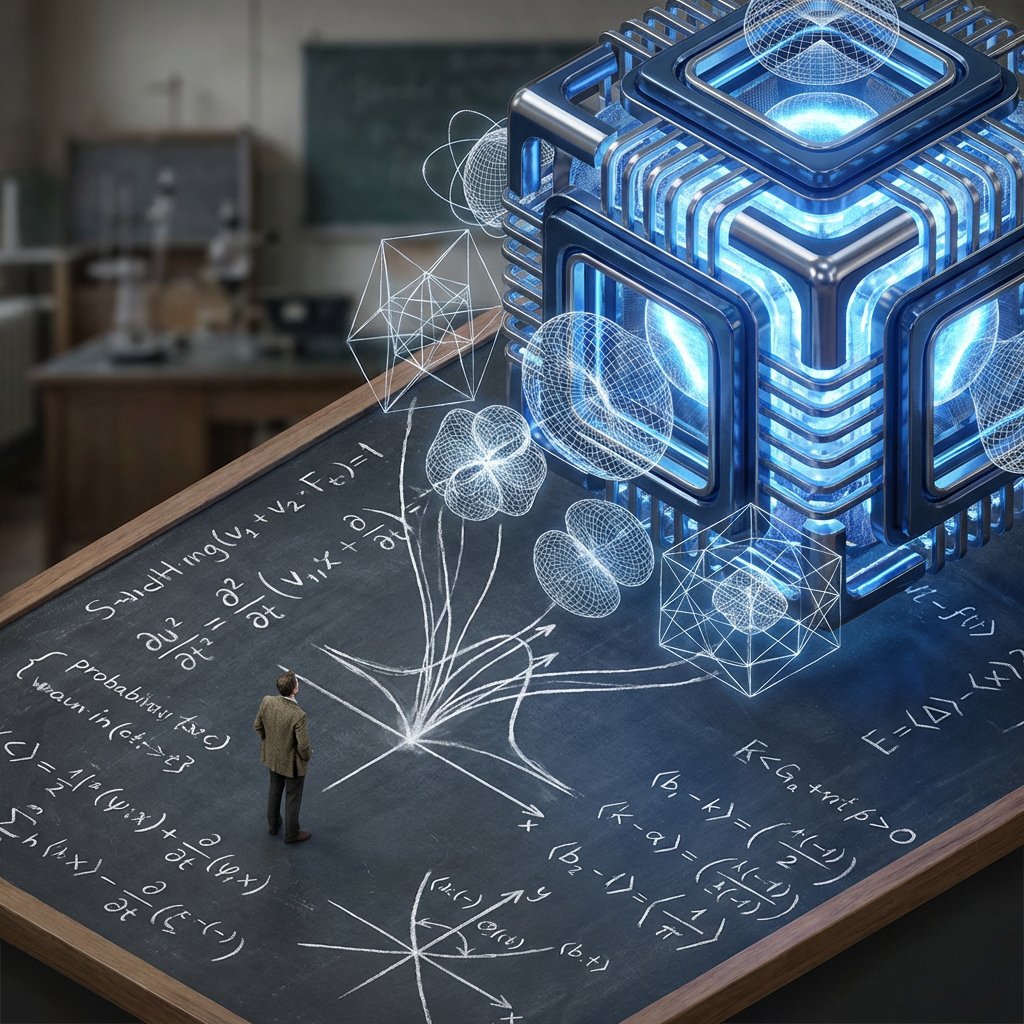
## 프롬프트
```text
2x2 grid, do this for 4 famous PHD level science or math topics
Input Variable: Theorem / Formula
Phase 1: Schematic Decomposition
Analyze the Notation: Identify the primary visual language of the scientist (Chalk on blackboard? Ink on parchment? Pencil on graph paper?).
Identify the "Structure": If this theory were a building, what would it look like?
Logic: Chaos Theory -> Fractal Spire. Thermodynamics -> Engine Block.
Phase 2: The Dimensional Transition
The Base: A flat surface covered in the [Notation Medium] (e.g., a slate blackboard covered in chalk equations).
The Extrusion: The chalk lines physically lift off the surface. They begin as white wireframes, then gain opacity, then gain texture.
The Climax: At the top of the image, the wireframes have fully solidified into a photorealistic, impossible structure representing the theory.
The Observer: A tiny, scale-model figure of the scientist stands on the flat "2D" section, looking up in awe at the massive "3D" structure they have summoned.
Output: High-Angle Isometric, "3D mod designer toy" style, stark contrast between sketchy lines and solid mass.
```
### 이 프롬프트 생성
| 모델 | Nano Banana pro |
|---|---|
| 예상 비용 | $0.11 / 회 |
| 엔드포인트 | `/api/v1/nano_banana/text_to_image` |
[로그인하여 생성](https://runapi.ai/ko/login)
생성된 이미지가 여기에 표시됩니다
## 프롬프트 분석
### 주제
Nano Banana Pro Science Prompt Template
### 분위기
art / 이미지
### 기술적 설정
nano-banana-pro / Nano Banana / Text To Image / /api/v1/nano_banana/text_to_image
### 스타일
2x2-grid, blackboard, isometric, math, photorealistic, science, wireframes
## 이 프롬프트를 지원하는 모델
| 모달리티 | 모델 | 가격 | 사용해 보기 |
|---|---|---|---|
| 이미지 | Qwen 2/qwen-2-text-to-image | $0.04 / 이미지 | [사용해 보기](https://runapi.ai/ko/models/qwen-2/text-to-image.md) |
| 이미지 | Qwen 3/qwen-3-pro-text-to-image | $0.04-$0.08 / 이미지 | [사용해 보기](https://runapi.ai/ko/models/qwen-3/pro-text-to-image.md) |
| 이미지 | Qwen 3/qwen-3-text-to-image | $0.03 / 이미지 | [사용해 보기](https://runapi.ai/ko/models/qwen-3/text-to-image.md) |
| 이미지 | Qwen Image/qwen-image-text-to-image | $0.03 / 이미지 | [사용해 보기](https://runapi.ai/ko/models/qwen-image/text-to-image.md) |
| 이미지 | Wan/wan-2.7-image | $0.03 / 이미지 | [사용해 보기](https://runapi.ai/ko/models/wan/2.7-image.md) |
## DETAILS
| Field | Value |
|---|---|
| 모델 | `nano-banana-pro` |
| Modality | 이미지 |
| Category | art |
| Tags | 2x2-grid, blackboard, isometric, math, photorealistic, science, wireframes |
## Use with an agent
### Claude
1. claude mcp add runapi -s user -- npx -y @runapi.ai/mcp
2. Claude Code 재시작
3. 이 프롬프트를 붙여넣으세요: 이미지 생성: "2x2 grid, do this for 4 famous PHD level science or math topics
Input Variable: Theorem / Formula
Phase 1: Schematic Decomposition
Analyze the Notation: Identify the primary visual language of the scientist (Chalk on blackboard? Ink on parchment? Pencil on graph paper?).
Identify the "Structure": If this theory were a building, what would it look like?
Logic: Chaos Theory -> Fractal Spire. Thermodynamics -> Engine Block.
Phase 2: The Dimensional Transition
The Base: A flat surface covered in the [Notation Medium] (e.g., a slate blackboard covered in chalk equations).
The Extrusion: The chalk lines physically lift off the surface. They begin as white wireframes, then gain opacity, then gain texture.
The Climax: At the top of the image, the wireframes have fully solidified into a photorealistic, impossible structure representing the theory.
The Observer: A tiny, scale-model figure of the scientist stands on the flat "2D" section, looking up in awe at the massive "3D" structure they have summoned.
Output: High-Angle Isometric, "3D mod designer toy" style, stark contrast between sketchy lines and solid mass.
"
### Codex
1. codex plugin install runapi-mcp@agents
2. Codex 재시작
3. 이 프롬프트를 붙여넣으세요: 이미지 생성: "2x2 grid, do this for 4 famous PHD level science or math topics
Input Variable: Theorem / Formula
Phase 1: Schematic Decomposition
Analyze the Notation: Identify the primary visual language of the scientist (Chalk on blackboard? Ink on parchment? Pencil on graph paper?).
Identify the "Structure": If this theory were a building, what would it look like?
Logic: Chaos Theory -> Fractal Spire. Thermodynamics -> Engine Block.
Phase 2: The Dimensional Transition
The Base: A flat surface covered in the [Notation Medium] (e.g., a slate blackboard covered in chalk equations).
The Extrusion: The chalk lines physically lift off the surface. They begin as white wireframes, then gain opacity, then gain texture.
The Climax: At the top of the image, the wireframes have fully solidified into a photorealistic, impossible structure representing the theory.
The Observer: A tiny, scale-model figure of the scientist stands on the flat "2D" section, looking up in awe at the massive "3D" structure they have summoned.
Output: High-Angle Isometric, "3D mod designer toy" style, stark contrast between sketchy lines and solid mass.
"
### Cursor
1. npx @runapi.ai/mcp init cursor
2. Cursor 재시작
3. 이 프롬프트를 붙여넣으세요: 이미지 생성: "2x2 grid, do this for 4 famous PHD level science or math topics
Input Variable: Theorem / Formula
Phase 1: Schematic Decomposition
Analyze the Notation: Identify the primary visual language of the scientist (Chalk on blackboard? Ink on parchment? Pencil on graph paper?).
Identify the "Structure": If this theory were a building, what would it look like?
Logic: Chaos Theory -> Fractal Spire. Thermodynamics -> Engine Block.
Phase 2: The Dimensional Transition
The Base: A flat surface covered in the [Notation Medium] (e.g., a slate blackboard covered in chalk equations).
The Extrusion: The chalk lines physically lift off the surface. They begin as white wireframes, then gain opacity, then gain texture.
The Climax: At the top of the image, the wireframes have fully solidified into a photorealistic, impossible structure representing the theory.
The Observer: A tiny, scale-model figure of the scientist stands on the flat "2D" section, looking up in awe at the massive "3D" structure they have summoned.
Output: High-Angle Isometric, "3D mod designer toy" style, stark contrast between sketchy lines and solid mass.
"
### Windsurf
1. npx @runapi.ai/mcp init windsurf
2. Windsurf 재시작
3. 이 프롬프트를 붙여넣으세요: 이미지 생성: "2x2 grid, do this for 4 famous PHD level science or math topics
Input Variable: Theorem / Formula
Phase 1: Schematic Decomposition
Analyze the Notation: Identify the primary visual language of the scientist (Chalk on blackboard? Ink on parchment? Pencil on graph paper?).
Identify the "Structure": If this theory were a building, what would it look like?
Logic: Chaos Theory -> Fractal Spire. Thermodynamics -> Engine Block.
Phase 2: The Dimensional Transition
The Base: A flat surface covered in the [Notation Medium] (e.g., a slate blackboard covered in chalk equations).
The Extrusion: The chalk lines physically lift off the surface. They begin as white wireframes, then gain opacity, then gain texture.
The Climax: At the top of the image, the wireframes have fully solidified into a photorealistic, impossible structure representing the theory.
The Observer: A tiny, scale-model figure of the scientist stands on the flat "2D" section, looking up in awe at the massive "3D" structure they have summoned.
Output: High-Angle Isometric, "3D mod designer toy" style, stark contrast between sketchy lines and solid mass.
"
## Generate via API
### curl
```curl
curl -X POST https://runapi.ai/api/v1/nano_banana/text_to_image \
-H "Authorization: Bearer $RUNAPI_API_KEY" \
-H "Content-Type: application/json" \
--data-binary @- <<'JSON'
{
"model": "nano-banana-pro",
"prompt": "2x2 grid, do this for 4 famous PHD level science or math topics \n Input Variable: Theorem / Formula\nPhase 1: Schematic Decomposition\nAnalyze the Notation: Identify the primary visual language of the scientist (Chalk on blackboard? Ink on parchment? Pencil on graph paper?).\nIdentify the \"Structure\": If this theory were a building, what would it look like?\nLogic: Chaos Theory -> Fractal Spire. Thermodynamics -> Engine Block.\nPhase 2: The Dimensional Transition\nThe Base: A flat surface covered in the [Notation Medium] (e.g., a slate blackboard covered in chalk equations).\nThe Extrusion: The chalk lines physically lift off the surface. They begin as white wireframes, then gain opacity, then gain texture.\nThe Climax: At the top of the image, the wireframes have fully solidified into a photorealistic, impossible structure representing the theory.\nThe Observer: A tiny, scale-model figure of the scientist stands on the flat \"2D\" section, looking up in awe at the massive \"3D\" structure they have summoned.\nOutput: High-Angle Isometric, \"3D mod designer toy\" style, stark contrast between sketchy lines and solid mass.\n"
}
JSON
```
### Node.js
```javascript
import { NanoBananaClient } from "@runapi.ai/nano-banana";
const client = new NanoBananaClient({
apiKey: process.env.RUNAPI_API_KEY,
});
const result = await client.textToImage.run({
"model": "nano-banana-pro",
"prompt": "2x2 grid, do this for 4 famous PHD level science or math topics \n Input Variable: Theorem / Formula\nPhase 1: Schematic Decomposition\nAnalyze the Notation: Identify the primary visual language of the scientist (Chalk on blackboard? Ink on parchment? Pencil on graph paper?).\nIdentify the \"Structure\": If this theory were a building, what would it look like?\nLogic: Chaos Theory -> Fractal Spire. Thermodynamics -> Engine Block.\nPhase 2: The Dimensional Transition\nThe Base: A flat surface covered in the [Notation Medium] (e.g., a slate blackboard covered in chalk equations).\nThe Extrusion: The chalk lines physically lift off the surface. They begin as white wireframes, then gain opacity, then gain texture.\nThe Climax: At the top of the image, the wireframes have fully solidified into a photorealistic, impossible structure representing the theory.\nThe Observer: A tiny, scale-model figure of the scientist stands on the flat \"2D\" section, looking up in awe at the massive \"3D\" structure they have summoned.\nOutput: High-Angle Isometric, \"3D mod designer toy\" style, stark contrast between sketchy lines and solid mass.\n"
});
console.log(result.id);
```
### Python
```python
import json
import os
import requests
response = requests.post(
"https://runapi.ai/api/v1/nano_banana/text_to_image",
headers={"Authorization": f"Bearer {os.environ['RUNAPI_API_KEY']}"},
json=json.loads("{\n \"model\": \"nano-banana-pro\",\n \"prompt\": \"2x2 grid, do this for 4 famous PHD level science or math topics \u003cinstructions\u003e\\n Input Variable: Theorem / Formula\\nPhase 1: Schematic Decomposition\\nAnalyze the Notation: Identify the primary visual language of the scientist (Chalk on blackboard? Ink on parchment? Pencil on graph paper?).\\nIdentify the \\\"Structure\\\": If this theory were a building, what would it look like?\\nLogic: Chaos Theory -\u003e Fractal Spire. Thermodynamics -\u003e Engine Block.\\nPhase 2: The Dimensional Transition\\nThe Base: A flat surface covered in the [Notation Medium] (e.g., a slate blackboard covered in chalk equations).\\nThe Extrusion: The chalk lines physically lift off the surface. They begin as white wireframes, then gain opacity, then gain texture.\\nThe Climax: At the top of the image, the wireframes have fully solidified into a photorealistic, impossible structure representing the theory.\\nThe Observer: A tiny, scale-model figure of the scientist stands on the flat \\\"2D\\\" section, looking up in awe at the massive \\\"3D\\\" structure they have summoned.\\nOutput: High-Angle Isometric, \\\"3D mod designer toy\\\" style, stark contrast between sketchy lines and solid mass.\\n\u003c/instructions\u003e\"\n}")
)
response.raise_for_status()
print(response.json()["id"])
```
### PHP
```php
true,
CURLOPT_HTTPHEADER => [
"Authorization: Bearer " . getenv("RUNAPI_API_KEY"),
"Content-Type: application/json",
],
CURLOPT_POSTFIELDS => "{\n \"model\": \"nano-banana-pro\",\n \"prompt\": \"2x2 grid, do this for 4 famous PHD level science or math topics \u003cinstructions\u003e\\n Input Variable: Theorem / Formula\\nPhase 1: Schematic Decomposition\\nAnalyze the Notation: Identify the primary visual language of the scientist (Chalk on blackboard? Ink on parchment? Pencil on graph paper?).\\nIdentify the \\\"Structure\\\": If this theory were a building, what would it look like?\\nLogic: Chaos Theory -\u003e Fractal Spire. Thermodynamics -\u003e Engine Block.\\nPhase 2: The Dimensional Transition\\nThe Base: A flat surface covered in the [Notation Medium] (e.g., a slate blackboard covered in chalk equations).\\nThe Extrusion: The chalk lines physically lift off the surface. They begin as white wireframes, then gain opacity, then gain texture.\\nThe Climax: At the top of the image, the wireframes have fully solidified into a photorealistic, impossible structure representing the theory.\\nThe Observer: A tiny, scale-model figure of the scientist stands on the flat \\\"2D\\\" section, looking up in awe at the massive \\\"3D\\\" structure they have summoned.\\nOutput: High-Angle Isometric, \\\"3D mod designer toy\\\" style, stark contrast between sketchy lines and solid mass.\\n\u003c/instructions\u003e\"\n}",
CURLOPT_RETURNTRANSFER => true,
]);
$response = json_decode(curl_exec($ch), true);
curl_close($ch);
echo $response["id"] . PHP_EOL;
```
### Java
```java
import java.net.URI;
import java.net.http.HttpClient;
import java.net.http.HttpRequest;
import java.net.http.HttpResponse;
var request = HttpRequest.newBuilder(URI.create("https://runapi.ai/api/v1/nano_banana/text_to_image"))
.header("Authorization", "Bearer " + System.getenv("RUNAPI_API_KEY"))
.header("Content-Type", "application/json")
.POST(HttpRequest.BodyPublishers.ofString("{\n \"model\": \"nano-banana-pro\",\n \"prompt\": \"2x2 grid, do this for 4 famous PHD level science or math topics \u003cinstructions\u003e\\n Input Variable: Theorem / Formula\\nPhase 1: Schematic Decomposition\\nAnalyze the Notation: Identify the primary visual language of the scientist (Chalk on blackboard? Ink on parchment? Pencil on graph paper?).\\nIdentify the \\\"Structure\\\": If this theory were a building, what would it look like?\\nLogic: Chaos Theory -\u003e Fractal Spire. Thermodynamics -\u003e Engine Block.\\nPhase 2: The Dimensional Transition\\nThe Base: A flat surface covered in the [Notation Medium] (e.g., a slate blackboard covered in chalk equations).\\nThe Extrusion: The chalk lines physically lift off the surface. They begin as white wireframes, then gain opacity, then gain texture.\\nThe Climax: At the top of the image, the wireframes have fully solidified into a photorealistic, impossible structure representing the theory.\\nThe Observer: A tiny, scale-model figure of the scientist stands on the flat \\\"2D\\\" section, looking up in awe at the massive \\\"3D\\\" structure they have summoned.\\nOutput: High-Angle Isometric, \\\"3D mod designer toy\\\" style, stark contrast between sketchy lines and solid mass.\\n\u003c/instructions\u003e\"\n}"))
.build();
var response = HttpClient.newHttpClient().send(request, HttpResponse.BodyHandlers.ofString());
System.out.println(response.body());
```
### Ruby
```ruby
require "json"
require "net/http"
uri = URI("https://runapi.ai/api/v1/nano_banana/text_to_image")
request = Net::HTTP::Post.new(uri)
request["Authorization"] = "Bearer " + ENV.fetch("RUNAPI_API_KEY")
request["Content-Type"] = "application/json"
request.body = "{\n \"model\": \"nano-banana-pro\",\n \"prompt\": \"2x2 grid, do this for 4 famous PHD level science or math topics \u003cinstructions\u003e\\n Input Variable: Theorem / Formula\\nPhase 1: Schematic Decomposition\\nAnalyze the Notation: Identify the primary visual language of the scientist (Chalk on blackboard? Ink on parchment? Pencil on graph paper?).\\nIdentify the \\\"Structure\\\": If this theory were a building, what would it look like?\\nLogic: Chaos Theory -\u003e Fractal Spire. Thermodynamics -\u003e Engine Block.\\nPhase 2: The Dimensional Transition\\nThe Base: A flat surface covered in the [Notation Medium] (e.g., a slate blackboard covered in chalk equations).\\nThe Extrusion: The chalk lines physically lift off the surface. They begin as white wireframes, then gain opacity, then gain texture.\\nThe Climax: At the top of the image, the wireframes have fully solidified into a photorealistic, impossible structure representing the theory.\\nThe Observer: A tiny, scale-model figure of the scientist stands on the flat \\\"2D\\\" section, looking up in awe at the massive \\\"3D\\\" structure they have summoned.\\nOutput: High-Angle Isometric, \\\"3D mod designer toy\\\" style, stark contrast between sketchy lines and solid mass.\\n\u003c/instructions\u003e\"\n}"
response = Net::HTTP.start(uri.hostname, uri.port, use_ssl: true) { |http| http.request(request) }
puts JSON.parse(response.body).fetch("id")
```
### Go
```go
package main
import (
"context"
"fmt"
"log"
"net/http"
"os"
"strings"
)
func main() {
body := strings.NewReader("{\"model\":\"nano-banana-pro\",\"prompt\":\"2x2 grid, do this for 4 famous PHD level science or math topics \\n Input Variable: Theorem / Formula\\nPhase 1: Schematic Decomposition\\nAnalyze the Notation: Identify the primary visual language of the scientist (Chalk on blackboard? Ink on parchment? Pencil on graph paper?).\\nIdentify the \\\"Structure\\\": If this theory were a building, what would it look like?\\nLogic: Chaos Theory -> Fractal Spire. Thermodynamics -> Engine Block.\\nPhase 2: The Dimensional Transition\\nThe Base: A flat surface covered in the [Notation Medium] (e.g., a slate blackboard covered in chalk equations).\\nThe Extrusion: The chalk lines physically lift off the surface. They begin as white wireframes, then gain opacity, then gain texture.\\nThe Climax: At the top of the image, the wireframes have fully solidified into a photorealistic, impossible structure representing the theory.\\nThe Observer: A tiny, scale-model figure of the scientist stands on the flat \\\"2D\\\" section, looking up in awe at the massive \\\"3D\\\" structure they have summoned.\\nOutput: High-Angle Isometric, \\\"3D mod designer toy\\\" style, stark contrast between sketchy lines and solid mass.\\n\"}")
req, err := http.NewRequestWithContext(context.Background(), http.MethodPost, "https://runapi.ai/api/v1/nano_banana/text_to_image", body)
if err != nil {
log.Fatal(err)
}
req.Header.Set("Authorization", "Bearer "+os.Getenv("RUNAPI_API_KEY"))
req.Header.Set("Content-Type", "application/json")
resp, err := http.DefaultClient.Do(req)
if err != nil {
log.Fatal(err)
}
defer resp.Body.Close()
fmt.Println(resp.Status)
}
```
### CLI
```cli
$ runapi generate \
--model nano-banana-pro \
--prompt "2x2 grid, do this for 4 famous PHD level science or math topics \n Input Variable: Theorem / Formula\nPhase 1: Schematic Decomposition\nAnalyze the Notation: Identify the primary visual language of the scientist (Chalk on blackboard? Ink on parchment? Pencil on graph paper?).\nIdentify the \"Structure\": If this theory were a building, what would it look like?\nLogic: Chaos Theory -> Fractal Spire. Thermodynamics -> Engine Block.\nPhase 2: The Dimensional Transition\nThe Base: A flat surface covered in the [Notation Medium] (e.g., a slate blackboard covered in chalk equations).\nThe Extrusion: The chalk lines physically lift off the surface. They begin as white wireframes, then gain opacity, then gain texture.\nThe Climax: At the top of the image, the wireframes have fully solidified into a photorealistic, impossible structure representing the theory.\nThe Observer: A tiny, scale-model figure of the scientist stands on the flat \"2D\" section, looking up in awe at the massive \"3D\" structure they have summoned.\nOutput: High-Angle Isometric, \"3D mod designer toy\" style, stark contrast between sketchy lines and solid mass.\n" \
--wait
```
## 관련 프롬프트
- [Realistic Group Selfie with Smartphone Flash Effect](https://runapi.ai/ko/prompts/realistic-new-year-s-eve-group-selfie-78vEn0.md) — `nano-banana-pro`
- [Exploded-View Structural Cutaway for Food Photography](https://runapi.ai/ko/prompts/exploded-view-ingredient-cutaway-diagram-Jq6qv0.md) — `nano-banana-pro`
- [Four Seasons Portrait Collage](https://runapi.ai/ko/prompts/south-asian-seasonal-portrait-collage-0ge9j7.md) — `nano-banana-pro`
## 이 nano-banana-pro 프롬프트 사용하기
### 이 프롬프트를 안전하게 복사하려면 어떻게 하나요?
전체 프롬프트 블록 옆의 복사 버튼을 사용하세요. 주변 페이지 레이블이 아닌 프롬프트 텍스트만 복사되므로, 에이전트 지침, JSON 요청 본문, 또는 자체 프롬프트 라이브러리에 바로 붙여넣을 수 있습니다.
### 상세 페이지에 파라미터가 표시되는 이유는 무엇인가요?
일부 프롬프트는 화면 비율, 지속 시간, 음성 컨트롤 같은 저장된 생성 설정과 함께 수집되었습니다. 파라미터가 존재하는 경우 페이지에 별도로 나열되어 프롬프트 텍스트와 구조화된 설정을 함께 재사용할 수 있습니다.
### 어떤 엔드포인트를 호출해야 하나요?
API 코드 블록에 표시된 엔드포인트 경로를 사용하세요. 이 경로는 프롬프트의 RunAPI 서비스와 엔드포인트 이름에서 생성되어 curl 및 SDK 예시에서 사용되는 공개 API URL로 렌더링됩니다.
### 코드 대신 에이전트에서 이 프롬프트를 사용할 수 있나요?
예. 탭 전환기에서 Claude Code, Codex, Cursor, Windsurf 중 하나를 선택하고, RunAPI MCP 서버를 설치한 후 생성된 지침을 붙여넣으세요. 지침에는 전체 프롬프트 텍스트가 포함됩니다.
## 팀과 함께 구축하고 계신가요?
엔터프라이즈 설정, 통합, 기술 문의를 도와드립니다.
[문의하기](https://runapi.ai/ko/contact.md)
---
## More from RunAPI
- [Home](https://runapi.ai/ko/.md)
### 제품
- [모델 카탈로그](https://runapi.ai/ko/models.md)
- [요금](https://runapi.ai/ko/pricing.md)
- [제공사](https://runapi.ai/ko/models#all-models)
- [프롬프트 갤러리](https://runapi.ai/ko/prompts.md)
### 개발자
- [문서](https://runapi.ai/ko/docs/guides)
- [SDK](https://runapi.ai/ko/sdk.md)
- [CLI](https://runapi.ai/ko/cli.md)
- [MCP Server](https://runapi.ai/ko/mcp.md)
- [x402](https://runapi.ai/ko/x402.md)
### 가이드
- [Claude Code와 Cursor](https://runapi.ai/ko/claude-code-vs-cursor.md)
- [Cursor API 설정](https://runapi.ai/ko/cursor-api-setup.md)
- [RunAPI와 OpenRouter 비교](https://runapi.ai/ko/openrouter-alternative.md)
### 회사
- [엔터프라이즈](https://runapi.ai/ko/contact.md)
- [문의](https://runapi.ai/ko/contact.md)
### 법적 고지
- [약관](https://runapi.ai/ko/terms.md)
- [개인정보](https://runapi.ai/ko/privacy.md)
- [Site index for agents](https://runapi.ai/llms.txt)
Contact: contact@runapi.ai
## Structured data
```json
[
{
"@context": "https://schema.org",
"inLanguage": "ko",
"@type": "WebSite",
"name": "RunAPI",
"url": "https://runapi.ai/ko",
"potentialAction": {
"@type": "SearchAction",
"target": {
"@type": "EntryPoint",
"urlTemplate": "https://runapi.ai/ko/models?q={search_term_string}"
},
"query-input": "required name=search_term_string"
}
},
{
"@context": "https://schema.org",
"inLanguage": "ko",
"@type": "Organization",
"name": "RunAPI",
"url": "https://runapi.ai/ko",
"logo": {
"@type": "ImageObject",
"url": "https://runapi.ai/koicon.svg"
},
"sameAs": [
"https://github.com/runapi-ai"
]
},
{
"@context": "https://schema.org",
"inLanguage": "ko",
"@type": "BreadcrumbList",
"itemListElement": [
{
"@type": "ListItem",
"position": 1,
"name": "홈",
"item": "https://runapi.ai/ko"
},
{
"@type": "ListItem",
"position": 2,
"name": "프롬프트",
"item": "https://runapi.ai/ko/prompts"
},
{
"@type": "ListItem",
"position": 3,
"name": "이미지",
"item": "https://runapi.ai/ko/prompts/image"
},
{
"@type": "ListItem",
"position": 4,
"name": "Nano Banana Pro Science Prompt Template",
"item": "https://runapi.ai/prompts/2x2-scientific-theory-structures-in-3d-mod-designer-toy-73YLq0"
}
]
},
{
"@context": "https://schema.org",
"inLanguage": "ko",
"@type": "FAQPage",
"mainEntity": [
{
"@type": "Question",
"name": "이 프롬프트를 안전하게 복사하려면 어떻게 하나요?",
"acceptedAnswer": {
"@type": "Answer",
"text": "전체 프롬프트 블록 옆의 복사 버튼을 사용하세요. 주변 페이지 레이블이 아닌 프롬프트 텍스트만 복사되므로, 에이전트 지침, JSON 요청 본문, 또는 자체 프롬프트 라이브러리에 바로 붙여넣을 수 있습니다."
}
},
{
"@type": "Question",
"name": "상세 페이지에 파라미터가 표시되는 이유는 무엇인가요?",
"acceptedAnswer": {
"@type": "Answer",
"text": "일부 프롬프트는 화면 비율, 지속 시간, 음성 컨트롤 같은 저장된 생성 설정과 함께 수집되었습니다. 파라미터가 존재하는 경우 페이지에 별도로 나열되어 프롬프트 텍스트와 구조화된 설정을 함께 재사용할 수 있습니다."
}
},
{
"@type": "Question",
"name": "어떤 엔드포인트를 호출해야 하나요?",
"acceptedAnswer": {
"@type": "Answer",
"text": "API 코드 블록에 표시된 엔드포인트 경로를 사용하세요. 이 경로는 프롬프트의 RunAPI 서비스와 엔드포인트 이름에서 생성되어 curl 및 SDK 예시에서 사용되는 공개 API URL로 렌더링됩니다."
}
},
{
"@type": "Question",
"name": "코드 대신 에이전트에서 이 프롬프트를 사용할 수 있나요?",
"acceptedAnswer": {
"@type": "Answer",
"text": "예. 탭 전환기에서 Claude Code, Codex, Cursor, Windsurf 중 하나를 선택하고, RunAPI MCP 서버를 설치한 후 생성된 지침을 붙여넣으세요. 지침에는 전체 프롬프트 텍스트가 포함됩니다."
}
}
]
},
{
"@context": "https://schema.org",
"inLanguage": "en",
"@type": "CreativeWork",
"name": "Nano Banana Pro Science Prompt Template",
"text": "2x2 grid, do this for 4 famous PHD level science or math topics \n Input Variable: Theorem / Formula\nPhase 1: Schematic Decomposition\nAnalyze the Notation: Identify the primary visual language of the scientist (Chalk on blackboard? Ink on parchment? Pencil on graph paper?).\nIdentify the \"Structure\": If this theory were a building, what would it look like?\nLogic: Chaos Theory -> Fractal Spire. Thermodynamics -> Engine Block.\nPhase 2: The Dimensional Transition\nThe Base: A flat surface covered in the [Notation Medium] (e.g., a slate blackboard covered in chalk equations).\nThe Extrusion: The chalk lines physically lift off the surface. They begin as white wireframes, then gain opacity, then gain texture.\nThe Climax: At the top of the image, the wireframes have fully solidified into a photorealistic, impossible structure representing the theory.\nThe Observer: A tiny, scale-model figure of the scientist stands on the flat \"2D\" section, looking up in awe at the massive \"3D\" structure they have summoned.\nOutput: High-Angle Isometric, \"3D mod designer toy\" style, stark contrast between sketchy lines and solid mass.\n",
"image": "https://cdn.runapi.ai/public/prompts/previews/0ea5ef71e1a26448d5b463a1327315a5cfb6e09c3fb6c4e5e56f7601cd4e9f53-runapi-ai.jpg",
"about": [
"image",
"nano-banana-pro",
"art"
]
}
]
```