---
title: Nano Banana Pro Science Prompt Template — Prompt nano-banana-pro | RunAPI
description: Copia questo prompt RunAPI, visualizza i passaggi di configurazione dell'agente e usa il codice API per nano-banana-pro.
url: https://runapi.ai/it/prompts/2x2-scientific-theory-structures-in-3d-mod-designer-toy-73YLq0.md
canonical: https://runapi.ai/prompts/2x2-scientific-theory-structures-in-3d-mod-designer-toy-73YLq0
locale: it
site: RunAPI
image: https://runapi.ai/assets/opengraph-bfaaa0f0.png
prompt_id: 35887
model: nano-banana-pro
modality: image
endpoint: "/api/v1/nano_banana/text_to_image"
---
> HTML version: https://runapi.ai/it/prompts/2x2-scientific-theory-structures-in-3d-mod-designer-toy-73YLq0
> Site index for agents: https://runapi.ai/llms.txt
# Nano Banana Pro Science Prompt Template
Copia questo prompt RunAPI, visualizza i passaggi di configurazione dell'agente e usa il codice API per nano-banana-pro.
**Prompt** · Immagine
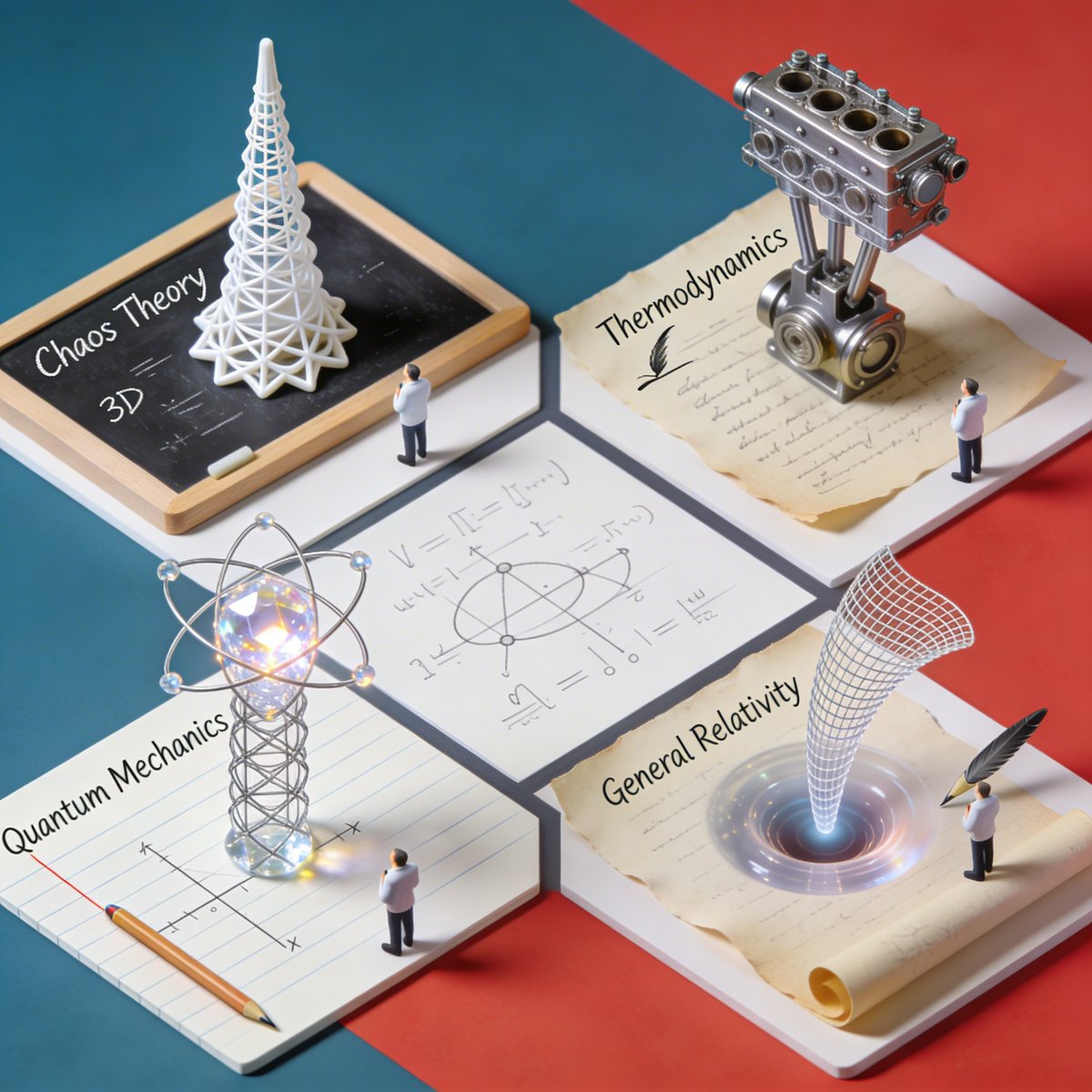
## Immagini di esempio

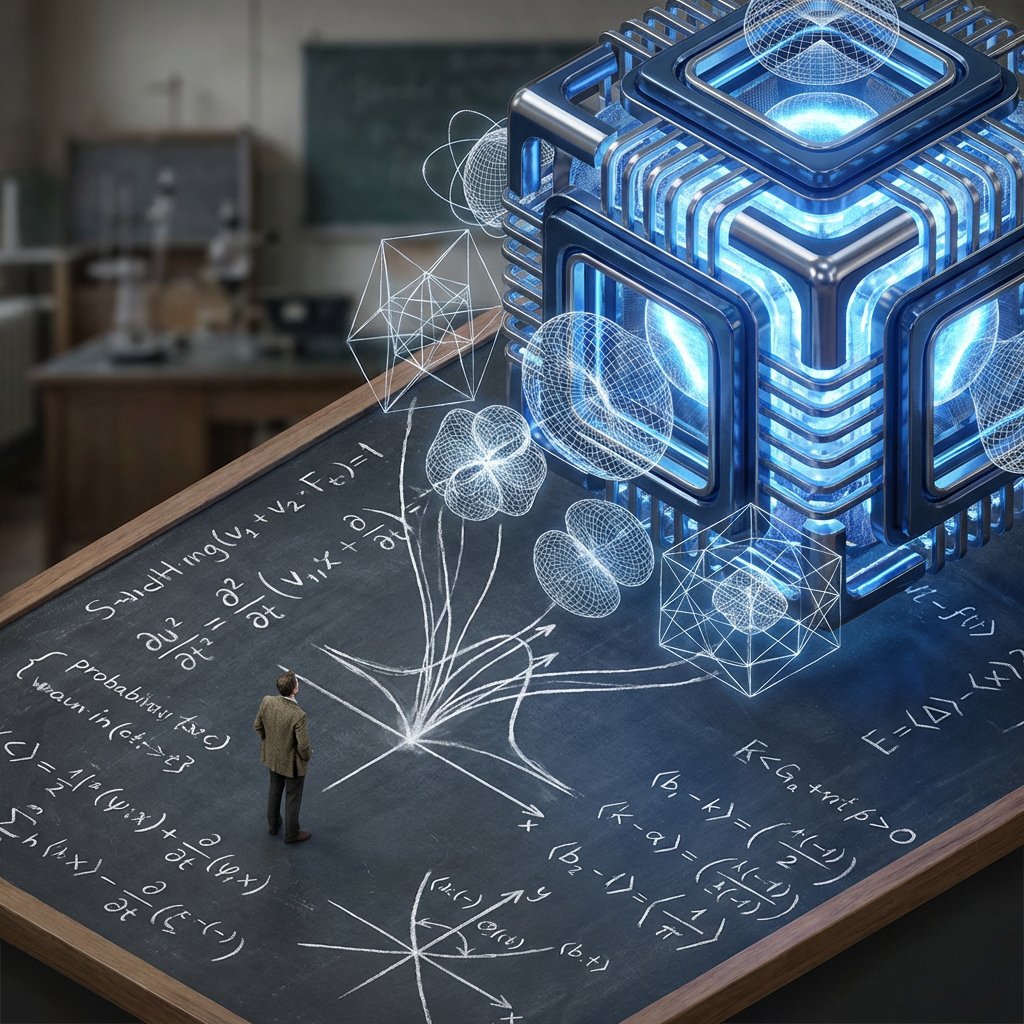
## Prompt
```text
2x2 grid, do this for 4 famous PHD level science or math topics
Input Variable: Theorem / Formula
Phase 1: Schematic Decomposition
Analyze the Notation: Identify the primary visual language of the scientist (Chalk on blackboard? Ink on parchment? Pencil on graph paper?).
Identify the "Structure": If this theory were a building, what would it look like?
Logic: Chaos Theory -> Fractal Spire. Thermodynamics -> Engine Block.
Phase 2: The Dimensional Transition
The Base: A flat surface covered in the [Notation Medium] (e.g., a slate blackboard covered in chalk equations).
The Extrusion: The chalk lines physically lift off the surface. They begin as white wireframes, then gain opacity, then gain texture.
The Climax: At the top of the image, the wireframes have fully solidified into a photorealistic, impossible structure representing the theory.
The Observer: A tiny, scale-model figure of the scientist stands on the flat "2D" section, looking up in awe at the massive "3D" structure they have summoned.
Output: High-Angle Isometric, "3D mod designer toy" style, stark contrast between sketchy lines and solid mass.
```
### Genera questo prompt
| Modello | Nano Banana pro |
|---|---|
| Costo stimato | $0.11 / chiamata |
| Endpoint | `/api/v1/nano_banana/text_to_image` |
[Accedi per generare](https://runapi.ai/it/login)
L’immagine generata apparirà qui
## Analisi del prompt
### Soggetto
Nano Banana Pro Science Prompt Template
### Atmosfera
art / Immagine
### Tecnico
nano-banana-pro / Nano Banana / Text To Image / /api/v1/nano_banana/text_to_image
### Stile
2x2-grid, blackboard, isometric, math, photorealistic, science, wireframes
## Modelli compatibili con questo prompt
| Modalità | Modello | Prezzo | Prova |
|---|---|---|---|
| Immagine | Qwen 2/qwen-2-text-to-image | $0.04 / immagine | [Prova](https://runapi.ai/it/models/qwen-2/text-to-image.md) |
| Immagine | Qwen 3/qwen-3-pro-text-to-image | $0.04-$0.08 / immagine | [Prova](https://runapi.ai/it/models/qwen-3/pro-text-to-image.md) |
| Immagine | Qwen 3/qwen-3-text-to-image | $0.03 / immagine | [Prova](https://runapi.ai/it/models/qwen-3/text-to-image.md) |
| Immagine | Qwen Image/qwen-image-text-to-image | $0.03 / immagine | [Prova](https://runapi.ai/it/models/qwen-image/text-to-image.md) |
| Immagine | Wan/wan-2.7-image | $0.03 / immagine | [Prova](https://runapi.ai/it/models/wan/2.7-image.md) |
## DETTAGLI ESECUZIONE
| Field | Value |
|---|---|
| Modello | `nano-banana-pro` |
| Modality | Immagine |
| Category | art |
| Tags | 2x2-grid, blackboard, isometric, math, photorealistic, science, wireframes |
## Use with an agent
### Claude Code
1. claude mcp add runapi -s user -- npx -y @runapi.ai/mcp
2. Riavvia Claude Code
3. Incolla questo prompt: Genera un'immagine: "2x2 grid, do this for 4 famous PHD level science or math topics
Input Variable: Theorem / Formula
Phase 1: Schematic Decomposition
Analyze the Notation: Identify the primary visual language of the scientist (Chalk on blackboard? Ink on parchment? Pencil on graph paper?).
Identify the "Structure": If this theory were a building, what would it look like?
Logic: Chaos Theory -> Fractal Spire. Thermodynamics -> Engine Block.
Phase 2: The Dimensional Transition
The Base: A flat surface covered in the [Notation Medium] (e.g., a slate blackboard covered in chalk equations).
The Extrusion: The chalk lines physically lift off the surface. They begin as white wireframes, then gain opacity, then gain texture.
The Climax: At the top of the image, the wireframes have fully solidified into a photorealistic, impossible structure representing the theory.
The Observer: A tiny, scale-model figure of the scientist stands on the flat "2D" section, looking up in awe at the massive "3D" structure they have summoned.
Output: High-Angle Isometric, "3D mod designer toy" style, stark contrast between sketchy lines and solid mass.
"
### Codex
1. codex plugin install runapi-mcp@agents
2. Riavvia Codex
3. Incolla questo prompt: Genera un'immagine: "2x2 grid, do this for 4 famous PHD level science or math topics
Input Variable: Theorem / Formula
Phase 1: Schematic Decomposition
Analyze the Notation: Identify the primary visual language of the scientist (Chalk on blackboard? Ink on parchment? Pencil on graph paper?).
Identify the "Structure": If this theory were a building, what would it look like?
Logic: Chaos Theory -> Fractal Spire. Thermodynamics -> Engine Block.
Phase 2: The Dimensional Transition
The Base: A flat surface covered in the [Notation Medium] (e.g., a slate blackboard covered in chalk equations).
The Extrusion: The chalk lines physically lift off the surface. They begin as white wireframes, then gain opacity, then gain texture.
The Climax: At the top of the image, the wireframes have fully solidified into a photorealistic, impossible structure representing the theory.
The Observer: A tiny, scale-model figure of the scientist stands on the flat "2D" section, looking up in awe at the massive "3D" structure they have summoned.
Output: High-Angle Isometric, "3D mod designer toy" style, stark contrast between sketchy lines and solid mass.
"
### Cursor
1. npx @runapi.ai/mcp init cursor
2. Riavvia Cursor
3. Incolla questo prompt: Genera un'immagine: "2x2 grid, do this for 4 famous PHD level science or math topics
Input Variable: Theorem / Formula
Phase 1: Schematic Decomposition
Analyze the Notation: Identify the primary visual language of the scientist (Chalk on blackboard? Ink on parchment? Pencil on graph paper?).
Identify the "Structure": If this theory were a building, what would it look like?
Logic: Chaos Theory -> Fractal Spire. Thermodynamics -> Engine Block.
Phase 2: The Dimensional Transition
The Base: A flat surface covered in the [Notation Medium] (e.g., a slate blackboard covered in chalk equations).
The Extrusion: The chalk lines physically lift off the surface. They begin as white wireframes, then gain opacity, then gain texture.
The Climax: At the top of the image, the wireframes have fully solidified into a photorealistic, impossible structure representing the theory.
The Observer: A tiny, scale-model figure of the scientist stands on the flat "2D" section, looking up in awe at the massive "3D" structure they have summoned.
Output: High-Angle Isometric, "3D mod designer toy" style, stark contrast between sketchy lines and solid mass.
"
### Windsurf
1. npx @runapi.ai/mcp init windsurf
2. Riavvia Windsurf
3. Incolla questo prompt: Genera un'immagine: "2x2 grid, do this for 4 famous PHD level science or math topics
Input Variable: Theorem / Formula
Phase 1: Schematic Decomposition
Analyze the Notation: Identify the primary visual language of the scientist (Chalk on blackboard? Ink on parchment? Pencil on graph paper?).
Identify the "Structure": If this theory were a building, what would it look like?
Logic: Chaos Theory -> Fractal Spire. Thermodynamics -> Engine Block.
Phase 2: The Dimensional Transition
The Base: A flat surface covered in the [Notation Medium] (e.g., a slate blackboard covered in chalk equations).
The Extrusion: The chalk lines physically lift off the surface. They begin as white wireframes, then gain opacity, then gain texture.
The Climax: At the top of the image, the wireframes have fully solidified into a photorealistic, impossible structure representing the theory.
The Observer: A tiny, scale-model figure of the scientist stands on the flat "2D" section, looking up in awe at the massive "3D" structure they have summoned.
Output: High-Angle Isometric, "3D mod designer toy" style, stark contrast between sketchy lines and solid mass.
"
## Generate via API
### curl
```curl
curl -X POST https://runapi.ai/api/v1/nano_banana/text_to_image \
-H "Authorization: Bearer $RUNAPI_API_KEY" \
-H "Content-Type: application/json" \
--data-binary @- <<'JSON'
{
"model": "nano-banana-pro",
"prompt": "2x2 grid, do this for 4 famous PHD level science or math topics \n Input Variable: Theorem / Formula\nPhase 1: Schematic Decomposition\nAnalyze the Notation: Identify the primary visual language of the scientist (Chalk on blackboard? Ink on parchment? Pencil on graph paper?).\nIdentify the \"Structure\": If this theory were a building, what would it look like?\nLogic: Chaos Theory -> Fractal Spire. Thermodynamics -> Engine Block.\nPhase 2: The Dimensional Transition\nThe Base: A flat surface covered in the [Notation Medium] (e.g., a slate blackboard covered in chalk equations).\nThe Extrusion: The chalk lines physically lift off the surface. They begin as white wireframes, then gain opacity, then gain texture.\nThe Climax: At the top of the image, the wireframes have fully solidified into a photorealistic, impossible structure representing the theory.\nThe Observer: A tiny, scale-model figure of the scientist stands on the flat \"2D\" section, looking up in awe at the massive \"3D\" structure they have summoned.\nOutput: High-Angle Isometric, \"3D mod designer toy\" style, stark contrast between sketchy lines and solid mass.\n"
}
JSON
```
### Node.js
```javascript
import { NanoBananaClient } from "@runapi.ai/nano-banana";
const client = new NanoBananaClient({
apiKey: process.env.RUNAPI_API_KEY,
});
const result = await client.textToImage.run({
"model": "nano-banana-pro",
"prompt": "2x2 grid, do this for 4 famous PHD level science or math topics \n Input Variable: Theorem / Formula\nPhase 1: Schematic Decomposition\nAnalyze the Notation: Identify the primary visual language of the scientist (Chalk on blackboard? Ink on parchment? Pencil on graph paper?).\nIdentify the \"Structure\": If this theory were a building, what would it look like?\nLogic: Chaos Theory -> Fractal Spire. Thermodynamics -> Engine Block.\nPhase 2: The Dimensional Transition\nThe Base: A flat surface covered in the [Notation Medium] (e.g., a slate blackboard covered in chalk equations).\nThe Extrusion: The chalk lines physically lift off the surface. They begin as white wireframes, then gain opacity, then gain texture.\nThe Climax: At the top of the image, the wireframes have fully solidified into a photorealistic, impossible structure representing the theory.\nThe Observer: A tiny, scale-model figure of the scientist stands on the flat \"2D\" section, looking up in awe at the massive \"3D\" structure they have summoned.\nOutput: High-Angle Isometric, \"3D mod designer toy\" style, stark contrast between sketchy lines and solid mass.\n"
});
console.log(result.id);
```
### Python
```python
import json
import os
import requests
response = requests.post(
"https://runapi.ai/api/v1/nano_banana/text_to_image",
headers={"Authorization": f"Bearer {os.environ['RUNAPI_API_KEY']}"},
json=json.loads("{\n \"model\": \"nano-banana-pro\",\n \"prompt\": \"2x2 grid, do this for 4 famous PHD level science or math topics \u003cinstructions\u003e\\n Input Variable: Theorem / Formula\\nPhase 1: Schematic Decomposition\\nAnalyze the Notation: Identify the primary visual language of the scientist (Chalk on blackboard? Ink on parchment? Pencil on graph paper?).\\nIdentify the \\\"Structure\\\": If this theory were a building, what would it look like?\\nLogic: Chaos Theory -\u003e Fractal Spire. Thermodynamics -\u003e Engine Block.\\nPhase 2: The Dimensional Transition\\nThe Base: A flat surface covered in the [Notation Medium] (e.g., a slate blackboard covered in chalk equations).\\nThe Extrusion: The chalk lines physically lift off the surface. They begin as white wireframes, then gain opacity, then gain texture.\\nThe Climax: At the top of the image, the wireframes have fully solidified into a photorealistic, impossible structure representing the theory.\\nThe Observer: A tiny, scale-model figure of the scientist stands on the flat \\\"2D\\\" section, looking up in awe at the massive \\\"3D\\\" structure they have summoned.\\nOutput: High-Angle Isometric, \\\"3D mod designer toy\\\" style, stark contrast between sketchy lines and solid mass.\\n\u003c/instructions\u003e\"\n}")
)
response.raise_for_status()
print(response.json()["id"])
```
### PHP
```php
true,
CURLOPT_HTTPHEADER => [
"Authorization: Bearer " . getenv("RUNAPI_API_KEY"),
"Content-Type: application/json",
],
CURLOPT_POSTFIELDS => "{\n \"model\": \"nano-banana-pro\",\n \"prompt\": \"2x2 grid, do this for 4 famous PHD level science or math topics \u003cinstructions\u003e\\n Input Variable: Theorem / Formula\\nPhase 1: Schematic Decomposition\\nAnalyze the Notation: Identify the primary visual language of the scientist (Chalk on blackboard? Ink on parchment? Pencil on graph paper?).\\nIdentify the \\\"Structure\\\": If this theory were a building, what would it look like?\\nLogic: Chaos Theory -\u003e Fractal Spire. Thermodynamics -\u003e Engine Block.\\nPhase 2: The Dimensional Transition\\nThe Base: A flat surface covered in the [Notation Medium] (e.g., a slate blackboard covered in chalk equations).\\nThe Extrusion: The chalk lines physically lift off the surface. They begin as white wireframes, then gain opacity, then gain texture.\\nThe Climax: At the top of the image, the wireframes have fully solidified into a photorealistic, impossible structure representing the theory.\\nThe Observer: A tiny, scale-model figure of the scientist stands on the flat \\\"2D\\\" section, looking up in awe at the massive \\\"3D\\\" structure they have summoned.\\nOutput: High-Angle Isometric, \\\"3D mod designer toy\\\" style, stark contrast between sketchy lines and solid mass.\\n\u003c/instructions\u003e\"\n}",
CURLOPT_RETURNTRANSFER => true,
]);
$response = json_decode(curl_exec($ch), true);
curl_close($ch);
echo $response["id"] . PHP_EOL;
```
### Java
```java
import java.net.URI;
import java.net.http.HttpClient;
import java.net.http.HttpRequest;
import java.net.http.HttpResponse;
var request = HttpRequest.newBuilder(URI.create("https://runapi.ai/api/v1/nano_banana/text_to_image"))
.header("Authorization", "Bearer " + System.getenv("RUNAPI_API_KEY"))
.header("Content-Type", "application/json")
.POST(HttpRequest.BodyPublishers.ofString("{\n \"model\": \"nano-banana-pro\",\n \"prompt\": \"2x2 grid, do this for 4 famous PHD level science or math topics \u003cinstructions\u003e\\n Input Variable: Theorem / Formula\\nPhase 1: Schematic Decomposition\\nAnalyze the Notation: Identify the primary visual language of the scientist (Chalk on blackboard? Ink on parchment? Pencil on graph paper?).\\nIdentify the \\\"Structure\\\": If this theory were a building, what would it look like?\\nLogic: Chaos Theory -\u003e Fractal Spire. Thermodynamics -\u003e Engine Block.\\nPhase 2: The Dimensional Transition\\nThe Base: A flat surface covered in the [Notation Medium] (e.g., a slate blackboard covered in chalk equations).\\nThe Extrusion: The chalk lines physically lift off the surface. They begin as white wireframes, then gain opacity, then gain texture.\\nThe Climax: At the top of the image, the wireframes have fully solidified into a photorealistic, impossible structure representing the theory.\\nThe Observer: A tiny, scale-model figure of the scientist stands on the flat \\\"2D\\\" section, looking up in awe at the massive \\\"3D\\\" structure they have summoned.\\nOutput: High-Angle Isometric, \\\"3D mod designer toy\\\" style, stark contrast between sketchy lines and solid mass.\\n\u003c/instructions\u003e\"\n}"))
.build();
var response = HttpClient.newHttpClient().send(request, HttpResponse.BodyHandlers.ofString());
System.out.println(response.body());
```
### Ruby
```ruby
require "json"
require "net/http"
uri = URI("https://runapi.ai/api/v1/nano_banana/text_to_image")
request = Net::HTTP::Post.new(uri)
request["Authorization"] = "Bearer " + ENV.fetch("RUNAPI_API_KEY")
request["Content-Type"] = "application/json"
request.body = "{\n \"model\": \"nano-banana-pro\",\n \"prompt\": \"2x2 grid, do this for 4 famous PHD level science or math topics \u003cinstructions\u003e\\n Input Variable: Theorem / Formula\\nPhase 1: Schematic Decomposition\\nAnalyze the Notation: Identify the primary visual language of the scientist (Chalk on blackboard? Ink on parchment? Pencil on graph paper?).\\nIdentify the \\\"Structure\\\": If this theory were a building, what would it look like?\\nLogic: Chaos Theory -\u003e Fractal Spire. Thermodynamics -\u003e Engine Block.\\nPhase 2: The Dimensional Transition\\nThe Base: A flat surface covered in the [Notation Medium] (e.g., a slate blackboard covered in chalk equations).\\nThe Extrusion: The chalk lines physically lift off the surface. They begin as white wireframes, then gain opacity, then gain texture.\\nThe Climax: At the top of the image, the wireframes have fully solidified into a photorealistic, impossible structure representing the theory.\\nThe Observer: A tiny, scale-model figure of the scientist stands on the flat \\\"2D\\\" section, looking up in awe at the massive \\\"3D\\\" structure they have summoned.\\nOutput: High-Angle Isometric, \\\"3D mod designer toy\\\" style, stark contrast between sketchy lines and solid mass.\\n\u003c/instructions\u003e\"\n}"
response = Net::HTTP.start(uri.hostname, uri.port, use_ssl: true) { |http| http.request(request) }
puts JSON.parse(response.body).fetch("id")
```
### Go
```go
package main
import (
"context"
"fmt"
"log"
"net/http"
"os"
"strings"
)
func main() {
body := strings.NewReader("{\"model\":\"nano-banana-pro\",\"prompt\":\"2x2 grid, do this for 4 famous PHD level science or math topics \\n Input Variable: Theorem / Formula\\nPhase 1: Schematic Decomposition\\nAnalyze the Notation: Identify the primary visual language of the scientist (Chalk on blackboard? Ink on parchment? Pencil on graph paper?).\\nIdentify the \\\"Structure\\\": If this theory were a building, what would it look like?\\nLogic: Chaos Theory -> Fractal Spire. Thermodynamics -> Engine Block.\\nPhase 2: The Dimensional Transition\\nThe Base: A flat surface covered in the [Notation Medium] (e.g., a slate blackboard covered in chalk equations).\\nThe Extrusion: The chalk lines physically lift off the surface. They begin as white wireframes, then gain opacity, then gain texture.\\nThe Climax: At the top of the image, the wireframes have fully solidified into a photorealistic, impossible structure representing the theory.\\nThe Observer: A tiny, scale-model figure of the scientist stands on the flat \\\"2D\\\" section, looking up in awe at the massive \\\"3D\\\" structure they have summoned.\\nOutput: High-Angle Isometric, \\\"3D mod designer toy\\\" style, stark contrast between sketchy lines and solid mass.\\n\"}")
req, err := http.NewRequestWithContext(context.Background(), http.MethodPost, "https://runapi.ai/api/v1/nano_banana/text_to_image", body)
if err != nil {
log.Fatal(err)
}
req.Header.Set("Authorization", "Bearer "+os.Getenv("RUNAPI_API_KEY"))
req.Header.Set("Content-Type", "application/json")
resp, err := http.DefaultClient.Do(req)
if err != nil {
log.Fatal(err)
}
defer resp.Body.Close()
fmt.Println(resp.Status)
}
```
### CLI
```cli
$ runapi generate \
--model nano-banana-pro \
--prompt "2x2 grid, do this for 4 famous PHD level science or math topics \n Input Variable: Theorem / Formula\nPhase 1: Schematic Decomposition\nAnalyze the Notation: Identify the primary visual language of the scientist (Chalk on blackboard? Ink on parchment? Pencil on graph paper?).\nIdentify the \"Structure\": If this theory were a building, what would it look like?\nLogic: Chaos Theory -> Fractal Spire. Thermodynamics -> Engine Block.\nPhase 2: The Dimensional Transition\nThe Base: A flat surface covered in the [Notation Medium] (e.g., a slate blackboard covered in chalk equations).\nThe Extrusion: The chalk lines physically lift off the surface. They begin as white wireframes, then gain opacity, then gain texture.\nThe Climax: At the top of the image, the wireframes have fully solidified into a photorealistic, impossible structure representing the theory.\nThe Observer: A tiny, scale-model figure of the scientist stands on the flat \"2D\" section, looking up in awe at the massive \"3D\" structure they have summoned.\nOutput: High-Angle Isometric, \"3D mod designer toy\" style, stark contrast between sketchy lines and solid mass.\n" \
--wait
```
## Più prompt simili a questo
- [Realistic Group Selfie with Smartphone Flash Effect](https://runapi.ai/it/prompts/realistic-new-year-s-eve-group-selfie-78vEn0.md) — `nano-banana-pro`
- [Exploded-View Structural Cutaway for Food Photography](https://runapi.ai/it/prompts/exploded-view-ingredient-cutaway-diagram-Jq6qv0.md) — `nano-banana-pro`
- [Four Seasons Portrait Collage](https://runapi.ai/it/prompts/south-asian-seasonal-portrait-collage-0ge9j7.md) — `nano-banana-pro`
## Come usare questo prompt nano-banana-pro
### Come copio questo prompt in modo sicuro?
Usa il pulsante di copia accanto al blocco completo del prompt. Copia solo il testo del prompt, non le etichette circostanti della pagina, così puoi incollarlo in un'istruzione per agente, in un corpo di richiesta JSON o nella tua libreria di prompt.
### Perché la pagina di dettaglio mostra i parametri?
Alcuni prompt sono stati raccolti con impostazioni di generazione salvate, come aspect ratio, durata o controlli vocali. Quando esistono parametri, la pagina li elenca separatamente così puoi riutilizzare insieme il testo del prompt e le impostazioni strutturate.
### Quale endpoint devo chiamare?
Usa il path dell'endpoint mostrato nel blocco di codice API. Il path viene generato dal servizio RunAPI del prompt e dal nome dell'endpoint, poi reso come URL API pubblico usato dagli esempi curl e SDK.
### Posso usare questo prompt in un agente invece che nel codice?
Sì. Seleziona Claude Code, Codex, Cursor o Windsurf nel selettore di schede, installa il RunAPI MCP Server e incolla l’istruzione generata. L’istruzione include il testo completo del prompt.
## Stai costruendo con un team?
Ti aiutiamo con la configurazione enterprise, le integrazioni e le domande tecniche.
[Contattaci](https://runapi.ai/it/contact.md)
---
## More from RunAPI
- [Home](https://runapi.ai/it/.md)
### Prodotto
- [Catalogo dei modelli](https://runapi.ai/it/models.md)
- [Prezzi](https://runapi.ai/it/pricing.md)
- [Fornitori](https://runapi.ai/it/models#all-models)
- [Galleria di prompt](https://runapi.ai/it/prompts.md)
### Sviluppatori
- [Documentazione](https://runapi.ai/it/docs/guides)
- [SDK](https://runapi.ai/it/sdk.md)
- [CLI](https://runapi.ai/it/cli.md)
- [MCP Server](https://runapi.ai/it/mcp.md)
- [x402](https://runapi.ai/it/x402.md)
### Guide
- [Claude Code vs Cursor](https://runapi.ai/it/claude-code-vs-cursor.md)
- [Configurazione Cursor API](https://runapi.ai/it/cursor-api-setup.md)
- [RunAPI vs OpenRouter](https://runapi.ai/it/openrouter-alternative.md)
### Azienda
- [Enterprise](https://runapi.ai/it/contact.md)
- [Contatti](https://runapi.ai/it/contact.md)
### Legale
- [Termini](https://runapi.ai/it/terms.md)
- [Privacy](https://runapi.ai/it/privacy.md)
- [Site index for agents](https://runapi.ai/llms.txt)
Contact: contact@runapi.ai
## Structured data
```json
[
{
"@context": "https://schema.org",
"inLanguage": "it",
"@type": "WebSite",
"name": "RunAPI",
"url": "https://runapi.ai/it",
"potentialAction": {
"@type": "SearchAction",
"target": {
"@type": "EntryPoint",
"urlTemplate": "https://runapi.ai/it/models?q={search_term_string}"
},
"query-input": "required name=search_term_string"
}
},
{
"@context": "https://schema.org",
"inLanguage": "it",
"@type": "Organization",
"name": "RunAPI",
"url": "https://runapi.ai/it",
"logo": {
"@type": "ImageObject",
"url": "https://runapi.ai/iticon.svg"
},
"sameAs": [
"https://github.com/runapi-ai"
]
},
{
"@context": "https://schema.org",
"inLanguage": "it",
"@type": "BreadcrumbList",
"itemListElement": [
{
"@type": "ListItem",
"position": 1,
"name": "Home",
"item": "https://runapi.ai/it"
},
{
"@type": "ListItem",
"position": 2,
"name": "Prompt",
"item": "https://runapi.ai/it/prompts"
},
{
"@type": "ListItem",
"position": 3,
"name": "Immagine",
"item": "https://runapi.ai/it/prompts/image"
},
{
"@type": "ListItem",
"position": 4,
"name": "Nano Banana Pro Science Prompt Template",
"item": "https://runapi.ai/prompts/2x2-scientific-theory-structures-in-3d-mod-designer-toy-73YLq0"
}
]
},
{
"@context": "https://schema.org",
"inLanguage": "it",
"@type": "FAQPage",
"mainEntity": [
{
"@type": "Question",
"name": "Come copio questo prompt in modo sicuro?",
"acceptedAnswer": {
"@type": "Answer",
"text": "Usa il pulsante di copia accanto al blocco completo del prompt. Copia solo il testo del prompt, non le etichette circostanti della pagina, così puoi incollarlo in un'istruzione per agente, in un corpo di richiesta JSON o nella tua libreria di prompt."
}
},
{
"@type": "Question",
"name": "Perché la pagina di dettaglio mostra i parametri?",
"acceptedAnswer": {
"@type": "Answer",
"text": "Alcuni prompt sono stati raccolti con impostazioni di generazione salvate, come aspect ratio, durata o controlli vocali. Quando esistono parametri, la pagina li elenca separatamente così puoi riutilizzare insieme il testo del prompt e le impostazioni strutturate."
}
},
{
"@type": "Question",
"name": "Quale endpoint devo chiamare?",
"acceptedAnswer": {
"@type": "Answer",
"text": "Usa il path dell'endpoint mostrato nel blocco di codice API. Il path viene generato dal servizio RunAPI del prompt e dal nome dell'endpoint, poi reso come URL API pubblico usato dagli esempi curl e SDK."
}
},
{
"@type": "Question",
"name": "Posso usare questo prompt in un agente invece che nel codice?",
"acceptedAnswer": {
"@type": "Answer",
"text": "Sì. Seleziona Claude Code, Codex, Cursor o Windsurf nel selettore di schede, installa il RunAPI MCP Server e incolla l’istruzione generata. L’istruzione include il testo completo del prompt."
}
}
]
},
{
"@context": "https://schema.org",
"inLanguage": "en",
"@type": "CreativeWork",
"name": "Nano Banana Pro Science Prompt Template",
"text": "2x2 grid, do this for 4 famous PHD level science or math topics \n Input Variable: Theorem / Formula\nPhase 1: Schematic Decomposition\nAnalyze the Notation: Identify the primary visual language of the scientist (Chalk on blackboard? Ink on parchment? Pencil on graph paper?).\nIdentify the \"Structure\": If this theory were a building, what would it look like?\nLogic: Chaos Theory -> Fractal Spire. Thermodynamics -> Engine Block.\nPhase 2: The Dimensional Transition\nThe Base: A flat surface covered in the [Notation Medium] (e.g., a slate blackboard covered in chalk equations).\nThe Extrusion: The chalk lines physically lift off the surface. They begin as white wireframes, then gain opacity, then gain texture.\nThe Climax: At the top of the image, the wireframes have fully solidified into a photorealistic, impossible structure representing the theory.\nThe Observer: A tiny, scale-model figure of the scientist stands on the flat \"2D\" section, looking up in awe at the massive \"3D\" structure they have summoned.\nOutput: High-Angle Isometric, \"3D mod designer toy\" style, stark contrast between sketchy lines and solid mass.\n",
"image": "https://cdn.runapi.ai/public/prompts/previews/0ea5ef71e1a26448d5b463a1327315a5cfb6e09c3fb6c4e5e56f7601cd4e9f53-runapi-ai.jpg",
"about": [
"image",
"nano-banana-pro",
"art"
]
}
]
```