---
title: Nano Banana Pro Science Prompt Template — مطالبة nano-banana-pro | RunAPI
description: انسخ مطالبة RunAPI هذه، واعرض خطوات إعداد الوكيل، واستخدم كود API الخاص بـ nano-banana-pro.
url: https://runapi.ai/ar/prompts/2x2-scientific-theory-structures-in-3d-mod-designer-toy-73YLq0.md
canonical: https://runapi.ai/prompts/2x2-scientific-theory-structures-in-3d-mod-designer-toy-73YLq0
locale: ar
site: RunAPI
image: https://runapi.ai/assets/opengraph-bfaaa0f0.png
prompt_id: 35887
model: nano-banana-pro
modality: image
endpoint: "/api/v1/nano_banana/text_to_image"
---
> HTML version: https://runapi.ai/ar/prompts/2x2-scientific-theory-structures-in-3d-mod-designer-toy-73YLq0
> Site index for agents: https://runapi.ai/llms.txt
# Nano Banana Pro Science Prompt Template
انسخ مطالبة RunAPI هذه، واعرض خطوات إعداد الوكيل، واستخدم كود API الخاص بـ nano-banana-pro.
**الأوامر** · صورة
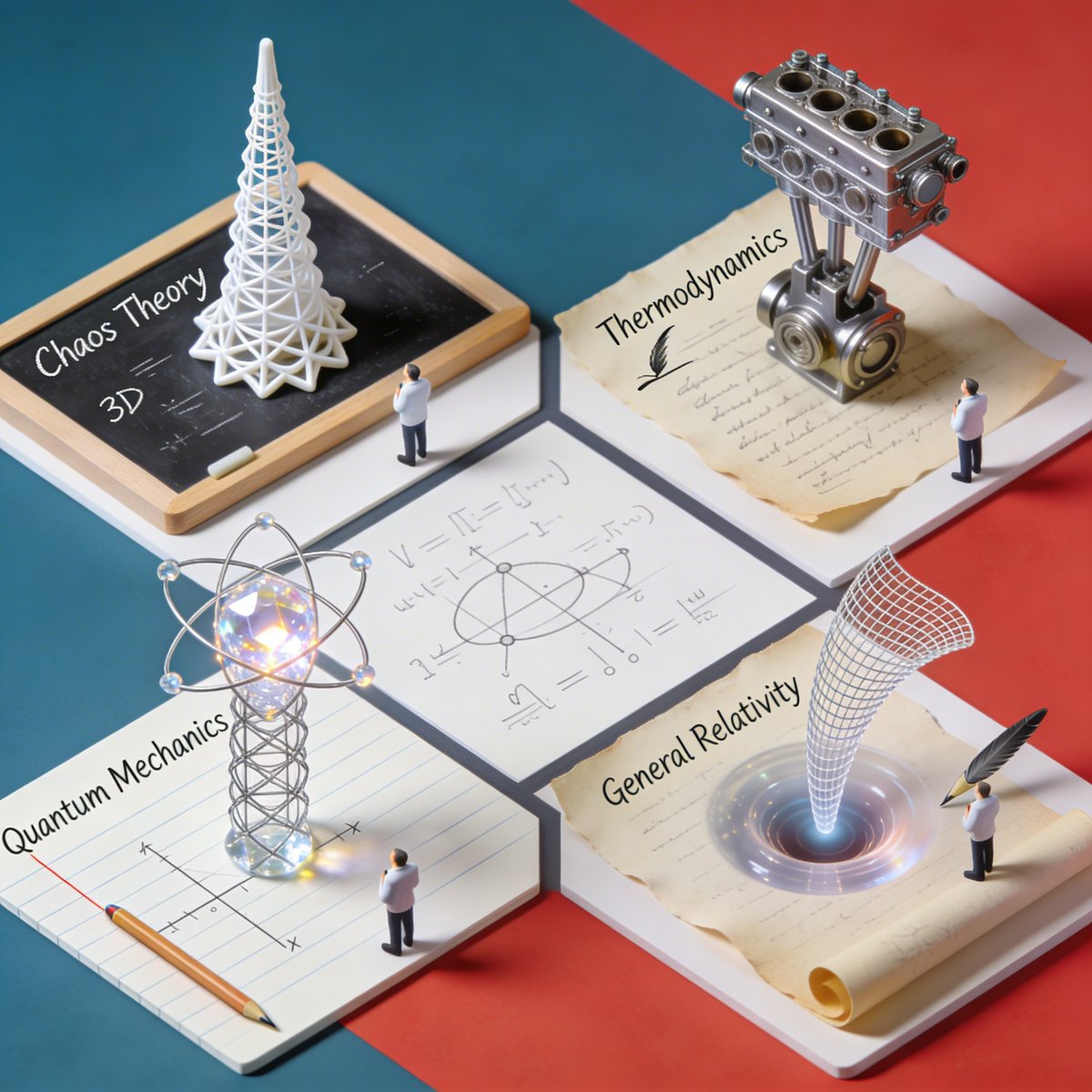
## صور الأمثلة

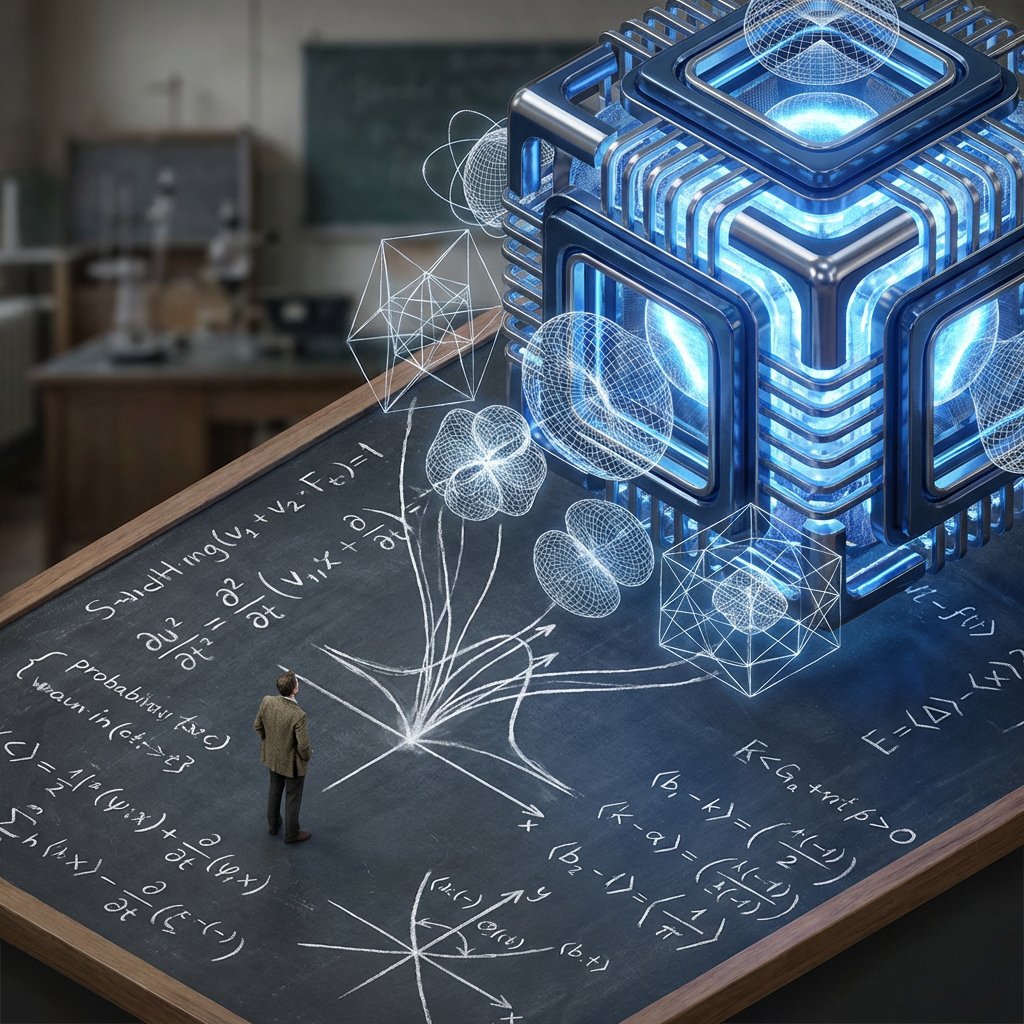
## Prompt
```text
2x2 grid, do this for 4 famous PHD level science or math topics
Input Variable: Theorem / Formula
Phase 1: Schematic Decomposition
Analyze the Notation: Identify the primary visual language of the scientist (Chalk on blackboard? Ink on parchment? Pencil on graph paper?).
Identify the "Structure": If this theory were a building, what would it look like?
Logic: Chaos Theory -> Fractal Spire. Thermodynamics -> Engine Block.
Phase 2: The Dimensional Transition
The Base: A flat surface covered in the [Notation Medium] (e.g., a slate blackboard covered in chalk equations).
The Extrusion: The chalk lines physically lift off the surface. They begin as white wireframes, then gain opacity, then gain texture.
The Climax: At the top of the image, the wireframes have fully solidified into a photorealistic, impossible structure representing the theory.
The Observer: A tiny, scale-model figure of the scientist stands on the flat "2D" section, looking up in awe at the massive "3D" structure they have summoned.
Output: High-Angle Isometric, "3D mod designer toy" style, stark contrast between sketchy lines and solid mass.
```
### إنشاء هذا الطلب
| النموذج | Nano Banana pro |
|---|---|
| التكلفة التقديرية | $0.11 / استدعاء |
| نقطة النهاية | `/api/v1/nano_banana/text_to_image` |
[سجّل الدخول للإنشاء](https://runapi.ai/ar/login)
ستظهر الصورة المُنشأة هنا
## تفصيل التعليمة
### الموضوع
Nano Banana Pro Science Prompt Template
### الأجواء
art / صورة
### تقني
nano-banana-pro / Nano Banana / Text To Image / /api/v1/nano_banana/text_to_image
### الأسلوب
2x2-grid, blackboard, isometric, math, photorealistic, science, wireframes
## نماذج تدعم هذا الـ prompt
| النمط | النموذج | السعر | جرّب |
|---|---|---|---|
| صورة | Qwen 2/qwen-2-text-to-image | $0.04 / صورة | [جرّب](https://runapi.ai/ar/models/qwen-2/text-to-image.md) |
| صورة | Qwen 3/qwen-3-pro-text-to-image | $0.04-$0.08 / صورة | [جرّب](https://runapi.ai/ar/models/qwen-3/pro-text-to-image.md) |
| صورة | Qwen 3/qwen-3-text-to-image | $0.03 / صورة | [جرّب](https://runapi.ai/ar/models/qwen-3/text-to-image.md) |
| صورة | Qwen Image/qwen-image-text-to-image | $0.03 / صورة | [جرّب](https://runapi.ai/ar/models/qwen-image/text-to-image.md) |
| صورة | Wan/wan-2.7-image | $0.03 / صورة | [جرّب](https://runapi.ai/ar/models/wan/2.7-image.md) |
## تفاصيل التشغيل
| Field | Value |
|---|---|
| النموذج | `nano-banana-pro` |
| Modality | صورة |
| Category | art |
| Tags | 2x2-grid, blackboard, isometric, math, photorealistic, science, wireframes |
## Use with an agent
### Claude Code
1. claude mcp add runapi -s user -- npx -y @runapi.ai/mcp
2. أعد تشغيل Claude Code
3. الصق هذا الموجه: أنشئ صورة: "2x2 grid, do this for 4 famous PHD level science or math topics
Input Variable: Theorem / Formula
Phase 1: Schematic Decomposition
Analyze the Notation: Identify the primary visual language of the scientist (Chalk on blackboard? Ink on parchment? Pencil on graph paper?).
Identify the "Structure": If this theory were a building, what would it look like?
Logic: Chaos Theory -> Fractal Spire. Thermodynamics -> Engine Block.
Phase 2: The Dimensional Transition
The Base: A flat surface covered in the [Notation Medium] (e.g., a slate blackboard covered in chalk equations).
The Extrusion: The chalk lines physically lift off the surface. They begin as white wireframes, then gain opacity, then gain texture.
The Climax: At the top of the image, the wireframes have fully solidified into a photorealistic, impossible structure representing the theory.
The Observer: A tiny, scale-model figure of the scientist stands on the flat "2D" section, looking up in awe at the massive "3D" structure they have summoned.
Output: High-Angle Isometric, "3D mod designer toy" style, stark contrast between sketchy lines and solid mass.
"
### Codex
1. codex plugin install runapi-mcp@agents
2. أعد تشغيل Codex
3. الصق هذا prompt: أنشئ صورة: "2x2 grid, do this for 4 famous PHD level science or math topics
Input Variable: Theorem / Formula
Phase 1: Schematic Decomposition
Analyze the Notation: Identify the primary visual language of the scientist (Chalk on blackboard? Ink on parchment? Pencil on graph paper?).
Identify the "Structure": If this theory were a building, what would it look like?
Logic: Chaos Theory -> Fractal Spire. Thermodynamics -> Engine Block.
Phase 2: The Dimensional Transition
The Base: A flat surface covered in the [Notation Medium] (e.g., a slate blackboard covered in chalk equations).
The Extrusion: The chalk lines physically lift off the surface. They begin as white wireframes, then gain opacity, then gain texture.
The Climax: At the top of the image, the wireframes have fully solidified into a photorealistic, impossible structure representing the theory.
The Observer: A tiny, scale-model figure of the scientist stands on the flat "2D" section, looking up in awe at the massive "3D" structure they have summoned.
Output: High-Angle Isometric, "3D mod designer toy" style, stark contrast between sketchy lines and solid mass.
"
### Cursor
1. npx @runapi.ai/mcp init cursor
2. أعد تشغيل Cursor
3. الصق هذا prompt: أنشئ صورة: "2x2 grid, do this for 4 famous PHD level science or math topics
Input Variable: Theorem / Formula
Phase 1: Schematic Decomposition
Analyze the Notation: Identify the primary visual language of the scientist (Chalk on blackboard? Ink on parchment? Pencil on graph paper?).
Identify the "Structure": If this theory were a building, what would it look like?
Logic: Chaos Theory -> Fractal Spire. Thermodynamics -> Engine Block.
Phase 2: The Dimensional Transition
The Base: A flat surface covered in the [Notation Medium] (e.g., a slate blackboard covered in chalk equations).
The Extrusion: The chalk lines physically lift off the surface. They begin as white wireframes, then gain opacity, then gain texture.
The Climax: At the top of the image, the wireframes have fully solidified into a photorealistic, impossible structure representing the theory.
The Observer: A tiny, scale-model figure of the scientist stands on the flat "2D" section, looking up in awe at the massive "3D" structure they have summoned.
Output: High-Angle Isometric, "3D mod designer toy" style, stark contrast between sketchy lines and solid mass.
"
### Windsurf
1. npx @runapi.ai/mcp init windsurf
2. أعد تشغيل Windsurf
3. الصق هذا prompt: أنشئ صورة: "2x2 grid, do this for 4 famous PHD level science or math topics
Input Variable: Theorem / Formula
Phase 1: Schematic Decomposition
Analyze the Notation: Identify the primary visual language of the scientist (Chalk on blackboard? Ink on parchment? Pencil on graph paper?).
Identify the "Structure": If this theory were a building, what would it look like?
Logic: Chaos Theory -> Fractal Spire. Thermodynamics -> Engine Block.
Phase 2: The Dimensional Transition
The Base: A flat surface covered in the [Notation Medium] (e.g., a slate blackboard covered in chalk equations).
The Extrusion: The chalk lines physically lift off the surface. They begin as white wireframes, then gain opacity, then gain texture.
The Climax: At the top of the image, the wireframes have fully solidified into a photorealistic, impossible structure representing the theory.
The Observer: A tiny, scale-model figure of the scientist stands on the flat "2D" section, looking up in awe at the massive "3D" structure they have summoned.
Output: High-Angle Isometric, "3D mod designer toy" style, stark contrast between sketchy lines and solid mass.
"
## Generate via API
### curl
```curl
curl -X POST https://runapi.ai/api/v1/nano_banana/text_to_image \
-H "Authorization: Bearer $RUNAPI_API_KEY" \
-H "Content-Type: application/json" \
--data-binary @- <<'JSON'
{
"model": "nano-banana-pro",
"prompt": "2x2 grid, do this for 4 famous PHD level science or math topics \n Input Variable: Theorem / Formula\nPhase 1: Schematic Decomposition\nAnalyze the Notation: Identify the primary visual language of the scientist (Chalk on blackboard? Ink on parchment? Pencil on graph paper?).\nIdentify the \"Structure\": If this theory were a building, what would it look like?\nLogic: Chaos Theory -> Fractal Spire. Thermodynamics -> Engine Block.\nPhase 2: The Dimensional Transition\nThe Base: A flat surface covered in the [Notation Medium] (e.g., a slate blackboard covered in chalk equations).\nThe Extrusion: The chalk lines physically lift off the surface. They begin as white wireframes, then gain opacity, then gain texture.\nThe Climax: At the top of the image, the wireframes have fully solidified into a photorealistic, impossible structure representing the theory.\nThe Observer: A tiny, scale-model figure of the scientist stands on the flat \"2D\" section, looking up in awe at the massive \"3D\" structure they have summoned.\nOutput: High-Angle Isometric, \"3D mod designer toy\" style, stark contrast between sketchy lines and solid mass.\n"
}
JSON
```
### Node.js
```javascript
import { NanoBananaClient } from "@runapi.ai/nano-banana";
const client = new NanoBananaClient({
apiKey: process.env.RUNAPI_API_KEY,
});
const result = await client.textToImage.run({
"model": "nano-banana-pro",
"prompt": "2x2 grid, do this for 4 famous PHD level science or math topics \n Input Variable: Theorem / Formula\nPhase 1: Schematic Decomposition\nAnalyze the Notation: Identify the primary visual language of the scientist (Chalk on blackboard? Ink on parchment? Pencil on graph paper?).\nIdentify the \"Structure\": If this theory were a building, what would it look like?\nLogic: Chaos Theory -> Fractal Spire. Thermodynamics -> Engine Block.\nPhase 2: The Dimensional Transition\nThe Base: A flat surface covered in the [Notation Medium] (e.g., a slate blackboard covered in chalk equations).\nThe Extrusion: The chalk lines physically lift off the surface. They begin as white wireframes, then gain opacity, then gain texture.\nThe Climax: At the top of the image, the wireframes have fully solidified into a photorealistic, impossible structure representing the theory.\nThe Observer: A tiny, scale-model figure of the scientist stands on the flat \"2D\" section, looking up in awe at the massive \"3D\" structure they have summoned.\nOutput: High-Angle Isometric, \"3D mod designer toy\" style, stark contrast between sketchy lines and solid mass.\n"
});
console.log(result.id);
```
### Python
```python
import json
import os
import requests
response = requests.post(
"https://runapi.ai/api/v1/nano_banana/text_to_image",
headers={"Authorization": f"Bearer {os.environ['RUNAPI_API_KEY']}"},
json=json.loads("{\n \"model\": \"nano-banana-pro\",\n \"prompt\": \"2x2 grid, do this for 4 famous PHD level science or math topics \u003cinstructions\u003e\\n Input Variable: Theorem / Formula\\nPhase 1: Schematic Decomposition\\nAnalyze the Notation: Identify the primary visual language of the scientist (Chalk on blackboard? Ink on parchment? Pencil on graph paper?).\\nIdentify the \\\"Structure\\\": If this theory were a building, what would it look like?\\nLogic: Chaos Theory -\u003e Fractal Spire. Thermodynamics -\u003e Engine Block.\\nPhase 2: The Dimensional Transition\\nThe Base: A flat surface covered in the [Notation Medium] (e.g., a slate blackboard covered in chalk equations).\\nThe Extrusion: The chalk lines physically lift off the surface. They begin as white wireframes, then gain opacity, then gain texture.\\nThe Climax: At the top of the image, the wireframes have fully solidified into a photorealistic, impossible structure representing the theory.\\nThe Observer: A tiny, scale-model figure of the scientist stands on the flat \\\"2D\\\" section, looking up in awe at the massive \\\"3D\\\" structure they have summoned.\\nOutput: High-Angle Isometric, \\\"3D mod designer toy\\\" style, stark contrast between sketchy lines and solid mass.\\n\u003c/instructions\u003e\"\n}")
)
response.raise_for_status()
print(response.json()["id"])
```
### PHP
```php
true,
CURLOPT_HTTPHEADER => [
"Authorization: Bearer " . getenv("RUNAPI_API_KEY"),
"Content-Type: application/json",
],
CURLOPT_POSTFIELDS => "{\n \"model\": \"nano-banana-pro\",\n \"prompt\": \"2x2 grid, do this for 4 famous PHD level science or math topics \u003cinstructions\u003e\\n Input Variable: Theorem / Formula\\nPhase 1: Schematic Decomposition\\nAnalyze the Notation: Identify the primary visual language of the scientist (Chalk on blackboard? Ink on parchment? Pencil on graph paper?).\\nIdentify the \\\"Structure\\\": If this theory were a building, what would it look like?\\nLogic: Chaos Theory -\u003e Fractal Spire. Thermodynamics -\u003e Engine Block.\\nPhase 2: The Dimensional Transition\\nThe Base: A flat surface covered in the [Notation Medium] (e.g., a slate blackboard covered in chalk equations).\\nThe Extrusion: The chalk lines physically lift off the surface. They begin as white wireframes, then gain opacity, then gain texture.\\nThe Climax: At the top of the image, the wireframes have fully solidified into a photorealistic, impossible structure representing the theory.\\nThe Observer: A tiny, scale-model figure of the scientist stands on the flat \\\"2D\\\" section, looking up in awe at the massive \\\"3D\\\" structure they have summoned.\\nOutput: High-Angle Isometric, \\\"3D mod designer toy\\\" style, stark contrast between sketchy lines and solid mass.\\n\u003c/instructions\u003e\"\n}",
CURLOPT_RETURNTRANSFER => true,
]);
$response = json_decode(curl_exec($ch), true);
curl_close($ch);
echo $response["id"] . PHP_EOL;
```
### Java
```java
import java.net.URI;
import java.net.http.HttpClient;
import java.net.http.HttpRequest;
import java.net.http.HttpResponse;
var request = HttpRequest.newBuilder(URI.create("https://runapi.ai/api/v1/nano_banana/text_to_image"))
.header("Authorization", "Bearer " + System.getenv("RUNAPI_API_KEY"))
.header("Content-Type", "application/json")
.POST(HttpRequest.BodyPublishers.ofString("{\n \"model\": \"nano-banana-pro\",\n \"prompt\": \"2x2 grid, do this for 4 famous PHD level science or math topics \u003cinstructions\u003e\\n Input Variable: Theorem / Formula\\nPhase 1: Schematic Decomposition\\nAnalyze the Notation: Identify the primary visual language of the scientist (Chalk on blackboard? Ink on parchment? Pencil on graph paper?).\\nIdentify the \\\"Structure\\\": If this theory were a building, what would it look like?\\nLogic: Chaos Theory -\u003e Fractal Spire. Thermodynamics -\u003e Engine Block.\\nPhase 2: The Dimensional Transition\\nThe Base: A flat surface covered in the [Notation Medium] (e.g., a slate blackboard covered in chalk equations).\\nThe Extrusion: The chalk lines physically lift off the surface. They begin as white wireframes, then gain opacity, then gain texture.\\nThe Climax: At the top of the image, the wireframes have fully solidified into a photorealistic, impossible structure representing the theory.\\nThe Observer: A tiny, scale-model figure of the scientist stands on the flat \\\"2D\\\" section, looking up in awe at the massive \\\"3D\\\" structure they have summoned.\\nOutput: High-Angle Isometric, \\\"3D mod designer toy\\\" style, stark contrast between sketchy lines and solid mass.\\n\u003c/instructions\u003e\"\n}"))
.build();
var response = HttpClient.newHttpClient().send(request, HttpResponse.BodyHandlers.ofString());
System.out.println(response.body());
```
### Ruby
```ruby
require "json"
require "net/http"
uri = URI("https://runapi.ai/api/v1/nano_banana/text_to_image")
request = Net::HTTP::Post.new(uri)
request["Authorization"] = "Bearer " + ENV.fetch("RUNAPI_API_KEY")
request["Content-Type"] = "application/json"
request.body = "{\n \"model\": \"nano-banana-pro\",\n \"prompt\": \"2x2 grid, do this for 4 famous PHD level science or math topics \u003cinstructions\u003e\\n Input Variable: Theorem / Formula\\nPhase 1: Schematic Decomposition\\nAnalyze the Notation: Identify the primary visual language of the scientist (Chalk on blackboard? Ink on parchment? Pencil on graph paper?).\\nIdentify the \\\"Structure\\\": If this theory were a building, what would it look like?\\nLogic: Chaos Theory -\u003e Fractal Spire. Thermodynamics -\u003e Engine Block.\\nPhase 2: The Dimensional Transition\\nThe Base: A flat surface covered in the [Notation Medium] (e.g., a slate blackboard covered in chalk equations).\\nThe Extrusion: The chalk lines physically lift off the surface. They begin as white wireframes, then gain opacity, then gain texture.\\nThe Climax: At the top of the image, the wireframes have fully solidified into a photorealistic, impossible structure representing the theory.\\nThe Observer: A tiny, scale-model figure of the scientist stands on the flat \\\"2D\\\" section, looking up in awe at the massive \\\"3D\\\" structure they have summoned.\\nOutput: High-Angle Isometric, \\\"3D mod designer toy\\\" style, stark contrast between sketchy lines and solid mass.\\n\u003c/instructions\u003e\"\n}"
response = Net::HTTP.start(uri.hostname, uri.port, use_ssl: true) { |http| http.request(request) }
puts JSON.parse(response.body).fetch("id")
```
### Go
```go
package main
import (
"context"
"fmt"
"log"
"net/http"
"os"
"strings"
)
func main() {
body := strings.NewReader("{\"model\":\"nano-banana-pro\",\"prompt\":\"2x2 grid, do this for 4 famous PHD level science or math topics \\n Input Variable: Theorem / Formula\\nPhase 1: Schematic Decomposition\\nAnalyze the Notation: Identify the primary visual language of the scientist (Chalk on blackboard? Ink on parchment? Pencil on graph paper?).\\nIdentify the \\\"Structure\\\": If this theory were a building, what would it look like?\\nLogic: Chaos Theory -> Fractal Spire. Thermodynamics -> Engine Block.\\nPhase 2: The Dimensional Transition\\nThe Base: A flat surface covered in the [Notation Medium] (e.g., a slate blackboard covered in chalk equations).\\nThe Extrusion: The chalk lines physically lift off the surface. They begin as white wireframes, then gain opacity, then gain texture.\\nThe Climax: At the top of the image, the wireframes have fully solidified into a photorealistic, impossible structure representing the theory.\\nThe Observer: A tiny, scale-model figure of the scientist stands on the flat \\\"2D\\\" section, looking up in awe at the massive \\\"3D\\\" structure they have summoned.\\nOutput: High-Angle Isometric, \\\"3D mod designer toy\\\" style, stark contrast between sketchy lines and solid mass.\\n\"}")
req, err := http.NewRequestWithContext(context.Background(), http.MethodPost, "https://runapi.ai/api/v1/nano_banana/text_to_image", body)
if err != nil {
log.Fatal(err)
}
req.Header.Set("Authorization", "Bearer "+os.Getenv("RUNAPI_API_KEY"))
req.Header.Set("Content-Type", "application/json")
resp, err := http.DefaultClient.Do(req)
if err != nil {
log.Fatal(err)
}
defer resp.Body.Close()
fmt.Println(resp.Status)
}
```
### CLI
```cli
$ runapi generate \
--model nano-banana-pro \
--prompt "2x2 grid, do this for 4 famous PHD level science or math topics \n Input Variable: Theorem / Formula\nPhase 1: Schematic Decomposition\nAnalyze the Notation: Identify the primary visual language of the scientist (Chalk on blackboard? Ink on parchment? Pencil on graph paper?).\nIdentify the \"Structure\": If this theory were a building, what would it look like?\nLogic: Chaos Theory -> Fractal Spire. Thermodynamics -> Engine Block.\nPhase 2: The Dimensional Transition\nThe Base: A flat surface covered in the [Notation Medium] (e.g., a slate blackboard covered in chalk equations).\nThe Extrusion: The chalk lines physically lift off the surface. They begin as white wireframes, then gain opacity, then gain texture.\nThe Climax: At the top of the image, the wireframes have fully solidified into a photorealistic, impossible structure representing the theory.\nThe Observer: A tiny, scale-model figure of the scientist stands on the flat \"2D\" section, looking up in awe at the massive \"3D\" structure they have summoned.\nOutput: High-Angle Isometric, \"3D mod designer toy\" style, stark contrast between sketchy lines and solid mass.\n" \
--wait
```
## مزيد من المطالبات المشابهة لهذا
- [Realistic Group Selfie with Smartphone Flash Effect](https://runapi.ai/ar/prompts/realistic-new-year-s-eve-group-selfie-78vEn0.md) — `nano-banana-pro`
- [Exploded-View Structural Cutaway for Food Photography](https://runapi.ai/ar/prompts/exploded-view-ingredient-cutaway-diagram-Jq6qv0.md) — `nano-banana-pro`
- [Four Seasons Portrait Collage](https://runapi.ai/ar/prompts/south-asian-seasonal-portrait-collage-0ge9j7.md) — `nano-banana-pro`
## استخدام هذا nano-banana-pro المطالبة
### كيف أنسخ هذه المطالبة بأمان؟
استخدم زر النسخ بجانب كتلة المطالبة الكاملة. ينسخ نص المطالبة فقط، وليس تسميات الصفحة المحيطة، بحيث يمكنك لصقه في تعليمات وكيل، أو نص طلب JSON، أو مكتبة المطالبات الخاصة بك.
### لماذا تعرض صفحة التفاصيل المعلمات؟
جُمعت بعض المطالبات مع إعدادات توليد محفوظة مثل نسبة الأبعاد، أو المدة، أو عناصر التحكم بالصوت. عندما توجد معلمات، تسردها الصفحة بشكل منفصل حتى تتمكن من إعادة استخدام نص المطالبة والإعدادات المنظمة معًا.
### أي نقطة نهاية يجب أن أستدعي؟
استخدم مسار نقطة النهاية المعروض في كتلة تعليمات API. يُنشأ المسار من اسم خدمة RunAPI واسم نقطة النهاية الخاصين بالمطالبة، ثم يُعرض كعنوان API عام مستخدم في أمثلة curl وSDK.
### هل يمكنني استخدام هذه المطالبة داخل وكيل بدلًا من الكود؟
نعم. اختر Claude Code أو Codex أو Cursor أو Windsurf في مُبدّل الألسنة، وثبّت RunAPI MCP Server، ثم الصق التعليمات المُنشأة. تتضمن التعليمات نص المطالبة الكامل.
## هل تبنون مع فريق؟
نساعدكم في إعدادات المؤسسات والتكاملات والأسئلة التقنية.
[تواصل معنا](https://runapi.ai/ar/contact.md)
---
## More from RunAPI
- [Home](https://runapi.ai/ar/.md)
### المنتج
- [كتالوج النماذج](https://runapi.ai/ar/models.md)
- [الأسعار](https://runapi.ai/ar/pricing.md)
- [مزودو الخدمة](https://runapi.ai/ar/models#all-models)
- [معرض المطالبات](https://runapi.ai/ar/prompts.md)
### المطورون
- [التوثيق](https://runapi.ai/ar/docs/guides)
- [حزم SDK](https://runapi.ai/ar/sdk.md)
- [CLI](https://runapi.ai/ar/cli.md)
- [خادم MCP](https://runapi.ai/ar/mcp.md)
- [x402](https://runapi.ai/ar/x402.md)
### الأدلة
- [Claude Code مقابل Cursor](https://runapi.ai/ar/claude-code-vs-cursor.md)
- [إعداد Cursor API](https://runapi.ai/ar/cursor-api-setup.md)
- [RunAPI مقابل OpenRouter](https://runapi.ai/ar/openrouter-alternative.md)
### الشركة
- [المؤسسات](https://runapi.ai/ar/contact.md)
- [اتصل بنا](https://runapi.ai/ar/contact.md)
### القانوني
- [الشروط](https://runapi.ai/ar/terms.md)
- [الخصوصية](https://runapi.ai/ar/privacy.md)
- [Site index for agents](https://runapi.ai/llms.txt)
Contact: contact@runapi.ai
## Structured data
```json
[
{
"@context": "https://schema.org",
"inLanguage": "ar",
"@type": "WebSite",
"name": "RunAPI",
"url": "https://runapi.ai/ar",
"potentialAction": {
"@type": "SearchAction",
"target": {
"@type": "EntryPoint",
"urlTemplate": "https://runapi.ai/ar/models?q={search_term_string}"
},
"query-input": "required name=search_term_string"
}
},
{
"@context": "https://schema.org",
"inLanguage": "ar",
"@type": "Organization",
"name": "RunAPI",
"url": "https://runapi.ai/ar",
"logo": {
"@type": "ImageObject",
"url": "https://runapi.ai/aricon.svg"
},
"sameAs": [
"https://github.com/runapi-ai"
]
},
{
"@context": "https://schema.org",
"inLanguage": "ar",
"@type": "BreadcrumbList",
"itemListElement": [
{
"@type": "ListItem",
"position": 1,
"name": "الرئيسية",
"item": "https://runapi.ai/ar"
},
{
"@type": "ListItem",
"position": 2,
"name": "الأوامر",
"item": "https://runapi.ai/ar/prompts"
},
{
"@type": "ListItem",
"position": 3,
"name": "صورة",
"item": "https://runapi.ai/ar/prompts/image"
},
{
"@type": "ListItem",
"position": 4,
"name": "Nano Banana Pro Science Prompt Template",
"item": "https://runapi.ai/prompts/2x2-scientific-theory-structures-in-3d-mod-designer-toy-73YLq0"
}
]
},
{
"@context": "https://schema.org",
"inLanguage": "ar",
"@type": "FAQPage",
"mainEntity": [
{
"@type": "Question",
"name": "كيف أنسخ هذه المطالبة بأمان؟",
"acceptedAnswer": {
"@type": "Answer",
"text": "استخدم زر النسخ بجانب كتلة المطالبة الكاملة. ينسخ نص المطالبة فقط، وليس تسميات الصفحة المحيطة، بحيث يمكنك لصقه في تعليمات وكيل، أو نص طلب JSON، أو مكتبة المطالبات الخاصة بك."
}
},
{
"@type": "Question",
"name": "لماذا تعرض صفحة التفاصيل المعلمات؟",
"acceptedAnswer": {
"@type": "Answer",
"text": "جُمعت بعض المطالبات مع إعدادات توليد محفوظة مثل نسبة الأبعاد، أو المدة، أو عناصر التحكم بالصوت. عندما توجد معلمات، تسردها الصفحة بشكل منفصل حتى تتمكن من إعادة استخدام نص المطالبة والإعدادات المنظمة معًا."
}
},
{
"@type": "Question",
"name": "أي نقطة نهاية يجب أن أستدعي؟",
"acceptedAnswer": {
"@type": "Answer",
"text": "استخدم مسار نقطة النهاية المعروض في كتلة تعليمات API. يُنشأ المسار من اسم خدمة RunAPI واسم نقطة النهاية الخاصين بالمطالبة، ثم يُعرض كعنوان API عام مستخدم في أمثلة curl وSDK."
}
},
{
"@type": "Question",
"name": "هل يمكنني استخدام هذه المطالبة داخل وكيل بدلًا من الكود؟",
"acceptedAnswer": {
"@type": "Answer",
"text": "نعم. اختر Claude Code أو Codex أو Cursor أو Windsurf في مُبدّل الألسنة، وثبّت RunAPI MCP Server، ثم الصق التعليمات المُنشأة. تتضمن التعليمات نص المطالبة الكامل."
}
}
]
},
{
"@context": "https://schema.org",
"inLanguage": "en",
"@type": "CreativeWork",
"name": "Nano Banana Pro Science Prompt Template",
"text": "2x2 grid, do this for 4 famous PHD level science or math topics \n Input Variable: Theorem / Formula\nPhase 1: Schematic Decomposition\nAnalyze the Notation: Identify the primary visual language of the scientist (Chalk on blackboard? Ink on parchment? Pencil on graph paper?).\nIdentify the \"Structure\": If this theory were a building, what would it look like?\nLogic: Chaos Theory -> Fractal Spire. Thermodynamics -> Engine Block.\nPhase 2: The Dimensional Transition\nThe Base: A flat surface covered in the [Notation Medium] (e.g., a slate blackboard covered in chalk equations).\nThe Extrusion: The chalk lines physically lift off the surface. They begin as white wireframes, then gain opacity, then gain texture.\nThe Climax: At the top of the image, the wireframes have fully solidified into a photorealistic, impossible structure representing the theory.\nThe Observer: A tiny, scale-model figure of the scientist stands on the flat \"2D\" section, looking up in awe at the massive \"3D\" structure they have summoned.\nOutput: High-Angle Isometric, \"3D mod designer toy\" style, stark contrast between sketchy lines and solid mass.\n",
"image": "https://cdn.runapi.ai/public/prompts/previews/0ea5ef71e1a26448d5b463a1327315a5cfb6e09c3fb6c4e5e56f7601cd4e9f53-runapi-ai.jpg",
"about": [
"image",
"nano-banana-pro",
"art"
]
}
]
```